What Are Babies Actually Learning Through Play?
What Are Babies Actually Learning Through Play?
(Why it’s never “just fun” — especially in the first two years)
If you’ve ever watched your baby wave a scarf around, stare intently at a floating bubble, or crawl with great determination towards something crinkly and colourful, you’ve probably smiled… and then quietly wondered:
This is lovely — but what are they actually getting from this?
It’s an understandable question. We’re surrounded by messages about milestones, progress and “doing enough”, and play can sometimes feel almost too simple to count as real learning.
But in the first two years of life, play isn’t something babies do alongside learning — it is the learning.
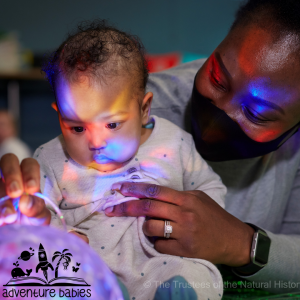
How Play Builds the Brain (Without Anyone Noticing)
Between birth and age two, your baby’s brain is growing faster than it ever will again. Millions of connections are being formed as they take in the world around them. And the thing driving that growth isn’t instruction or repetition — it’s experience.
When a baby reaches out to touch something new, listens to a rhythm, watches a story unfold, or moves their body in a different way, their brain is busy organising information. They’re beginning to understand cause and effect. They’re learning what feels familiar, what feels exciting, and what feels safe.
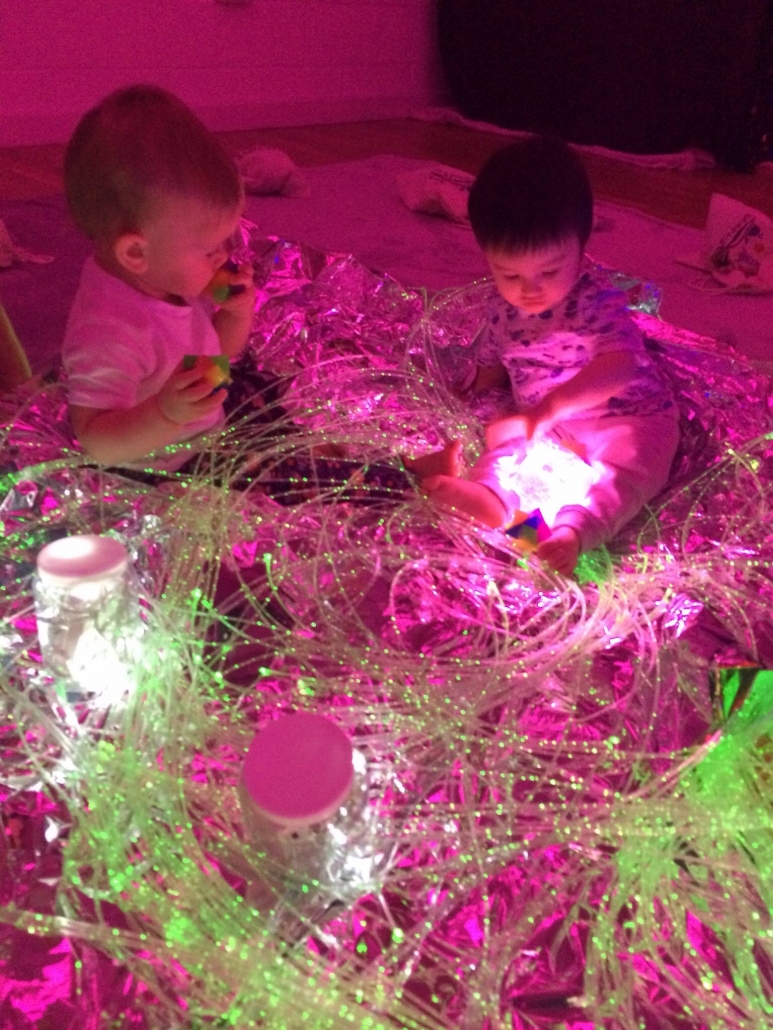
Sensory-rich play — the kind that involves texture, sound, movement, colour and storytelling — gives babies the variety of input their developing brains crave, without overwhelming them. It allows learning to happen organically, at their pace.
Research shows that play is more than just fun — it’s a crucial part of healthy child development, supporting everything from cognitive growth to emotional resilience and social skills (American Academy of Pediatrics).
Nothing is rushed. Nothing is forced.
And that’s exactly why it works.
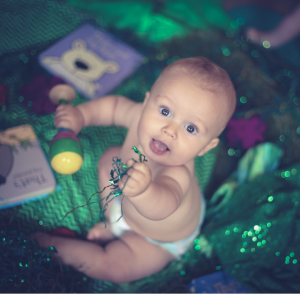
Why Shared Experiences Matter So Much
Babies don’t learn in isolation. They learn through connection.
When a baby plays alongside a trusted adult — watching their face, hearing their voice, feeling their reassurance — the experience becomes deeper. A simple activity turns into a moment of shared attention, and that shared attention is where confidence begins to grow.
In group settings, babies also start to notice one another. They watch. They listen. They take things in long before they can communicate it back. These early social experiences gently lay the foundations for empathy, turn-taking and curiosity about others.
This is why sensory storytelling classes can feel so powerful. They combine play with connection — between baby and adult, and between babies themselves — all wrapped up in a calm, joyful environment.
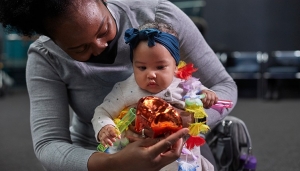
The Role of Fun (And Why It’s Not a “Bonus”)
There can be a quiet pressure on parents to ensure everything their child does is purposeful, educational or productive. But babies don’t learn best when they’re trying to perform — they learn best when they’re enjoying themselves.
When a baby is relaxed and engaged, their brain is far more open to forming new connections. Joy lowers stress. Curiosity increases attention. Fun keeps them coming back for more.
That’s why immersive experiences — where stories come to life, music is felt as much as heard, and movement is encouraged — support development so naturally. Babies aren’t being taught at. They’re being invited in.
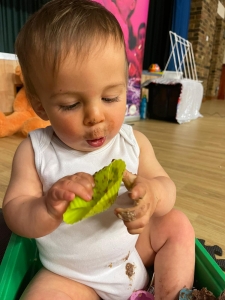
The Learning You Often Don’t Notice Until Later
One of the most interesting things about early play is that its benefits don’t always show up immediately. Parents often tell us they notice changes gradually, sometimes weeks or months later.
A baby who suddenly seems more engaged with books at home.
A toddler who recognises a familiar rhythm or story cue.
Longer periods of focused play.
More confidence exploring new environments.
These aren’t things that can be drilled or rushed. They grow out of repeated, positive experiences where learning feels safe and enjoyable.
Experiences Over Stuff
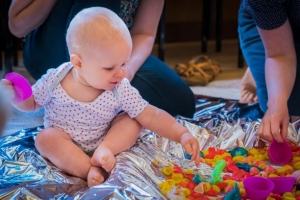
In the baby and toddler years, children don’t need endless toys or constant novelty. What they benefit from most are meaningful experiences.
Moments where adults slow down.
Where senses are gently stimulated rather than overloaded.
Where stories, music and movement are woven together.
These experiences don’t just support cognitive and physical development — they shape how children feel about learning itself.

So What Are Babies Really Learning Through Play?
They’re learning how their body works.
They’re learning how the world responds to them.
They’re learning that curiosity is encouraged.
They’re learning that learning feels good.
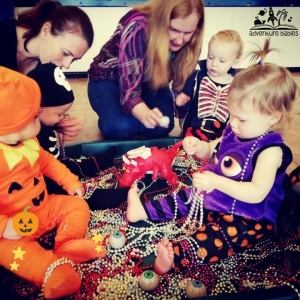
At Adventure Babies, our classes are designed with all of this in mind. Every story, sensory element and shared moment is there to support development — while keeping the magic, wonder and joy firmly at the heart of the experience.
Because when learning feels like play, it doesn’t just stick — it becomes something children love.
If you fancy joining us in class…