
Your Baby’s “Sensory Filing System”: How Their Brain Sorts the World
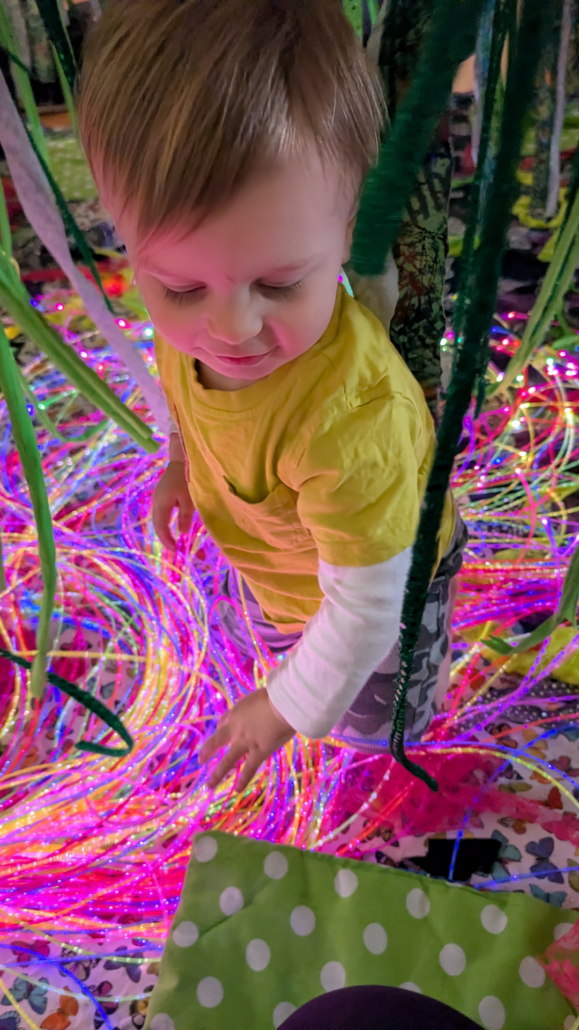
Your Baby’s “Sensory Filing System”: How Their Brain Sorts the World
If you’ve ever watched your baby become completely absorbed in something simple—a flickering shadow, the rustle of a leaf, the rhythm of your voice—you’ve seen their brain at work in its most important job:
Figuring out the world.
But here’s the part many parents aren’t told—your baby isn’t just experiencing things. They’re learning how to organise everything they see, hear, and feel into something that makes sense.
You can think of it as a kind of sensory filing system. And in the first two years of life, that system is being built from scratch.
What Is Sensory Processing in Babies?
Sensory processing is the way your baby takes in information from their senses—touch, sound, sight, movement—and turns it into something meaningful.
It’s not just about noticing things. It’s about deciding:
-
Is this safe?
-
Is this familiar?
-
Do I need to respond to this?
So when your baby hears your voice over and over again, or feels the same soft blanket against their skin, their brain is quietly filing that information away under safe, known, important.
How Your Baby Learns to Sort the World
At birth, everything is new. There is no system yet—just a constant stream of sensations arriving all at once.
Over time, your baby begins to organise these experiences.
They start to recognise your voice as something to tune into, even in a noisy room. They learn that certain textures are comforting, while others might feel unfamiliar or worth exploring more cautiously. Visually, they begin to notice patterns, track movement, and eventually recognise faces—not just as shapes, but as people they know and trust.
This process doesn’t happen by chance. It happens through repetition and gentle exposure.
Each time your baby experiences something again—hears the same song, sees the same book, feels the same sensory material—their brain strengthens its understanding. It becomes easier to process, quicker to recognise, and less overwhelming.
If you’ve ever wondered why repetition is so powerful, this blog explains it beautifully

Why Too Much Stimulation Can Backfire
It’s easy to assume that more stimulation means more learning. Bright toys, busy environments, constant noise—it can feel like you’re doing the “right” thing.
But here’s the reality: a baby’s sensory system is still developing. And without structure, too much input can quickly become overwhelming.
Instead of building a neat, organised filing system, it can feel more like everything is being thrown in at once—with no way to sort it.
You might notice this when your baby suddenly turns their head away, becomes fussy, or struggles to settle after a busy outing. These aren’t random reactions. They’re signs that their brain is saying, “I’ve had enough. I can’t process any more right now.”
The early childhood experts at Zero to Three explain that babies rely heavily on adults to help regulate these experiences. They don’t yet have the ability to filter or calm themselves independently—so the environment we create for them matters more than we often realise.
The Missing Piece: Structured, Meaningful Sensory Experiences
This is where the idea of guided sensory input becomes so important.
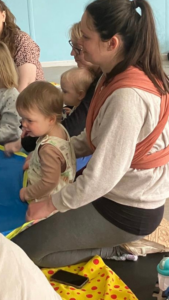
Babies don’t need endless stimulation. They need the right kind, delivered in a way their brain can understand.
When sensory experiences are predictable, repeated, and introduced gradually, something powerful happens.
Your baby begins to anticipate what’s coming next. Their brain starts to recognise patterns. They feel safe enough to explore, rather than overwhelmed by unpredictability.
Why Sensory Storytelling Works
This is exactly why sensory storytelling is so effective for babies.
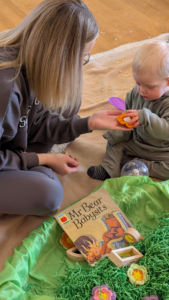
Instead of offering disconnected activities, storytelling provides a natural structure. There’s a beginning, a middle, and an end. Sensory elements—like textures, sounds, and visuals—are introduced in a way that follows a rhythm.
That rhythm matters.
It allows your baby’s brain to process each experience in context, rather than in isolation. They aren’t just touching something new or hearing a sound—they’re experiencing it as part of a bigger, meaningful sequence.
At Adventure Babies, this is at the heart of everything we do. Sensory storytelling isn’t about “more” stimulation—it’s about purposeful stimulation. Carefully guided, thoughtfully repeated, and designed to support how your baby’s brain actually develops.
What This Means for Everyday Life
Once you understand your baby’s sensory filing system, things start to click into place.
The reason they love the same book again and again?
They’re strengthening connections.
The reason they become overwhelmed in busy environments?
Too much, too fast, without enough structure.
The reason calm, familiar routines work so well?
Their brain knows what to expect—and that feels safe.
This early organisation of sensory information lays the groundwork for attention, emotional regulation, communication, and confidence as they grow.
Supporting Your Baby at Home (Without Overthinking It)
You don’t need complicated setups or expensive toys.
What matters most is how experiences are offered.
Slow things down. Let your baby fully explore one sensation at a time. Repeat the things they love, even if it feels simple. Watch their cues—when they look away or become unsettled, they’re asking for a pause.
And remember: less, but better, is often the key.
FAQs: Sensory Processing in Babies
What is sensory processing in babies?
It’s how babies take in information from their senses and organise it so they can understand and respond to the world around them.
How do I know if my baby is overstimulated?
Look for signs like turning away, fussiness, crying, or difficulty settling. These usually mean your baby needs a break.
Do babies need lots of stimulation to develop properly?
No—babies benefit more from calm, repeated, and structured experiences than from constant stimulation.
Why does my baby like the same things over and over again?
Repetition helps strengthen brain connections and makes the world feel predictable and safe.
Are sensory classes beneficial for babies?
Yes—especially when they are structured and guided. They help babies process and organise sensory input in a meaningful way.
The Takeaway
Your baby isn’t just discovering the world—they’re learning how to make sense of it.
And every calm, repeated, meaningful sensory experience you offer is helping them build that understanding from the ground up.
It might feel simple.
But inside their brain, it’s anything but.