Why “Baby Talk” Isn’t Silly — It’s Science
How to talk to your baby to support language development from day one
If you’ve ever caught yourself speaking to your baby in a high-pitched, sing-song voice and thought…
“Why am I talking like this?”
You’re not alone.
And here’s the truth every parent needs to hear:
👉 “Baby talk” isn’t silly — it’s one of the most powerful ways to support your baby’s brain and language development.
In fact, there’s a scientific name for it: parentese.
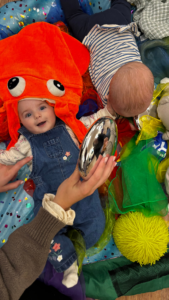
What is parentese (and why do we all do it naturally)?
Parentese is the way adults instinctively talk to babies. It usually sounds like:
- A higher-pitched tone
- Slower, more exaggerated speech
- Stretched-out vowels (“helloooo babyyyy”)
- Clear, expressive facial cues
It’s completely different from flat, adult-to-adult speech.
And importantly — it’s not random.
👉 It’s something your brain automatically does to help your baby learn language.
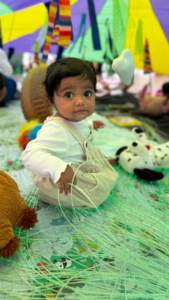
How babies learn language (and why parentese works)
From birth, babies are wired to tune into sound patterns.
Before they understand words, they’re learning:
- The rhythm of speech
- The rise and fall of pitch
- The patterns of conversation
Parentese makes all of this easier to understand.
Research shows that babies exposed to this style of communication are more likely to:
- Develop stronger vocabulary skills
- Engage more in back-and-forth interaction
- Reach early communication milestones more confidently
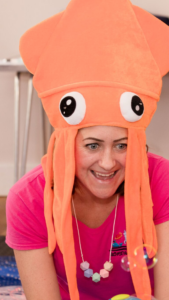
Why tone matters more than words in the early months
Here’s something that surprises a lot of parents:
👉 Your baby doesn’t need perfect words — they need expressive communication.
It’s not about saying more.
It’s about saying things in a way your baby can feel.
When you use parentese, you’re helping your baby:
- Focus their attention
- Break down sounds into patterns
- Understand emotion and meaning
This is the foundation of baby brain development and language learning.
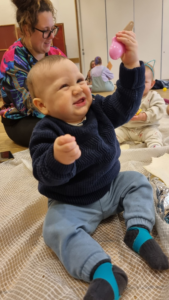
“Am I doing this right?” — the reassurance every parent needs
If you’ve ever wondered:
- “Should I be talking more?”
- “Am I doing enough?”
- “Is this helping?”
Here’s your answer:
👉 If you’re talking, singing, reacting and engaging with your baby — you are already supporting their development.
Parentese isn’t something you need to learn.
You’re likely already doing it.
And it counts.
Simple ways to use parentese in everyday life
You don’t need to change your routine — just add a little more expression.
Try:
- Narrating your day
“Let’s put your shoes on… shooooes!” - Responding to your baby’s sounds
Copy their coos and babbles back to them - Using songs and rhythm
Even simple nursery rhymes boost language patterns - Exaggerating key words
“Look at the BIG ball!”
👉 These small moments build powerful connections in your baby’s brain.
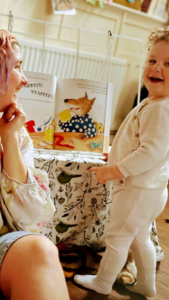
Why sensory storytelling strengthens language even more
This is exactly why sensory storytelling is so effective for babies.
At Adventure Babies, we don’t just read stories — we bring them to life through:
- 🎶 rhythm and repetition
- 🗣️ expressive, exaggerated language
- ✨ immersive sensory experiences
This gives babies multiple ways to experience language, making it easier for them to absorb and understand.
👉 You can explore our classes here:
The science behind it (in simple terms)
Studies show that babies prefer listening to parentese over regular speech — and they learn more from it.
This is because early interactions literally shape how the brain develops.
The takeaway: you’re already doing more than you think
You don’t need flashcards.
You don’t need perfect words.
👉 You just need connection, expression and interaction.
Every time you:
- Smile and speak
- Sing a song
- Respond to a babble
You are helping your baby learn to communicate.
FAQs: How to talk to your baby
1. Is baby talk bad for language development?
No — true “baby talk” (parentese) actually supports language development by helping babies understand sound patterns and communication.
2. When should I start talking to my baby?
From birth (and even before). Babies are listening and learning from the very beginning.
3. Do babies understand what I’m saying?
Not at first — but they understand tone, rhythm and emotion, which are the building blocks of language.
4. How can I help my baby learn to talk?
Talk often, respond to their sounds, use expression, and engage in back-and-forth interaction.
5. Are classes helpful for baby language development?
Yes — especially those that use sound, rhythm and interaction. These experiences expose babies to rich language patterns in a fun, engaging way.
SEO focus (woven naturally):
- parentese baby language
- how to talk to babies
- baby brain development language
- how babies learn to talk
- baby communication development