How Babies Communicate Before Talking: The First Conversations You Didn’t Know You Were Having
There’s a moment most parents recognise — even if they don’t quite realise what it is at the time.
You’re holding your baby. Maybe you’re a bit tired. Maybe you’re just going through the motions of the day. And then suddenly… they look straight at you.
Not a fleeting glance.
A proper look.
Their eyes lock onto yours, their body stills for a second, and something passes between you that feels oddly… intentional.
And then they make a sound.
Or a face.
Or a tiny movement.
You respond — instinctively.
And just like that, something has happened.
Not noise. Not randomness.
A conversation.
You’ve Been Having Conversations All Along
We tend to think of communication as something that starts with words. First words, first sentences, first conversations.
But babies don’t wait for language to begin connecting with you.
From the very beginning, they are reaching out. Testing. Responding. Learning the rhythm of interaction in a way that is completely natural and deeply human.
It just doesn’t look like what we expect.
There are no clear “hellos” or “goodbyes”. No obvious structure.
Instead, it’s woven into the smallest moments of your day.
A pause while you’re changing them.
A shared look during a song.
That little coo you almost missed because you were thinking about what’s for dinner.
These are not throwaway moments.
They are the start of communication.
The Language That Comes Before Words
If you slow things down — just slightly — you start to notice that your baby already has a whole way of expressing themselves.
It’s just quieter than we’re used to.
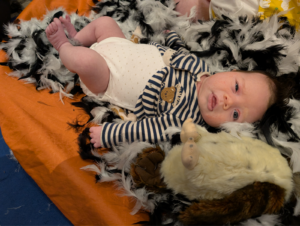
They use their eyes first. That intense focus, where it feels like they’re studying your face, isn’t accidental. They’re learning you. Watching how your mouth moves, how your eyebrows lift, how your expression changes. And then, slowly, they begin to respond in kind.
You might notice their face shift when yours does. A widening of the eyes. The hint of a smile. A flicker of recognition.
And then there are the sounds.
Those soft little coos and gurgles don’t come out of nowhere. They often arrive right after you’ve spoken, or when you’ve paused. Almost as if your baby is filling the space you’ve left for them.
Because in a way, they are.
One of the most powerful — and most overlooked — parts of early communication is the pause.
Your baby makes a sound… and then waits.
It’s subtle. Easy to miss if you’re distracted. But if you catch it, you realise what’s happening:
They’re giving you a turn.
The Back-and-Forth That Builds Everything
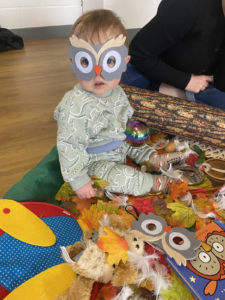
This gentle rhythm — you, then them, then you again — is the foundation of all communication.
Before words. Before sentences. Before they can even sit up or crawl.
It might look like nothing from the outside. Just a baby making noises, a parent responding.
But underneath it, something much bigger is happening.
Your baby is learning that communication is shared.
That interaction has a pattern.
That when they “say” something… someone answers.
This is what researchers call “serve and return” — a term used by the Harvard Center on the Developing Child to describe these back-and-forth exchanges that quite literally shape a baby’s brain.
When your baby looks, and you look back…
When they vocalise, and you respond…
Connections are being built. Pathways are forming.
Not just for speech, but for confidence, relationships, and emotional security.
And the beautiful thing?
You don’t have to learn how to do it.
You already are.
The Moments That Don’t Look Important (But Are)
Some of the most meaningful conversations you’ll have with your baby won’t feel like much at the time.
They won’t be big, memorable milestones.
They’ll be quiet.
A pause before you pick them up.
A shared glance while you’re singing.
The way they kick their legs when you talk, as if they’re answering you with their whole body.
It’s easy to overlook these moments because they’re woven into everything else — the washing, the feeds, the broken sleep, the constant mental load of caring for a tiny human.
But this is where connection lives.
Not in grand gestures.
In repetition. In presence. In noticing.
Why Being Around Other Babies Changes Everything
There’s another layer to this that often surprises parents.
Babies don’t just learn communication from us — they learn it from each other too.
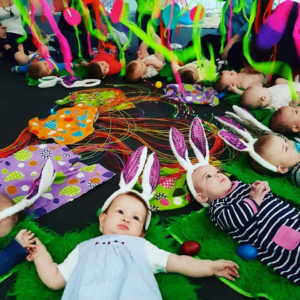
Put a group of babies in a room and watch closely. You’ll see them looking at one another, pausing, reacting, mirroring expressions in ways that feel almost instinctive.
It’s not structured. No one is teaching them.
But they are learning.
They’re noticing that other people make sounds.
That other faces respond.
That communication isn’t just one-to-one — it’s part of a wider social world.
This is one of the reasons group environments can feel so powerful, even when it looks like “just play”.
Where This Fits Into Your Week
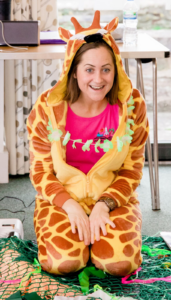
At Adventure Babies, this is the part we quietly build everything around.
Not pressure. Not performance.
Just space.
Space for your baby to look, pause, respond.
Space for you to notice those tiny cues you might miss at home.
Space for shared moments — between you, your baby, and the other families in the room.
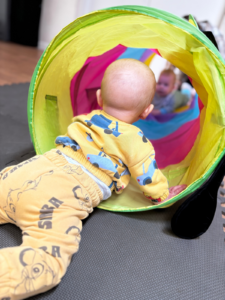
Through sensory storytelling, music, and gentle interaction, those early conversations naturally come to life.
And often, parents leave saying the same thing:
“I didn’t realise how much they were already communicating.”
👉 You can explore your nearest class here
If You’re Not Sure It’s Happening Yet
It’s completely normal to read something like this and wonder if you’re seeing it with your own baby.
Maybe they’re not making much eye contact yet.
Maybe the sounds feel few and far between.
Maybe you’re just not sure what you’re looking for.
That doesn’t mean the communication isn’t there.
Some babies are quieter. Some take a little longer to show their responses outwardly. And sometimes, it’s simply that life is busy and these moments are easy to miss.
The most powerful thing you can do isn’t to “teach” more.
It’s to slow down — just a fraction.
To leave a tiny bit of space after you speak.
To watch what happens next.
You might find there’s more being said than you realised.
The Bit No One Tells You
Long before your baby says their first word…
Before “mama”, before “dada”…
You’ve already had hundreds of conversations.
In looks.
In pauses.
In tiny, almost invisible exchanges that build something solid and lasting between you.
And one day, the words will come.
But they won’t be the beginning.
They’ll just be the moment you finally hear, out loud,
what’s been there all along.
FAQs: Baby Communication
When do babies start communicating?
From birth. Babies communicate through crying, eye contact, movement, and facial expressions from their earliest days.
What are baby communication cues?
Common cues include eye contact, cooing, pausing after sounds, kicking, reaching, and changes in facial expression.
What is responsive parenting?
Responsive parenting means noticing your baby’s cues and responding to them in a warm, consistent way — like answering a conversation.
Why is turn-taking important for babies?
Turn-taking teaches babies the rhythm of communication and helps build the foundations for speech, social skills, and emotional development.
Do baby classes help with communication?
Yes — especially classes that focus on interaction and shared experiences. Being around other babies naturally encourages communication, mirroring, and social awareness.