Making Mum Friends When Everyone Else Already Looks Settled
There’s a particular kind of courage involved in walking into a baby or toddler class on your own for the first time.
You’re carrying a baby, an enormous bag containing everything except the one thing you’ll actually need, and possibly a coffee you haven’t managed to drink. If you’ve got a toddler, you’ve added the exciting possibility that they may immediately head in the opposite direction while you attempt to look like a functioning adult.
Then you open the door.
Two mums are already chatting. Someone else seems to know exactly where to put the buggy, another parent calls someone by name and your brain makes an impressively quick assessment of the entire situation:
Everyone already has friends here except me.
They probably don’t.
If you’ve been wondering how to make mum friends on maternity leave, or you’re months beyond maternity leave and still haven’t found that mythical “mum village” everyone talks about, there’s something worth remembering.
An awful lot of the other parents are wondering exactly the same thing.
They might just look considerably more confident while they’re doing it.
Maternity leave can be strangely lonely
Before you have a baby, maternity leave can sound rather lovely.
No work! Coffee dates! Walks! Baby groups!
Then you actually have the baby.
Suddenly, leaving the house before 11am feels like a logistical achievement worthy of its own medal, and you can spend an entire day desperately wanting adult conversation while somehow remaining incapable of finishing a text message.
For anyone who previously spent their working day surrounded by colleagues, the contrast can feel enormous.
Work gives us casual human contact without requiring much effort. Someone asks what you did at the weekend, you make tea at the same time as another person or have a completely unnecessary conversation while standing next to the printer.
Once you’re at home with a baby, you can find yourself becoming surprisingly invested in whether the postman has time for a chat.
That feeling isn’t unusual. NCT’s 2026 research into becoming a parent found that 62% of new parents surveyed experienced loneliness or isolation at least some of the time after their baby was born.
The NCT research into the experiences of new parents involved more than 2,000 new and expectant parents across the UK, which gives some useful perspective when you’re sitting at home thinking everyone else appears to have maternity leave completely sorted.
They don’t.
It doesn’t necessarily disappear when your baby gets older
There’s also an assumption that once you’ve survived the newborn months, you’ll somehow acquire a ready-made group of friends.
That doesn’t always happen.
Your baby might be eight months old before you feel ready to start going to groups regularly. Perhaps you moved area, returned to work part-time or simply didn’t click with the people you met during pregnancy.
Once babies become mobile, another problem appears: having a proper conversation while your child crawls towards somebody else’s changing bag becomes increasingly ambitious.
Parents of one- and two-year-olds can feel lonely too.
In fact, this stage can sometimes become more isolating because the flurry of support and attention that surrounds a newborn has disappeared, yet you’re still spending huge amounts of time caring for a very small person.
So if your baby is 14 months old and you’re still wondering where your mum friends are, you haven’t missed the deadline.
There isn’t one.
Why does everyone else look as though they already know each other?
Because you’re seeing the outside of their morning rather than the inside.
The mum who looks completely at home might have sat in her car for ten minutes wondering whether to come inside. Those two parents chatting could have met last week, while the woman who seems incredibly confident may be hoping someone talks to her because she hasn’t had a proper adult conversation since yesterday afternoon.
We’re remarkably good at looking at other people and assuming they feel more settled than we do.
Baby and toddler groups add another strange layer because everyone obviously has something in common, but that doesn’t necessarily make starting a conversation easy.
What are you supposed to say?
“Hello. I see you also have a baby.”
Fortunately, babies are excellent social props.
Your baby has already provided your opening line
One of the easiest answers to how to make mum friends on maternity leave is to stop feeling as though you need an impressive conversation starter.
You both have babies.
That’s plenty.
Ask how old their little one is, whether they’ve been to the class before or where they found the bib you’ve just watched their baby cover in banana. Comment on the fact that both babies appear far more interested in someone’s water bottle than any of the carefully chosen toys around them.
If you’ve got toddlers, you have even more material.
Nothing breaks the ice quite like two parents simultaneously retrieving their children from somewhere they shouldn’t be.
Friendships rarely begin because somebody says something extraordinary. More often, they grow from two people having the same small conversation several weeks in a row.
That’s one of the lovely things about a regular class.
You don’t have to make a best friend by 10.45 on Tuesday.
You just need to come back next Tuesday.
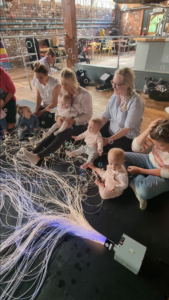
Familiar faces make everything easier
During the first week, you recognise nobody.
The following week, you recognise the mum whose baby loved the bubbles. By week three, you’ve learnt the baby’s name and eventually you discover that the mum has a name too.
A few weeks later, you’re discussing naps, weaning, childcare, returning to work and why one tiny human can generate quite so much washing.
Regular contact takes some of the pressure away because you aren’t constantly starting from scratch.
Instead of trying a different activity every week and repeatedly introducing yourself to strangers, familiar faces begin appearing. Those tiny exchanges gradually become conversations, and sometimes those conversations become friendships.
The NHS acknowledges that having a baby can leave parents feeling lonely and cut off from their previous lives, particularly after a first baby, and highlights the importance of maintaining friendship and support around you.
You don’t need twenty new friends.
Sometimes you just need someone who understands why a 37-minute nap has completely changed the course of your day.
Mum friends are a slightly different kind of friendship
Becoming a parent doesn’t suddenly make you compatible with every other person who has also produced a child.
You might meet ten mums and really click with one.
That’s completely normal.
Maternity-leave friendships often begin with circumstance rather than obvious similarity. You might have different jobs, backgrounds and interests, yet suddenly find yourselves deeply united by the question of what you’re supposed to do with a baby between 3pm and bedtime.
There’s also something comforting about not having to explain everything.
Your existing friends can be wonderfully supportive, but another parent at exactly the same stage immediately understands certain things. They know why you’re late, why plans might change at the last minute and why you need to abandon a conversation because someone has just produced an absolutely spectacular nappy.
Nobody needs an explanation.
That shared understanding can be incredibly reassuring.
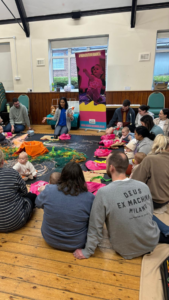
Try the five-minute-after-class rule
If you want to make friends at baby groups but always find yourself packing up and disappearing as soon as the session ends, try staying for another five minutes.
Not an hour.
Just five minutes.
Class itself gives everyone something to focus on, which takes away much of the social pressure. Those few minutes afterwards, however, are often when conversations begin.
Ask someone whether they’re going for coffee, comment on something funny their baby did or continue a conversation you started during class.
Once you’ve spoken to the same person a few times, be brave and ask whether they fancy a walk sometime.
It may feel suspiciously like asking someone on a date.
Socially speaking, it basically is.
The reassuring part is that they’re quite possibly hoping you’ll ask.
You don’t need an enormous mum group
Social media has given us a slightly strange picture of maternity leave where everyone apparently acquires a perfectly coordinated group of six women who drink coffee together, go on buggy walks and somehow all have babies born within three weeks of each other.
Lovely if that happens.
It isn’t a requirement.
One person you can message when you’ve had a ridiculous morning can be worth considerably more than a giant WhatsApp group.
Even having a few familiar faces at your weekly baby or toddler class can change how the week feels. Somewhere that people know your name, recognise your child and notice when you haven’t been creates a sense of belonging without requiring an enormous friendship group.
Community doesn’t have to be big to matter.
Don’t wait for someone else to be the confident one
This may be the hardest part.
Sometimes making friends means being the person who goes first.
You might need to sit beside someone instead of leaving that polite British empty space between you. Perhaps you’ll have to ask whether they want coffee afterwards, offer your number or suggest meeting at the park next week.
There’s always a chance it will feel slightly awkward.
Do it anyway.
The person sitting beside you may have spent the previous evening searching how to make mum friends on maternity leave too.
One tiny invitation can feel enormous when somebody has been hoping to be included.
Adventure Babies is for the grown-ups too
We put a huge amount of thought into what babies and toddlers experience at Adventure Babies. Our stories, sensory play, puppets, movement, messy play and interactive activities all give little ones opportunities to explore, communicate and discover.
But there’s another part of class that matters enormously to us.
The grown-ups need somewhere to belong too.
We want Adventure Babies to feel like somewhere you can arrive exactly as you are.
Come in late because your baby needed feeding precisely when you were supposed to leave the house. Feed during class, change a nappy, sit quietly for a while or retrieve your crawling baby for the 47th time.
Your baby might cry.
Your toddler might refuse to participate in the activity we’ve spent ages preparing because they’ve discovered a doorstop.
Nobody minds.
Most importantly, you don’t need to know anyone before you walk through the door.
And if you’re already settled, look for the new person
There’s another side to this.
If you’ve been coming to class for a while and now feel comfortable, notice the parent who has just arrived.
Say hello.
Ask their baby’s name, move over slightly or include them in the conversation.
Remember how it felt when you first walked into a room where everyone else appeared to know exactly what they were doing.
Small moments of inclusion can make an enormous difference.
The NHS suggests joining groups or classes and trying peer support as possible ways of building connection when loneliness becomes difficult. Sometimes that support begins much more simply because somebody smiled and made space on the mat.
Eventually, you stop being “someone’s mum”
Something rather lovely can happen after a while.
You stop being “Theo’s mum” and “Amelia’s mum” and learn each other’s actual names.
Conversations move beyond naps and weaning. You discover what somebody did before maternity leave, whether they’re going back to work, what makes them laugh and what they’re finding difficult.
Your babies brought you together, but the friendship becomes yours.
Some friendships belong to a particular season of life. Others survive nursery, school and the alarming moment when the babies who met on a sensory mat are suddenly enormous children.
Both kinds matter.
A friendship doesn’t need to last forever to have been exactly what you needed at the time.
How to make mum friends on maternity leave? Start smaller than you think
You don’t need to find “your tribe” this week.
Start by finding somewhere you enjoy going regularly.
Sit beside somebody instead of on the other side of the room. Ask their baby’s name, then try to remember it when you see them again.
Stay for five minutes after class.
Suggest coffee if you click.
Go back next week.
Those tiny interactions don’t look particularly life-changing while they’re happening, but friendships rarely announce themselves dramatically at the beginning.
If you’d like somewhere to start, you can find your nearest Adventure Babies class and come along with your baby or toddler.
You might initially book because you want them to enjoy stories, sensory play, puppets, messy play and all the lovely opportunities to explore.
Then one week you realise you know where to put the buggy.
Someone calls you by name.
You spot the new mum standing by the door and smile at her because you remember exactly how that felt.
And somewhere along the way, the baby class has become part of your week too.