How to Get Out With a Newborn (When Leaving the House Feels Completely Impossible)
There should honestly be some kind of Olympic recognition for leaving the house with a newborn.
Not casually popping out. Properly leaving the house.
The sort involving:
packing seventeen muslins,
finding the emergency nappy cream,
feeding the baby “one last time,”
changing your own top because somebody has unexpectedly sicked directly into your bra,
and then finally standing at the front door feeling like you’ve completed military training… only for the baby to immediately do a catastrophic poo explosion.
Again.
If you’ve been wondering how to get out with a newborn when it suddenly feels weirdly overwhelming and impossible, firstly: you are extremely normal.
And secondly: it really does get easier.
But there is also something important worth saying here that new parents often do not hear enough:
Getting out with your baby is not only good for them.
It is really good for you too.
Why Leaving the House Suddenly Feels Like Such a Big Deal
Before having a baby, leaving the house required approximately:
keys,
phone,
mild enthusiasm.
After having a baby, it becomes a full logistical operation involving feeds, naps, weather forecasts, emergency outfits and the very real possibility somebody will scream halfway through Boots.
The early weeks with a newborn can feel surprisingly small too. Days blur together. Feeds run into naps. Naps run into staring at a baby whilst wondering how somebody so tiny has created this much laundry.
And whilst there is beauty in those slow newborn days, there can also be isolation.
That is one of the reasons so many new parents suddenly find themselves googling things like:
“baby classes near me”
“activities with my baby”
or
“how to leave the house with a newborn without emotionally collapsing.”
Because underneath all those searches is usually the same thing:
a need for connection.
Your Baby Benefits From You Feeling Good Too
Modern parenting sometimes talks about baby development as though parents should spend every waking second creating educational experiences from recycled oat containers and emotionally unstable sensory trays.
Meanwhile your newborn is honestly thrilled watching light through a window.
Babies do not need perfection.
What they do need is responsive connection, sensory experiences, interaction and emotionally safe relationships.
According to NHS Start for Life
, talking, singing, responding and interacting with babies from birth supports early brain and communication development. Even very ordinary everyday experiences help babies begin understanding the world around them.
And importantly, babies are deeply affected by how their parents feel too.
When parents feel calmer, supported and emotionally connected, babies often regulate more easily alongside them. Babies learn through co-regulation long before they can calm themselves independently.
Which means sometimes the most powerful developmental thing for your baby is actually this:
seeing you laugh,
hearing you talk to other adults,
feeling your body relax slightly over coffee after class,
watching you feel safe and connected too.
Honestly, that matters enormously.
The First Time You Go Somewhere Alone With a Baby Feels Slightly Unhinged
Nobody really prepares you for the psychological intensity of taking a newborn somewhere by yourself for the first time.
You arrive sweating.
The baby has somehow removed one sock.
You cannot remember your own name.
You packed snacks despite exclusively breastfeeding and have no idea why.
And yet, once you do it once, something shifts.
You realise the world has not ended because your baby cried briefly in public.
You realise every other parent looks similarly sleep deprived.
You realise nobody competent actually has this stage fully figured out.
That’s one of the reasons baby classes can become such an important part of early parenthood. Not because babies desperately need scheduled enrichment at ten weeks old, but because parents need places where they feel welcomed, understood and normal again.
, nobody expects perfection.
Babies feed in class.
They sleep.
They cry.
Toddlers occasionally become emotionally overwhelmed because somebody else touched a shaker egg.
Honestly, everybody just gets it.
And that changes everything.
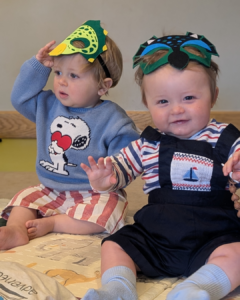
Why Sensory Experiences Matter for Babies
One of the lovely things about getting out with your baby is how much they quietly absorb from the world around them.
Even tiny babies are taking in sounds, movement, lights, voices, textures and facial expressions constantly. Their brains are building connections through sensory experiences and human interaction all day long.
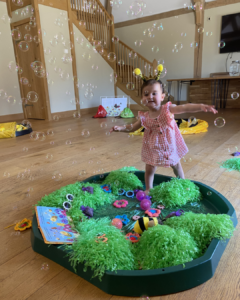
At Adventure Babies, sensory storytelling classes are designed around exactly that understanding. Babies experience stories through music, movement, sensory play and immersive environments that support communication, curiosity and early development in a way that feels exciting rather than pressured.
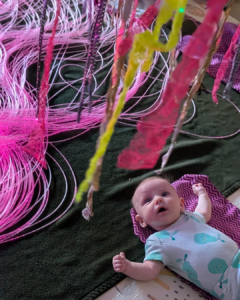
One week babies might watch glowing lights dance through an underwater story. Another week they may hear jungle sounds, explore textures or stare in complete wonder at bubbles floating through the room like they have personally witnessed magic.
And honestly? Sometimes they have.
According to Harvard Center on the Developing Child
, early experiences and responsive relationships play a huge role in shaping brain architecture during infancy. Sensory-rich, emotionally safe environments help babies explore and learn through connection and curiosity.
Which explains why babies often leave class completely fascinated, overstimulated in the best possible way and suddenly ready for the nap of their lives.
You Were Never Supposed to Do This Alone
This is probably the most important bit.
New parents are often surrounded by people and still feel lonely.
You can spend entire days speaking mostly to somebody who occasionally smiles at you and frequently sneezes milk onto your shoulder. Adult conversation becomes strangely exciting. A peaceful coffee feels like luxury.
That’s why community matters so much during the baby years.
At Adventure Babies, parents come for the sensory play and developmental experiences, but they often stay because of the people. Friendships form over sleep deprivation, snack discussions and shared experiences of trying to leave the house with babies who seem fundamentally opposed to being placed in car seats.
Nobody judges.
Nobody expects you to “bounce back.”
Nobody minds if you arrive late carrying seventeen unnecessary items and emotional fragility.
You are simply welcomed exactly as you are.
And honestly, sometimes that is the thing new parents need most.
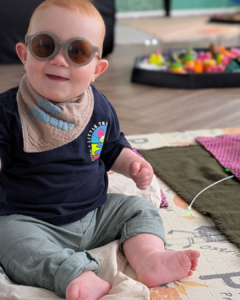
How to Get Out With a Newborn? Start Small.
Not every outing needs to become a perfect memory-making moment.
Sometimes success is simply:
you left the house,
your baby saw something new,
you spoke to another adult,
you remembered you still exist outside feeding schedules and laundry piles.
That counts.
Whether it’s a walk, a coffee, a baby class or sitting beside another parent who understands exactly how hard this stage can feel sometimes, those small moments of connection matter deeply.
Because babies do not just need stimulation and development.
They need parents who feel supported too.
And honestly?
You deserve that just as much as they do.