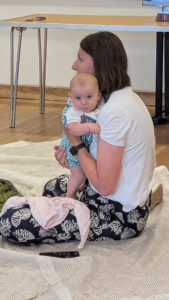
Why Does My Baby Kick So Much? The Surprising Science Behind All That Wriggling
If you’ve ever changed a nappy while your baby launched both legs into the air with the force of a tiny Olympic athlete, you may have found yourself wondering:
Why does my baby kick so much?
It’s one of those things parents notice constantly but rarely think about too deeply. Babies kick during nappy changes. They kick when they’re excited. They kick when they’re cross. They kick when they’re lying under a play gym. Some babies seem to spend most of their waking hours enthusiastically windmilling their legs like they’re training for a marathon they haven’t been invited to yet.
The funny thing is that all this apparently random kicking is actually doing some very important work.
In fact, those energetic little legs are helping your baby build the foundations for almost every major physical milestone that comes next.
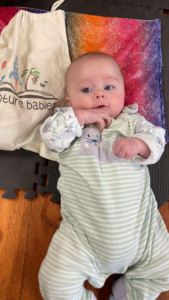
Your Baby Isn’t Just Moving — They’re Practising
As adults, we tend to think movement has a purpose.
We walk somewhere.
We pick something up.
We reach for a cup of tea.
Babies don’t move like that.
For them, movement is the purpose.
Every kick, stretch, wiggle and flail helps their brain learn where their body is in space. Development specialists call this proprioception, but in simple terms, it’s your baby’s internal GPS system.
Before babies can roll, sit, crawl or walk, they need to build an understanding of their own body. Kicking is one of the earliest ways they begin doing that.
Those repetitive leg movements help strengthen muscles, develop coordination and create connections between the brain and body.
According to NHS Start for Life
, babies develop physical skills gradually through movement and exploration. Long before milestones become visible, their brains are busy laying the foundations underneath.
Which means all that kicking isn’t random at all.
It’s practice.
Why Babies Often Kick More When They’re Happy
One of the most fascinating things about babies is that they don’t have words yet, so their bodies do a lot of the talking.
Watch a baby when they’re genuinely delighted.
Perhaps they’ve spotted your face after a nap. Maybe you’ve started singing their favourite song. Perhaps a bubble machine has entered the room and they are experiencing what can only be described as pure joy.
Very often, their entire body joins the celebration.
Arms wave.
Legs kick.
Bodies wriggle.
Babies frequently use movement to express excitement because movement and emotion are closely connected in the developing brain.
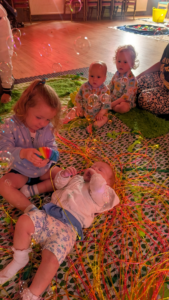
This is something we see all the time at Adventure Babies classes
. Babies often kick furiously during stories, songs and sensory experiences that capture their attention. To an adult it might look like random movement. To a baby, it’s often a physical expression of engagement and excitement.
Which is really rather lovely when you think about it.
Your baby is literally dancing before they know how.
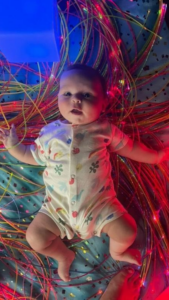
The Link Between Kicking and Future Milestones
Parents understandably spend a lot of time looking ahead.
When will they roll?
When will they sit?
When will they crawl?
But development doesn’t happen in neat little jumps.
It happens gradually, through thousands of tiny movements repeated over and over again.
When babies kick, they’re strengthening muscles in their legs, hips, tummy and core. They’re learning how their body responds when they move. They’re experimenting with force, balance and coordination.
What looks like simple kicking today contributes to the skills they’ll eventually use to roll across the floor, push themselves up, crawl after the dog and, before you’re emotionally ready, disappear at speed towards something expensive.
Development often looks messy while it’s happening.
The milestone is simply the visible result.
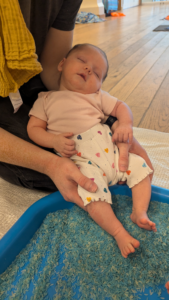
Why Your Baby Loves Kicking During Nappy Changes
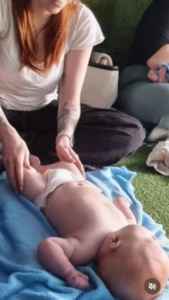
Many parents notice their baby becomes especially energetic when lying on their back with no clothes on.
There is actually a good reason for this.
Without being held, strapped into a pram or tucked into a carrier, babies have complete freedom to explore movement. They can stretch, twist, kick and experiment with how their body works.
This freedom matters.
According to The National Childbirth Trust (NCT)
, opportunities for free movement help babies build strength and confidence as they develop physical skills.
So while it may feel slightly inconvenient when you’re trying to fasten a nappy onto a baby who has transformed into an enthusiastic octopus, your little one is actually learning.
Not that this makes the nappy any easier to put on.
What Kicking Teaches the Brain
Perhaps the most interesting part of all this is that kicking isn’t just developing muscles.
It’s developing the brain.
Every movement sends information back and forth between the brain and body. The brain learns what happened, adjusts and refines future movements. This process helps build neural pathways that support future physical, sensory and cognitive development.
In other words, movement is learning.
This is one of the reasons sensory play, movement and exploration are so important during infancy. Babies learn through doing. Through touching, reaching, kicking, watching and experiencing.
At Adventure Babies, sensory storytelling adventures are built around this understanding. Babies are encouraged to move, explore and engage with stories using their whole bodies because that’s how young children naturally learn best.
Not by sitting still.
Not by being taught.
But by experiencing the world through movement, curiosity and connection.
The Pressure to “Do More”
Modern parents are often surrounded by messages telling them to stimulate, enrich and optimise every waking moment.
It can leave you wondering whether your baby needs more toys, more activities or more structured learning experiences.
Meanwhile, your baby is lying on a mat absolutely delighted by their own feet.
The truth is that babies are born curious. They don’t need constant entertainment. They need opportunities to move, explore and connect with the people around them.
Some of the most powerful developmental experiences happen during the simplest moments.
A song during a nappy change.
A story before bed.
A cuddle and conversation.
A sensory class.
A walk outside.
A kick under a play gym.
Learning doesn’t always look impressive.
Often it looks exactly like a baby lying on their back enthusiastically kicking at thin air.
So Why Does My Baby Kick So Much?
Because they’re learning.
They’re building strength.
They’re developing coordination.
They’re exploring their body.
They’re expressing excitement.
They’re creating brain connections that will support future milestones.
And perhaps most reassuringly of all, they’re doing exactly what babies are supposed to do.
So next time you’re watching your baby launch their legs around with impressive enthusiasm, you can relax.
They’re not just kicking.
They’re busy building the foundations for everything that’s still to come.