
Why Is My Baby So Clingy? The Truth About Babies Who Only Want You
There is a very specific kind of emotional damage that comes from finally getting your baby to sleep, lowering them carefully into the cot like you are handling an unexploded bomb, and then hearing immediate furious newborn screeching approximately three seconds later.
Not because they are hungry.
Not because they are uncomfortable.
Not because anything is actually wrong.
Simply because you had the audacity to stop holding them.
If you’ve been googling “why is my baby so clingy,” firstly, welcome. Almost every parent of a young baby has quietly wondered the exact same thing whilst attempting to drink cold tea one-handed.
And secondly, your baby is almost certainly behaving exactly as nature intended.
Which is deeply reassuring in theory and slightly less reassuring when you haven’t sat down alone since the birth.
Your Baby Is Not “Spoiled”
Modern parenting advice can sometimes make it sound as though babies are tiny emotional masterminds manipulating exhausted adults for entertainment.
As though your ten-week-old has consciously decided:
“Excellent. Today we continue the campaign against independent urination.”
But biologically, clinginess in babies makes complete sense.
Your baby has gone from spending months hearing your heartbeat constantly, being rocked by your movements and existing in permanent physical contact with you… to suddenly being placed in a loud, bright world where literally everything is unfamiliar.
When you think about it honestly, newborns cope with this transition remarkably well considering the circumstances.
So when babies want to be held all the time, stare at your face constantly or scream the second they are placed down, they are not trying to manipulate you. They are trying to feel safe.
According to NHS Start for Life
, close responsive interactions help babies build attachment and emotional security during the early months. Those cuddles, conversations, feeds and moments of comfort are not “spoiling” your baby — they are literally helping shape their developing brain.
Which means your clingy baby is not broken.
They are just very, very new here.
Your Baby Uses You to Regulate Their Nervous System
One of the most fascinating things about young babies is that they cannot calm themselves down independently yet.
Adults can sometimes regulate stress by taking deep breaths, going for walks or pretending we’re completely fine whilst aggressively reorganising kitchen cupboards.
Babies do not have those skills yet.
Instead, they regulate through you.
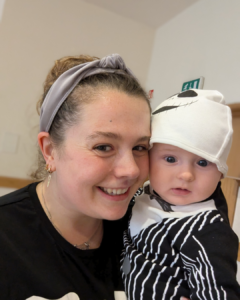
Your heartbeat, voice, smell, warmth and movement all send safety signals to your baby’s nervous system. That is why babies often settle instantly when picked up after rejecting every other possible solution with extraordinary emotional commitment.
It’s also why babies love rocking, feeding, cuddling and being carried close to your body.
Understanding this changes clinginess from feeling like a behavioural problem into something much more logical and human. Your baby is not trying to control you. They are borrowing your calm because their nervous system is still under construction.
Honestly, once you realise that, it becomes much harder to view clinginess as “bad behaviour.”
Exhausting sometimes?
Absolutely.
Manipulative?
Not remotely.
Why Your Baby Finds Your Face Weirdly Fascinating
Have you noticed your baby staring at you constantly?
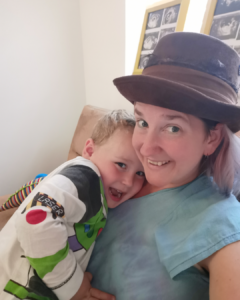
Not casual glancing either. Full, intense eye contact. Like you are the lead character in a drama series they are deeply emotionally invested in.
That fascination is developmental gold.
Babies learn through faces long before they understand language. They study your expressions, watch your mouth move, listen to changes in tone and absorb social information constantly through everyday interaction.
According to Harvard Center on the Developing Child
, these responsive “serve and return” interactions help build crucial neural connections linked to communication and emotional development.
Which means when your baby watches you narrate making toast or folding laundry, they are not just staring randomly into space.
They are learning human connection in real time.
Honestly, babies are both scientifically fascinating and deeply humbling.
You can spend money on developmental toys only to discover your baby believes your face is the greatest entertainment ever created.
The Pressure to “Not Hold Them Too Much”
Parents of young babies receive some genuinely bizarre advice sometimes.
“Don’t pick them up straight away.”
“They’ll get used to being held.”
“You’re making a rod for your own back.”
And yet everything we understand about infant attachment suggests that responsive care and emotional security are incredibly important during early development.
Young babies are not designed for independence yet. They are designed for connection first.
Feeling safe enough to eventually explore the world independently actually grows out of secure attachment, not separation.
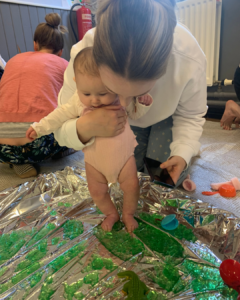
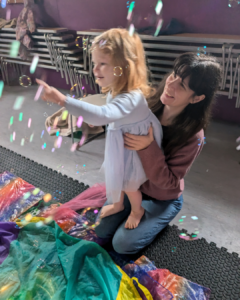
That’s one of the reasons sensory baby classes can feel so lovely during this stage too. Babies begin slowly experiencing new sounds, textures, movement and social interaction whilst remaining connected to the person they trust most.
, babies experience sensory storytelling, music, movement and immersive play in a way that feels exciting but emotionally safe. Some babies wriggle around exploring every sensory tray available. Others stay cuddled in their parent’s arms watching lights and bubbles with complete amazement.
Both are learning.
Both are engaging.
Both are exactly fine.
The Part Nobody Talks About Enough
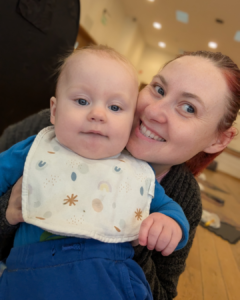
Clingy babies can feel emotionally intense.
There is a particular kind of exhaustion that comes from being needed physically all day long. You can adore your baby completely whilst also fantasising about eating a biscuit uninterrupted or sitting alone in silence for six consecutive minutes.
That does not make you a bad parent.
It makes you human.
The early months can feel strangely isolating too. Days become repetitive in ways people rarely explain beforehand. Feeds blur into naps, naps blur into laundry, and suddenly leaving the house feels like a military operation involving seventeen muslins and at least one emergency outfit.
That is why community matters so much during this stage.
One of the loveliest things about baby classes is often not even the class itself. It is sitting beside other parents and realising everybody else is figuring it out too. Nobody minds if your baby cries. Nobody cares if you arrive flustered. Nobody expects perfection.
At Adventure Babies, friendships form every week simply because parents finally feel understood somewhere.
And honestly, parents need holding sometimes too.
Your Baby Is Not Giving You a Hard Time
One day your baby will crawl away confidently.
Then walk away.
Then insist they can do everything themselves whilst you stand there emotionally unprepared for how quickly it all changed.
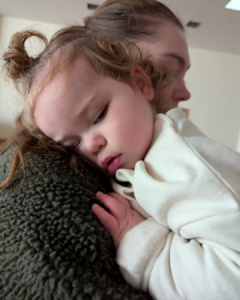
But right now, your baby wants you because you are home.
Your smell feels familiar.
Your voice feels safe.
Your arms calm their nervous system.
Your face teaches them connection, communication and love.
So if your baby only naps on you, cries when you leave the room or behaves as though physical contact is their full-time profession, it does not mean you are doing something wrong.
It means your baby is exactly where they are supposed to be.
And honestly?
You are probably exactly what they need too.