
The Unexpected Reason Bedtime Stories Calm Mums Down Too
The Benefits of Reading to Your Baby at Bedtime Go Beyond Sleep
There’s a moment that happens in a lot of homes at the end of the day that nobody really talks about.
The kitchen is still a mess. You’ve probably reheated the same cup of tea three times. Your baby has cried because you dared to put them down long enough to brush your teeth. You’re overstimulated, touched out, mentally replaying everything you forgot to do, and somehow it’s only 6:42pm.
Then suddenly, almost by accident, you sit down with a book.
Your baby wriggles onto your lap. You open a familiar story. Your voice softens without you even meaning it to. The room slows down slightly.
And for the first time all day, both of your nervous systems begin to settle.
When people talk about the benefits of reading to babies at bedtime, they usually focus on sleep, language development or building routines. And yes, those things matter. But honestly, one of the most underrated parts of bedtime stories is what they do for parents too.
At Adventure Babies we spend a lot of time talking about how babies experience stories through closeness, rhythm, sensory connection and emotional safety. But the truth is, adults need those things too — especially in the intense, relentless early months of parenting.
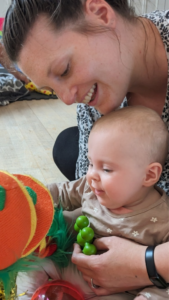
Why Reading to Your Baby at Bedtime Feels So Calming
Most of modern parenting is loud.
There’s constant stimulation. Notifications. Advice. Noise. Toys that sing aggressively at you. Washing machines humming in the background. A running mental list of things you should probably be doing.
Your brain rarely gets a clean stopping point.
But reading a story to your baby creates something surprisingly powerful: a shared pause.
Not because books magically solve bedtime. Anyone with a baby knows bedtime can still be complete chaos. Sometimes you’ll read three pages while your baby tries to eat the corner of the book and kick you in the throat simultaneously. But even then, something changes.
Your breathing slows.
Your voice becomes rhythmic.
Your body becomes still for a few minutes.
Your baby focuses on you.
And that matters more than we often realise.
Research around co-regulation shows that babies learn to regulate their emotions and stress responses through calm, responsive interactions with caregivers. But it works both ways. Parents regulate babies, and babies can help regulate parents too through closeness, eye contact and repetitive connection.
That’s partly why bedtime stories can feel emotionally grounding even after a hard day.
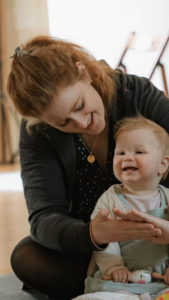
The Surprising Science Behind Bedtime Stories and Baby Development
One of the most fascinating things about reading to babies under one is that they don’t actually need to understand the words for it to benefit their development.
Your baby is absorbing:
- the rhythm of language
- tone of voice
- facial expressions
- emotional connection
- repeated sounds and patterns
- feelings of safety and closeness
According to The National Literacy Trust, sharing stories from birth supports communication, bonding and early language development long before babies can speak themselves.
But there’s another layer to it too. Repeated bedtime stories create predictability, and predictability helps babies feel secure. When babies hear the same familiar story night after night, they begin recognising sounds, anticipating moments and associating books with calm connection.
And honestly? Parents often start doing exactly the same thing.
There’s a reason so many parents can recite Guess How Much I Love You or Dear Zoo in a sleep-deprived trance. Those repeated stories become tiny emotional anchors in the middle of the chaos of early parenthood.
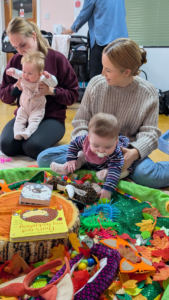
Bedtime Reading Is Often More About Connection Than Sleep
This is probably the part nobody tells new parents enough.
Reading before bed doesn’t have to “work” in order to be valuable.
Your baby might not fall asleep afterwards.
They might wriggle constantly.
They might skip half the pages.
They might only care about the dog on page four.
That doesn’t mean you’re doing it wrong.
Some of the pressure around bedtime routines can make parents feel like every part of the evening has to lead efficiently towards sleep. But babies are human beings, not tiny productivity hacks. Sometimes the real value of bedtime stories is simply that they create a moment where both of you reconnect after a long day.
Especially if you’ve spent the day rushing around, worrying, multitasking or feeling emotionally stretched thin.
At Adventure Babies classes, we often see parents visibly soften during storytelling moments. Sometimes it’s actually the adults who need the sensory calm as much as the babies do. The slower pace. The eye contact. The permission to stop for a minute.
And I think that’s why reading with babies can feel strangely emotional sometimes. It’s one of the few parts of parenting where you’re encouraged to pause instead of perform.

Why Familiar Stories Matter So Much to Babies
Adults often crave novelty, but babies thrive on familiarity.
That’s why babies love hearing the same stories over and over again. Familiar books help babies predict what comes next, which supports emotional security and early memory development.
It also explains why certain bedtime books start to feel oddly comforting to parents too.
The repetition becomes soothing.
The phrases become familiar.
The ritual becomes predictable.
In a stage of life that can feel incredibly overwhelming and relentless, that predictability matters.
Research from Harvard University’s Center on the Developing Child highlights how consistent, responsive interactions help build strong foundations for emotional wellbeing and brain development. Bedtime stories may seem small, but repeated moments of calm connection genuinely shape how babies experience safety and relationships.

The Tiny Rituals You’ll Remember One Day
Most parents imagine they’ll remember the big milestones.
The first steps.
The first word.
The first birthday.
But often the things that stay with you are much smaller.
The weight of your baby asleep against your chest halfway through a story.
The way they suddenly smiled at a familiar page.
The tiny hand trying to turn the pages too early.
Reading the same book so many times you know every line by heart.
Those little bedtime rituals become part of your family’s emotional landscape.
And for babies, they become part of how they learn what love, comfort and connection feel like.
So yes, the benefits of reading to your baby at bedtime absolutely include language development, attachment, emotional security and early literacy skills.
But sometimes the biggest benefit is much simpler than that.
For a few minutes at the end of a hard day, both of you get to feel safe, close and calm together.
And honestly, that’s powerful.