How to Help My Baby Develop Speech: The Power of Stories from the Very Start
How to Help My Baby Develop Speech: The Power of Stories from the Very Start
Ever caught yourself chatting away to your baby and thought, “I sound completely ridiculous”?
Good. That’s exactly how it’s supposed to sound.
Because here’s the secret: your baby is developing speech long before they ever say a single word. Every coo, babble, giggle, and gurgle is part of an incredible process that begins the moment they arrive in your arms — and reading books together is one of the most powerful ways to help it along.
When Does Speech Development Begin?
You might think language starts when your baby says their first “mama” or “dada” — but actually, it starts from birth.
🍼 Newborns already recognise your voice and respond to its rhythm and tone. That gentle chat while you change their nappy? You’re teaching them how conversations work.
👂 By 3 months, they’re starting to coo and copy sounds.
💬 By 6 months, they’re experimenting with babbling (“ba-ba-ba”) — which is basically baby karaoke.
🗣️ By 9–12 months, they’re beginning to understand simple words like “bye-bye” or their own name.
All of this happens through listening, watching, and interacting — and that’s where stories come in.
How Books Help Babies Develop Speech
Reading with your baby isn’t just about cuddles (though that’s a lovely bonus). It’s a full-blown language workout for their developing brain.
Here’s why:
📚 Books expose babies to more words – Everyday chat tends to repeat the same few phrases (“Where’s your sock?” “Don’t eat that!” “Time for milk”). Stories introduce new sounds, words, and rhythms that build early language understanding.
👁️ They teach tone and expression – When you whisper for a sleepy bunny or growl for a grumpy bear, your baby is learning about the melody and emotion of speech.
🫶 They build listening skills – Looking at pictures, waiting for you to turn the page, or anticipating a familiar line helps babies practise focus and memory.
👄 They encourage imitation – Babies watch your mouth move as you read — and soon start copying sounds and lip movements themselves.
✨ They create connection – That closeness and eye contact while you share a book builds trust, attention, and confidence — all key ingredients for speech development.
Even before your baby can form words, books are helping them tune in to the sounds, rhythm, and joy of language.
Early Speech Milestones to Watch For
Here’s a quick peek at how speech develops in the first year:
👶 0–3 months – Gurgling, cooing, and responding to familiar voices. Your baby is learning that sound = communication.
🪄 3–6 months – Laughing, squealing, and experimenting with pitch and tone.
👅 6–9 months – Babbling with consonants like “ba” or “da” — practising mouth and tongue movements that lead to real words.
💬 9–12 months – Beginning to understand simple words, gestures, and routines. They may even have a favourite sound or “word” they use on repeat!
Remember: all babies develop at their own pace. The key is to keep talking, reading, and responding. It’s not about speed — it’s about connection.
How Adventure Babies Supports Early Speech Development
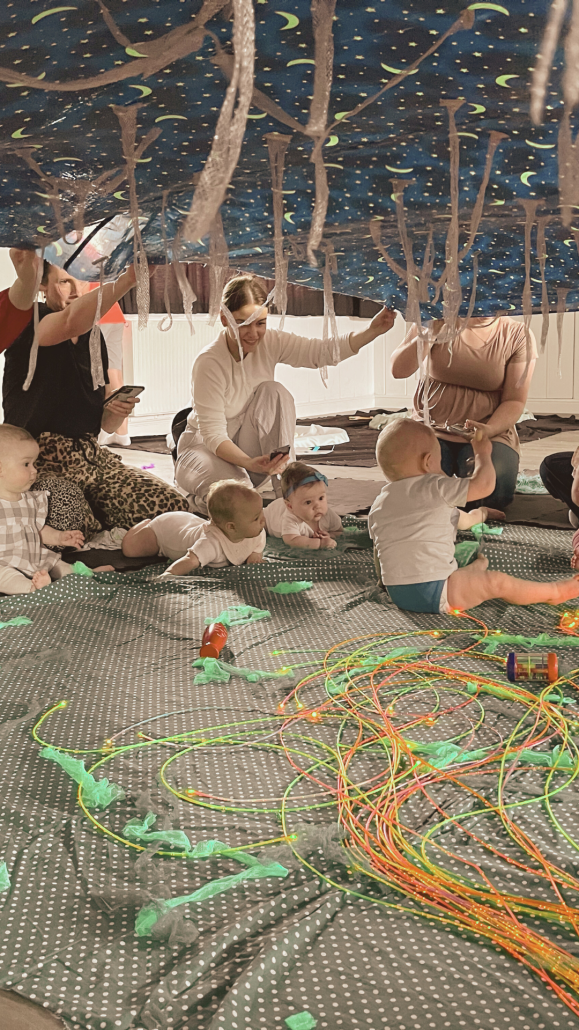
At Adventure Babies, we turn stories into experiences your baby can feel.
Every class is designed to support your baby’s communication journey through sensory storytelling, songs, and play.
📖 Storytelling magic – Expressive voices, repetition, and rhythm help babies pick up sounds and patterns.
🎶 Songs and rhymes – These short, repetitive bursts are perfect for early speech practice.
🪶 Sensory play – When babies explore props and textures linked to a story, they start linking words to meaning (“soft”, “bumpy”, “splash!”).
👩👧 Shared joy – Babies learn best when they’re happy and connected — that giggle during story time means the magic (and learning) is happening.
The Bottom Line
Your baby doesn’t need fancy toys or language apps to develop speech — they just need you.
Your voice, your stories, your silly sound effects, and a few good books are all it takes to build the foundation for speech and communication.
So next time you’re reading that same board book for the 87th time, remember: every rhyme repeated and every giggle shared is helping your baby find their voice.
👉 Ready to see speech development in action?
Find your nearest Adventure Babies class and discover how sensory storytelling helps babies communicate with confidence — one sound, one story, one adventure at a time.