Memory & Recognition: Why Babies Love Repetition
What repeated songs and stories are really doing for your baby’s brain.
If you’ve ever wondered why your baby wants the same song again… and again… and again — you’re not alone. What might feel repetitive to an adult is actually deeply satisfying for a baby.
Repetition isn’t a lack of imagination. It’s how babies practise remembering.
Do Babies Have Memory From Birth?
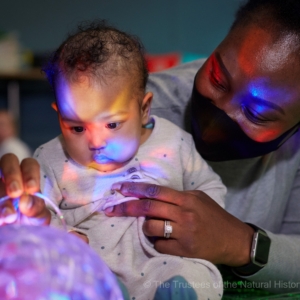
Although babies can’t tell us what they remember, research shows that memory begins developing from the very start of life. Newborns quickly learn to recognise familiar voices, faces, smells, and daily patterns.
Because of this, babies don’t experience the world as a blank slate each day. Instead, they slowly build a sense of “I’ve seen this before.”
That recognition matters. Familiar experiences help babies feel safe and settled. When they can predict what’s coming next, their nervous system relaxes — and learning becomes easier.
In short, memory supports both emotional security and cognitive development.
Why Repetition Helps Babies Learn
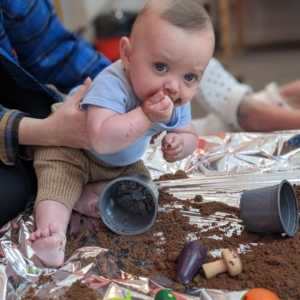
Babies learn through doing, hearing, and seeing things repeatedly. Each repetition strengthens the connections in the brain that support memory, attention, and understanding.
When babies experience the same song, phrase, or action over time:
-
they begin to recognise patterns
-
they anticipate what will happen next
-
they start to join in physically or vocally
For example, a baby who hears the same action song each week may start to smile before the chorus or move their hands before the action begins. That moment of anticipation is memory at work.
Repetition also helps babies understand cause and effect — when this happens, that follows — which is a key part of early thinking.
Adventure Babies
Repetition in Adventure Babies Classes
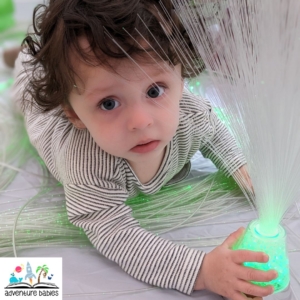
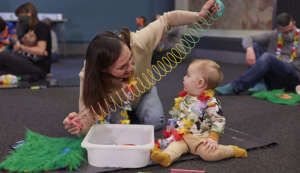
At Adventure Babies, repetition is used intentionally, not accidentally.
Each class includes:
-
familiar characters and story themes
-
repeated songs and rhymes
-
predictable moments within the session
Because babies recognise the structure, they feel confident exploring within it. Over time, many babies begin to respond more actively — watching closely, reaching out, or reacting before a moment arrives.
This gentle predictability allows babies to enjoy new sensory experiences without feeling overwhelmed, while quietly strengthening memory and recognition skills.
Adventure Babies
Supporting Baby Memory at Home
You don’t need to add anything extra to support baby memory development — you’re probably doing it already.
Simple ways to help include:
-
rereading favourite books without worrying about variety
-
using the same words or gestures for familiar routines
-
pausing and noticing when your baby anticipates what comes next
Those tiny pauses, smiles, and movements are signs that your baby is remembering and recognising — even if it doesn’t look dramatic.
For further reading, BookTrust UK highlights how repetition supports early communication, attention, and enjoyment of books from infancy:
👉 https://www.booktrust.org.uk
Why Repetition Really Matters
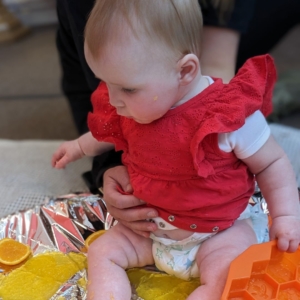
Repetition helps babies build memory, confidence, and understanding of their world. Just as importantly, it reassures parents that doing the same thing again isn’t wasted effort.
In Adventure Babies classes, repetition becomes something joyful — familiar stories, shared moments, and growing recognition week by week.
Because for babies, repetition isn’t boring.
It’s how learning begins.