When Should I Start Reading to My Baby? We’ve Been Championing It Since 2013
When should I start reading to my baby? It’s one of the questions we hear more than almost any other at Adventure Babies. New parents often wonder whether there’s any point reading to a newborn who can’t follow a story, turn the pages or even focus on the pictures for very long.
This month, we felt a huge sense of pride when a major UK report gave exactly the answer we’ve believed for more than thirteen years.
The Education Committee’s new Reading for Pleasure report recommends that children should experience books from birth and even suggests every child should receive a library card as early as possible. It recognises that a lifelong relationship with reading begins long before children can read independently. You can read the full report on the UK Parliament website.
For us, this wasn’t surprising.
It was encouraging.
Since 2013, Adventure Babies has built every class around the idea that babies deserve stories from the very beginning of life.
When should I start reading to my baby?
If you’re asking yourself, when should I start reading to my baby? the answer is wonderfully simple.
From birth.
Not because your newborn understands the words on the page, but because they understand something even more important.
They know your voice.
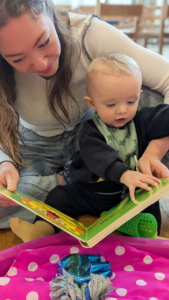
Long before babies understand language, they learn from rhythm, expression, repetition and connection. Every time you cuddle together with a book, your baby hears the patterns of speech, watches your face and begins to associate books with comfort, security and love.
Those early experiences become the foundations for language, communication and a lifelong enjoyment of reading.
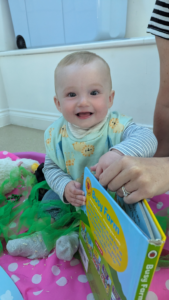
That’s why you’ll often see tiny babies at Adventure Babies lying happily on their grown-up’s lap while we bring stories to life around them.
They’re learning far more than most people realise.
We’ve trusted this approach since 2013
When Adventure Babies began, the baby class world looked very different.
Many people believed books could wait until babies were older. Reading was often seen as something you introduced once children could sit still, point at pictures or understand the story.
We saw things differently.
As experienced early years educators, we knew babies learn through every interaction they have with the people who love them. A story isn’t simply words on a page. It’s eye contact. It’s shared smiles. It’s hearing different voices. It’s feeling a page between tiny fingers. It’s watching bubbles float through the air as a story unfolds.
That’s why sensory storytelling has always been at the heart of our classes.
Every puppet, every parachute, every light projection and every sensory activity exists for one reason: to help babies experience books in ways that match how they naturally learn.
Now, national guidance is moving in the same direction.
Reading is about far more than learning words
One of the reasons we love the new report is that it looks beyond reading as an academic skill.
Reading for pleasure helps children develop imagination, empathy, wellbeing and relationships alongside literacy. Those benefits begin long before children recognise letters or say their first words.
That reflects exactly what we see every week.
Some babies watch every page intently.
Others crawl towards the puppet before the story even starts.
Some spend most of the session fascinated by one particular prop.
Every one of those babies is taking part.
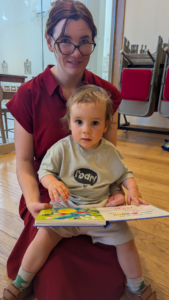
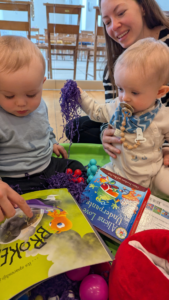
Parents sometimes apologise because their baby grabs the book, chews the corner or crawls away halfway through the story.
We always smile.
That’s what reading with babies really looks like.
Books aren’t precious objects that have to stay perfect. They’re tools for exploration, conversation and connection.
Why stories matter before babies can talk
People sometimes assume language begins with first words.
In reality, babies spend months learning the building blocks of communication before they ever speak.
They listen to tone.
They notice pauses.
They recognise familiar sounds.
They begin to predict what comes next when they hear the same story again.
Repetition strengthens those pathways inside the developing brain. Familiar books also help babies anticipate language, recognise patterns and build memory.
None of that requires them to understand every word.
It simply requires loving adults who keep sharing stories.
That’s reassuring news for parents who worry they’re “doing it wrong.”
There isn’t a perfect way to read with a baby.
There is only your way.
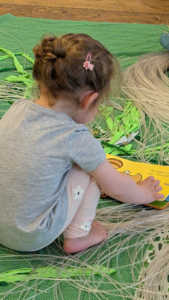
Why sensory storytelling makes such a difference
At Adventure Babies, books never stay on the page for very long.
A snowy scene becomes swirling white scarves.
A jungle fills with animal sounds and textured materials.
A seaside story turns into splashing water play.
Those experiences aren’t simply entertaining.
They help babies connect words with real experiences using all of their senses.
When babies hear “soft”, they might stroke feathers.
When they hear “rain”, they may feel cool water droplets.
When a character hides, babies begin discovering early concepts like anticipation and object permanence.
That combination of stories, sensory exploration and responsive interaction makes books memorable long before children can read independently.
Parents are learning too
One of the loveliest things about our classes is watching parents relax.
Many arrive believing they need to read every word perfectly.
They worry if their baby wriggles away.
They apologise when pages get turned too quickly.
Then they discover something wonderful.
Reading with babies isn’t a performance.
It’s a conversation.
Sometimes that conversation looks like laughter.
Sometimes it looks like pointing.
Sometimes it looks like chewing the book.
All of it counts.
Parents often leave with a completely different understanding of what shared reading can be, and that confidence carries into everyday life at home.
We feel incredibly proud
Running a small business rarely gives you time to stop and reflect.
There’s always another class to plan, another theme to write or another box of sensory equipment to unpack.
Reading this report gave us one of those rare moments.
For over thirteen years, we’ve trusted the research, our teaching experience and the thousands of babies who’ve joined us every week.
We’ve watched babies fall in love with stories before they could sit.
We’ve watched parents discover the joy of reading without pressure.
We’ve watched books become part of family life from the very beginning.
Seeing national recommendations echo those same principles feels incredibly special.
Not because it proves we were right.
Because it means more babies may now have the chance to experience books from birth.
Join us on the adventure
If you’ve been wondering when should I start reading to my baby, we hope you now know the answer.
Today.
Your baby doesn’t need to understand every word.
They don’t need to sit still.
They don’t even need to reach the end of the story.
They simply need you.
At Adventure Babies, we’ve been celebrating stories, sensory play and early development since 2013. Every class is designed to help babies build positive relationships with books while giving parents the confidence to enjoy reading together from the very beginning.
Whether your baby is a few weeks old or taking their first steps, we’d love to welcome you into our community.
Continue your reading
You might also enjoy:
- How Babies Learn
- Why Reading to Your Baby Matters
- Our Original Adventure Babies Books
- Find an Adventure Babies Class Near You
If you would like to know more about what Parliament think about reading for pleasure click here!