When Do Babies Start Playing with Other Babies?
(A guide to baby social development and first friendships)
Have you ever watched your baby lock eyes with another little one and burst into a gummy grin? That’s not just adorable — it’s social development in action!
Parents often ask, “When do babies start playing with other babies?” The answer might surprise you: babies begin noticing, copying, and responding to one another long before they can talk or walk.
At Adventure Babies, we see this magic happen every week in our storytelling and sensory play sessions — tiny humans fascinated by each other’s faces, reaching out curiously, or squealing in delight during bubbles. But when exactly does it start, what does it mean for your baby’s development, and how can you encourage it?
👶 When Do Babies Start Playing with Other Babies?
Babies typically start to notice other babies around 4 to 6 months old. They might smile, stare, or make happy sounds when another baby catches their attention.
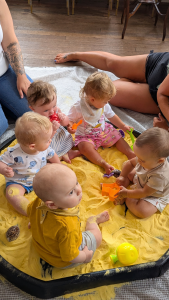
By 6 to 12 months, you’ll see the beginnings of what experts call parallel play — when babies sit or play next to each other, watching, copying, and learning through observation.
It might not look like “playing together” just yet, but these little moments are incredibly important. They mark the start of your baby’s journey toward real friendships and social understanding.
Here’s a rough timeline:
-
0–3 months: Babies focus on faces — especially yours! They learn to read expressions and respond with smiles and coos.
-
4–6 months: Babies notice other babies and may reach out or giggle at them.
-
6–12 months: Parallel play begins. Babies explore side by side, copying one another’s movements.
-
12–18 months: Toddlers start interacting more directly — offering toys, sharing giggles, or beginning to take turns.
So, if your baby stares lovingly (or curiously!) at another baby in class, that’s perfectly normal — and the first spark of social awareness.
🧠 Why Is Playing with Other Babies Important?
Early social play helps your baby develop so much more than social confidence. When your baby watches, copies, and responds to others, they are also:
-
Building communication skills — before they can even talk
-
Developing empathy by noticing others’ emotions
-
Strengthening self-regulation — learning to wait, take turns, and share space
-
Boosting confidence in new environments
These tiny interactions are the foundation of all later communication and relationships. Every giggle, wave, or copied action is a mini social experiment!
💛 How to Support Your Baby’s Social Development
Wondering how to help your baby start playing with other babies? You don’t need to plan “baby playdates” — just give them opportunities to observe and engage naturally.
Here are a few simple ways:
-
Join a baby group or sensory class: Shared experiences help babies learn from one another through play and movement.
-
Encourage face-to-face time: Babies love watching other faces — it’s how they learn to read emotions.
-
Play interactive games: Peekaboo, nursery rhymes, and reading together all support social understanding.
-
Model sociability: Smile, wave, and chat with others in front of your baby. They’ll copy your cues.
-
Follow their lead: Some babies are little social butterflies, others prefer quiet watching — both are okay.
You might also enjoy our post on talking to your baby for language development, which shows how social interaction helps speech too.
✨ How Adventure Babies Classes Support Social Development
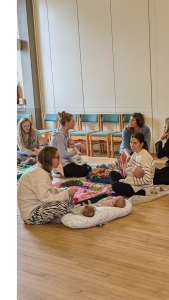
At Adventure Babies, our sensory storytelling classes are designed to gently encourage early social interaction in a warm, supportive environment.
-
Group stories and songs bring babies together in rhythm and movement.
-
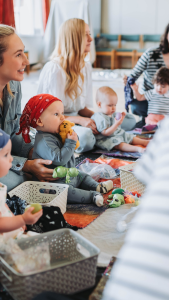
Sensory play activities let babies explore side by side, sharing curiosity and copying one another.
-
A relaxed atmosphere helps even shy babies gain confidence as they see familiar faces each week.
-
Parent connection time gives you space to chat, compare notes, and feel part of a community.
We regularly see babies recognising each other week to week — squealing, waving, or crawling toward their new little friends. Those moments are pure joy.
One parent told us:
“My son spotted the same baby from last week and his whole face lit up — they reached out for each other during storytime!”
That’s baby friendship in its earliest (and cutest) form.
🍼 When Do Babies Start Playing Together for Real?
True cooperative play — where babies interact intentionally and share toys or games — usually starts around 18 months to 2 years old.
Until then, parallel play (side-by-side fun) is perfectly normal and hugely beneficial. Your baby learns from simply watching and copying others — a vital step before full social play.
❤️ The Bottom Line
So, when do babies start playing with other babies? Usually around 6 months, though every child develops at their own pace. Even before that, babies are watching, learning, and beginning to connect with others in their own beautiful way.
Supporting baby social development doesn’t need to be complicated — just time, play, and gentle interaction.
If you’d love to give your baby a fun, social environment that supports early friendships and developmental milestones, come and join an Adventure Babies class near you Because every story shared is a story together. 💛