
The Wriggle Before the Roll: Helping Your Baby Move With Confidence
Your baby lifts both legs, swipes at a toy and twists sideways… then flops back down. Meanwhile, someone in your baby group announces that theirs has started rolling, and suddenly those little wriggles feel like a very long rehearsal.
If “how to encourage my baby to reach and roll” sits on your mental question list, start here: the movements before the milestone deserve attention too. Bringing hands together, lifting legs and reaching towards feet all help babies develop movement control. A complete roll makes a lovely video, but plenty of useful practice happens before that camera-ready moment.
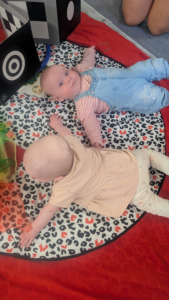
The movement you might be overlooking
Watch your baby playing on their back. Perhaps they bring their hands together over their chest, lift their knees or discover that their feet make excellent entertainment.
Physiotherapists call the imaginary line down the centre of the body the “midline”. Bringing hands towards that centre gives babies opportunities to explore their hands together and coordinate movements. Later, reaching towards knees and feet adds another challenge.
According to Leeds Community Healthcare’s advice on early movement, lifting arms and legs helps babies develop muscle control. So that enthusiastic toe inspection belongs in the development story, even if nobody puts it on a milestone card.
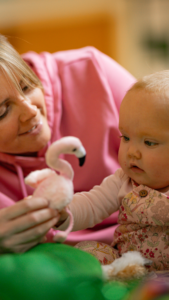
How to encourage my baby to reach and roll: start with an achievable invitation
Choose one lightweight, age-appropriate toy and offer it near the middle of your baby’s body while they lie on their back. Give them time to look, lift an arm and try a reach.
Once they show interest, offer it slightly to one side, then try the other side during another turn. Keep it close enough to make success possible rather than repeatedly moving it away. Nobody enjoys chasing a prize that keeps retreating.
For a younger baby, looking towards your face or following a toy may be the starting point. Match the invitation to what they can manage today; independent reaching takes time to develop.
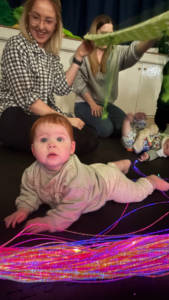
Why reaching takes more than an outstretched hand
During tummy play, reaching creates a surprisingly complicated job. To lift one hand towards a toy, your baby needs to support more of their weight through the other arm.
That means a reach involves balance and shoulder stability as well as interest in the toy. East Lancashire Hospitals’ physiotherapy guidance explains how babies progress from propping on their elbows to shifting weight and reaching with one hand.
Wait until your baby can comfortably support themselves before adding that challenge. A favourite toy nearby can provide a reason to try, while your face at floor level gives them someone to share the effort with.
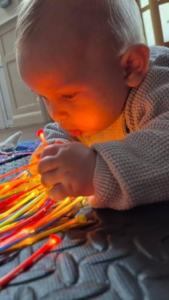
Side-lying: a different way to play
Tummy time gets plenty of attention, but supervised side-lying offers another useful position. It can help babies bring their hands together, explore toys in front of them and experience movements involved in rolling. While your baby stays awake and comfortable, gently help them onto their side on a firm floor mat. Stay beside them, support them as needed and offer a toy around chest level. Try the other side on another occasion, without forcing a position they resist. Toy height matters here. East Lancashire’s guidance suggests placing the toy around tummy level to encourage forward reaching, rather than so high that the baby arches backwards to find it. A small change in your setup can make play easier.
Tummy time can start with you
Some babies greet the playmat with the enthusiasm most adults reserve for a tax return. Happily, tummy time can begin on your chest while you stay fully awake and alert.
The NHS guide to keeping babies active recommends starting little and often, then gradually building up. Short, comfortable opportunities give your baby a chance to practise without turning every attempt into an endurance event.
As they become ready for floor play, get down beside them and offer your face, voice or a suitable toy as something interesting to look towards. Stop for a cuddle or change of position when they need a break. Always supervise tummy time, keep their airway clear and put them on their back for sleep.
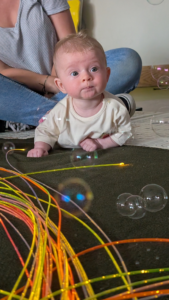
Give the wriggle somewhere to go
When thinking about how to encourage my baby to reach and roll, consider the space around them as well as the toy in front of them. A clear floor mat lets babies kick, turn and explore movement freely.
Seats and bouncers can help families manage everyday life, but they offer different opportunities from floor play. Build in regular chances to move outside them while your baby stays awake and you supervise.
Cambridgeshire’s children’s physiotherapy team suggests placing an interesting toy to the side to encourage reaching and rolling. Start with an invitation rather than trying to pull your baby through the movement. If you would like to learn how to support a roll physically, ask your health visitor or physiotherapist to demonstrate.
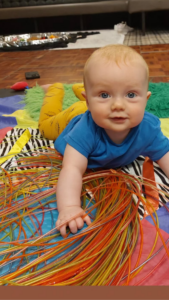
Stories give movement a reason
A baby doesn’t need to understand a whole story to find a character interesting. Try holding a suitable story prop where they can see it, pausing for their response and offering it within reach.
You can keep the same simple idea at home: introduce a character, let your baby look, then make room for their attempt to touch it. Treat a glance or an arm movement as something worth responding to.
Our Adventure Babies sensory storytelling classes bring stories, props and sensory exploration together. With you nearby, little ones can enjoy opportunities to look, reach and explore at their own pace.
When should I ask for advice?
Babies develop at different rates, and premature babies need their corrected age taken into account. Rolling from tummy to back also involves a different movement from rolling the other way, so mastering one direction doesn’t automatically mean mastering both.
Speak to your health visitor or GP if your baby isn’t reaching for toys around six months, hasn’t started rolling by around nine months, or you feel concerned sooner. Seek advice promptly if they lose a skill or consistently move one side much less than the other. East London NHS’s developmental guidance explains these signs and how corrected age works.
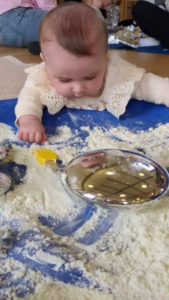
Make room for the almost
Next time your baby reaches, wobbles and lands exactly where they started, notice what they attempted. Did their hand travel further, their head turn towards the toy or their legs lift to join in?
Supporting movement can fit into ordinary moments together: a little floor play, an achievable reach and time to respond. You don’t have to make every waking minute productive.
For stories worth wriggling towards and company for you along the way, find your local Adventure Babies class. The almost-roll deserves an audience too.