
How to Develop Your Baby’s Fine Motor Skills: Why Crinkly Things Are Doing More Than You Think
How to Develop Your Baby’s Fine Motor Skills
Have you ever handed your baby an expensive toy only for them to become completely fascinated by the crinkly wrapper, the corner of a muslin, or the label on a blanket?
You’re not alone.
Babies have an incredible talent for ignoring the thing we expected them to love and becoming utterly absorbed by something much simpler. While it might seem puzzling, there’s actually a brilliant developmental reason behind it.
Every scrunch, squeeze, grab and crinkle is helping your baby build one of the most important foundations for future learning: fine motor skills.
The wonderful thing is that babies don’t need expensive gadgets or complicated exercises to develop these skills. They simply need opportunities to explore with their hands.
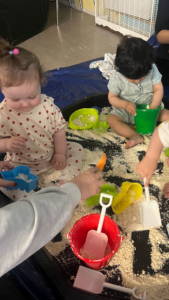
What are fine motor skills?
Fine motor skills are the small, precise movements we make using the muscles in our hands, fingers and wrists.
Unlike gross motor skills, which involve large movements such as rolling, crawling and walking, fine motor skills allow babies to manipulate objects with increasing accuracy.
These skills develop gradually throughout infancy as babies learn to:
- open and close their hands
- reach accurately for objects
- grasp and release toys
- move items from one hand to the other
- use their fingers independently
- explore different textures.
It may seem like a long way from squeezing a crinkly scarf to writing their name, but these early experiences are exactly where that journey begins.
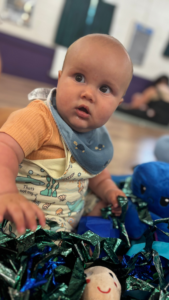
Why are babies obsessed with crinkly things?
If your baby seems mesmerised by anything that makes a crunchy sound, they’re behaving exactly as nature intended.
Crinkly materials offer something researchers call multi-sensory feedback.
When your baby squeezes a crinkly fabric, several things happen at once.
Their fingers feel resistance.
Their ears hear the sound they’ve created.
Their eyes watch the material change shape.
Their brain connects all of these sensations together.
This combination is incredibly rewarding for a developing brain because it teaches an important lesson:
“When I move my hands, something happens.”
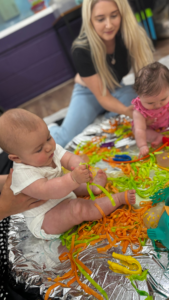
Tiny hands are working incredibly hard
Those little fingers might look effortless, but every movement requires hundreds of tiny messages travelling between the brain, nerves and muscles.
Each time your baby reaches for a sensory scarf or grasps a textured toy, they are learning how much pressure to use.
Too little and it slips away.
Too much and it crumples.
Gradually, the brain becomes better at judging exactly how much force is needed.
Occupational therapists call this motor planning—the brain’s ability to organise and refine movement through practice.
The more varied opportunities babies have to explore safely, the more efficient these pathways become.
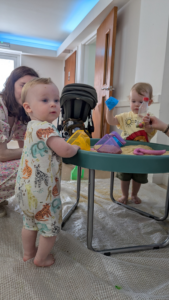
Fine motor development starts much earlier than many parents realise
Many people think fine motor skills begin when babies start picking up toys.
In reality, development begins from birth.
During the first few months, your baby’s grasp is mostly reflexive.
As they grow, those automatic movements slowly become intentional.
You’ll probably notice them:
- staring at their own hands
- bringing their hands together
- batting at hanging toys
- gripping your finger
- grabbing your hair (with surprising strength!)
- reaching towards interesting textures.
Every one of these moments is an important developmental milestone.
Why texture matters so much
Different textures encourage different hand movements.
Soft fabrics encourage gentle grasping.
Silky materials slide through tiny fingers, encouraging babies to adjust their grip.
Knobbly textures wake up sensory receptors in the skin.
Crinkly materials invite repeated squeezing.
Natural materials such as feathers, leaves or pinecones offer completely different sensory information again.
This variety helps the brain build increasingly detailed maps of how the hands move and respond.
That’s one reason sensory play is so valuable during the first year.
It’s never just about keeping babies entertained.
It’s about giving the brain rich experiences to learn from.
The surprising link between fine motor skills and communication
One of the most fascinating discoveries in child development is that movement and communication are closely connected.
The areas of the brain involved in controlling hand movements develop alongside those responsible for speech and language.
As babies explore books, reach for puppets, point at pictures and turn pages, they’re doing far more than exercising their fingers.
They’re also building shared attention, curiosity and opportunities for conversation.
When you narrate what they’re touching—
“That’s crunchy!”
“Can you hear the crinkle?”
“You’ve found the soft rabbit!”
—you are helping connect movement with language.
This is one of the reasons sensory storytelling is so powerful.
Books become something babies don’t just listen to—they experience with every sense.
Simple ways to support your baby’s fine motor development
The best activities are often the simplest.
Offer a variety of safe textures to explore.
Allow plenty of floor time where babies can freely reach and move.
Read interactive books with flaps, different materials and interesting pictures.
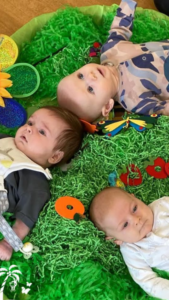
Let babies explore scarves, ribbons, textured balls and sensory fabrics under close supervision.
Sing action songs that encourage hand movements such as clapping, waving or reaching.
Give babies time.
Resist the temptation to constantly place toys directly into their hands. The reaching itself is where much of the learning happens.
Why books are brilliant for little hands
Reading together is often thought of as a language activity, but it’s equally valuable for fine motor development.
Even very young babies begin reaching towards pages.
As they grow, they practise:
- touching pictures
- lifting flaps
- turning thick board-book pages
- pointing at familiar objects
- holding books independently.
Every story becomes another opportunity to strengthen tiny hands while building a lifelong love of reading.
At Adventure Babies, books are always at the heart of what we do because stories naturally encourage babies to explore with both their minds and their bodies.
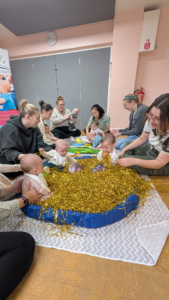
During our sensory storytelling adventures, babies reach for props, squeeze different textures, hold scarves, wave ribbons, explore messy play, grasp puppets and investigate exciting sensory treasures inspired by each story. They often don’t realise they’re developing important skills because, to them, they’re simply having fun.
When should I be concerned?
Babies develop at different rates, so it’s important not to compare your child with others.
Some babies spend weeks fascinated by opening and closing their hands before showing much interest in toys.
Others are eager to grab everything within reach.
If you’re ever worried about your baby’s development, speak to your health visitor or GP. They can offer reassurance or advise whether further assessment is needed.
Most importantly, remember that development isn’t a race.
The goal isn’t to make babies achieve milestones earlier.
It’s to give them rich, joyful experiences that allow development to unfold naturally.
The magic is in the little moments
It’s easy to overlook the tiny things babies do every day.
A squeeze.
A scrunch.
A curious poke.
A determined grab.
But these moments are anything but ordinary.
They’re how babies learn about their bodies, their environment and the relationship between their actions and the world around them.
So the next time your baby spends ten minutes happily fascinated by a crinkly scarf instead of the expensive toy you carefully chose, remember this:
They’re not just playing.
They’re building strength, coordination, concentration, problem-solving skills and confidence—one tiny crinkle at a time.
And sometimes, the smallest movements are laying the foundations for the biggest adventures yet.