How Do Babies Develop Memory? The Magic of Storytelling and Sensory Play
Ever wondered how your baby seems to know that bedtime means milk, cuddles, and their favourite story — or why they light up the second you start singing that song you’ve sung approximately 784 times? That’s memory at work!
At Adventure Babies, we see memory magic unfold every week through our stories, songs and sensory play. But what’s really happening in those tiny brains? Let’s take a peek.
🧠 How Do Babies Develop Memory?
Babies are born ready to learn, but memory develops gradually as the brain’s connections multiply at lightning speed. In fact, during the first year, a baby’s brain makes up to a million new neural connections every second. (No wonder they need so many naps.)
At first, babies experience the world mainly through sensory memory — sounds, smells, textures, and faces. They may not “remember” events the way adults do, but they start forming associations: Mummy’s face = safety, Daddy’s song = fun, that squeaky duck = bath time!
Here’s roughly how memory develops:
-
By 6 months: Babies can remember simple actions or faces for about a day.
-
By 9 months: They can recall routines for a few days.
-
By 2 years: Their memory really takes off — they start recalling people, places and favourite stories from weeks (even months) ago.
That’s why your toddler suddenly insists on the same bedtime story every single night. Their memory is growing, and repetition strengthens it.
📚 Why Storytelling Helps Build Memory
Stories are the ultimate memory builders — especially when they involve all the senses.
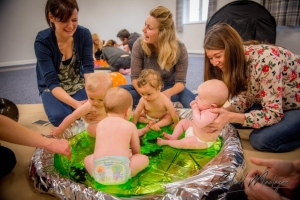
When your baby listens to a story at an Adventure Babies class, they’re not just hearing words. They’re experiencing a full sensory adventure:
✨ Sight – bright colours and moving props bring the story to life
👂 Sound – rhythm, rhyme and repetition help patterns stick
👃 Smell – scents create powerful memory triggers (yes, even a hint of lavender can take them back to that bedtime story)
🖐️ Touch – textures connect words to real-world sensations
💞 Emotion – feeling safe and loved during a story cements the memory
The more senses involved, the stronger the memory trace becomes. That’s why our storytelling sessions are so much more than just words — they’re immersive experiences that help little brains learn how to remember.
💡 Easy Ways to Support Your Baby’s Memory at Home
You don’t need a psychology degree to nurture your baby’s memory — just a bit of playfulness and a lot of repetition!
Here are a few ideas:
-
Repetition, repetition, repetition – Babies learn through doing things (and hearing things) again and again. It’s not boring — it’s brain-building!
-
Talk about your day – Even if they can’t talk back, describing what’s happening helps link experiences with words.
-
Play hide-and-seek – Hiding toys teaches object permanence: “Just because I can’t see it doesn’t mean it’s gone.”
-
Add sensory cues – A familiar smell, song or touch helps store and retrieve memories later.
-
Tell stories with real objects – Like we do at Adventure Babies! Hold the toy duck as you read That’s Not My Duck, and watch recognition spark.
🌟 The Adventure Babies Difference
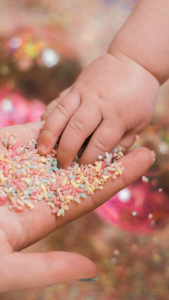
At Adventure Babies, we blend storytelling, sensory play and connection to give your little one’s memory a workout disguised as pure fun.
Week by week, babies begin to remember:
-
The rhythm of a song,
-
The feeling of the sensory materials,
-
The joy of a familiar face,
-
And eventually — their favourite story moments.
These early memory-building experiences form the foundation for language, imagination, and learning later on.
So next time your baby wiggles excitedly when they hear the first line of a story, know that their brain is lighting up with recognition. That’s not just cute — it’s cognitive development in action.
Curious to see how storytelling can boost your baby’s memory?
Find your nearest Adventure Babies class