Baby Brain Development 0–1 Year: What’s Really Happening (and How to Support It)
If you’ve ever found yourself watching your baby—really watching them—you’ve probably wondered what on earth is going on inside their little head.
They’re staring at a shadow like it’s the most fascinating thing they’ve ever seen. Chewing their hand with intense focus. Dropping the same toy again and again like it’s part of some grand experiment.
It can look simple on the outside.
But when it comes to baby brain development in the first year, something extraordinary is happening beneath the surface.
Because in that first year of life, your baby’s brain is developing faster than it ever will again. Scientists estimate that babies form over a million neural connections every second in early life. A million. Every second.
It’s no wonder so many parents start asking:
“Am I doing enough to support my baby’s brain development?”
Let’s take the pressure off that question—and replace it with something much more reassuring.

How Babies Learn in the First Year
When we talk about how babies learn in the first year, it’s easy to assume it’s about teaching.
It’s not.
Your baby isn’t learning through structured lessons or complicated activities. They’re learning through you. Through interaction, connection, and everyday experiences.
Every time your baby makes a sound and you respond, something important is happening in their brain. Every time they catch your eye and you smile back, every time you copy their little noises or talk to them as you go about your day, you’re building neural connections.
This is known as “serve and return” interaction—and it’s one of the most powerful ways to support baby brain development.
Your baby “serves” with a look, sound, or movement.
You “return” with your voice, your expression, your attention.
And in that simple back-and-forth, their brain is wiring itself for communication, relationships, and emotional security.
Why Repetition Is Key to Baby Brain Development
If you’ve ever wondered whether you should be doing more variety with your baby, you’re not alone.
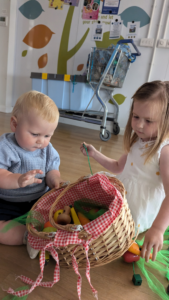
But when it comes to baby brain development activities, repetition matters far more than constantly introducing something new.
In the early months, your baby’s brain creates more connections than it will eventually keep. Over time, it strengthens the ones that are used and lets go of the ones that aren’t.
So when your baby wants the same song again…
Or the same story on repeat…
Or seems obsessed with doing the same movement over and over…
They’re not bored.
They’re learning.
Repetition is how the brain says, “this matters—keep this connection.”
What Helps Baby Brain Development the Most?
Parents often search for the best ways to support their baby—but the truth is, the most powerful things are also the simplest.
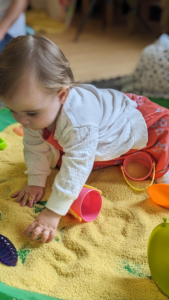
Babies learn through their senses. Through touch, sound, movement, light, and rhythm. They learn by exploring, by being held, by listening to your voice, by experiencing the world in a way that feels safe and engaging.
When multiple senses are involved at once, the brain forms stronger connections. This is why experiences like music, movement, and sensory play are so effective—they give your baby’s brain more than one way to understand what’s happening.
So if you’re wondering what helps baby brain development 0–1 year, it’s not about doing more.
It’s about:
- Connection
- Repetition
- Sensory-rich experiences
- Feeling safe and secure
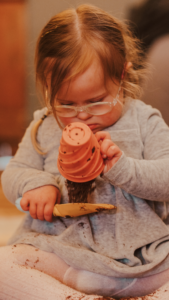
The Role of Emotional Security in Brain Development
One of the most important (and often overlooked) parts of newborn brain development stages is emotional safety.
When your baby feels calm, connected, and secure, their brain is in the best possible state for learning. They’re open to exploring, observing, and taking everything in.
When they feel overwhelmed or unsettled, their brain shifts focus. Learning pauses while they regulate.
Which means your presence—your responsiveness, your voice, your touch—isn’t just comforting.
It’s essential for healthy brain development.
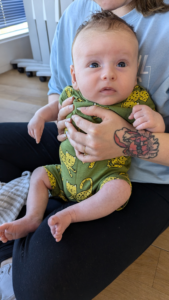
How to Support Your Baby’s Brain Development (Without the Pressure)
If you’re worrying about whether you’re doing enough, this is your reminder to take a breath.
Because supporting your baby’s brain development doesn’t mean filling your day with endless activities.
It looks like:
Talking to them.
Responding to them.
Repeating songs and stories.
Letting them move and explore.
Being present in the small moments.
That’s what builds the brain.
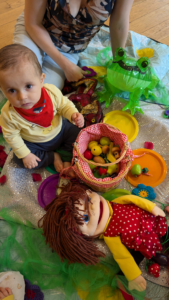
Where Adventure Babies Comes In
At Adventure Babies, everything we do is designed around how babies actually learn.
Our classes are built to support baby brain development from 0–1 year through sensory storytelling, music, repetition, and connection. Each session is carefully designed to engage your baby’s senses while giving you the chance to interact, respond, and bond in a relaxed, supportive environment.
It might feel like a lovely class (and it is), but underneath it there’s real developmental science shaping every moment.
A Final Reassurance
If you’ve found yourself Googling “how to support baby brain development” at 2am—you’re not alone.
But here’s the truth.
You don’t need to optimise every moment.
You don’t need to be perfect.
You just need to keep showing up, connecting, and sharing the world with your baby.
Because when it comes to baby brain development in the first year, that is what matters most 💛