What Should You Read to a Newborn Who Cannot Follow the Story Yet?
You settle down with your newborn and open a lovely book. Halfway through the first page, they stare past your shoulder, hiccup and close their eyes.
Excellent. A demanding audience.
It’s natural to wonder whether reading makes any difference when your baby can’t follow the story. Should you choose something educational? Stick to black-and-white pictures? Wait until they show more interest?
The best books to read to a newborn offer a comfortable starting point for sharing your voice, attention and closeness. A gripping plot can wait.
As your baby grows into a curious one-year-old and then a busy toddler, those early reading moments can grow with them.
What does a newborn get from a story?
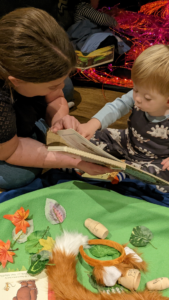
Your newborn won’t understand why the bear has lost his hat. However, they can hear your voice, experience its rhythm and enjoy being close to you.
Reading gives you something to say when you’re tired and conversation feels surprisingly difficult. The words provide a starting point, while your baby experiences the sound and pace of language.
The NHS encourages sharing books from an early age. It’s an opportunity to spend time together and introduce the sounds of spoken language.
A newborn doesn’t need to understand the whole experience to take something from it. Their interest may begin with your voice long before they pay much attention to the page.
The best books to read to a newborn: what to look for
You don’t need a perfect first library. Start with a few books that offer different ways to share a moment together.
Bold pictures with clear contrast
Black-and-white books can give young babies something visually clear to explore.
Look for simple shapes, distinct outlines and uncluttered pages. Hold the book comfortably nearby, then notice whether your baby looks towards a particular picture.
BookTrust recommends trying black-and-white books in the early months, while babies’ vision develops. Colourful books still have a place; you can choose both.
There’s no need to move the page constantly or persuade your baby to keep looking. A brief glance gives you a starting point.
Rhymes you enjoy saying aloud
A gentle rhyme can make reading feel easier, especially when sleep deprivation has reduced your conversational range.
Choose words with a pleasing rhythm or a repeated phrase. Your voice will often change naturally as you read them.
Try slowing down at the end of a line. Leave a small pause before repeating a familiar sound.
You might notice your baby become still, move their mouth or look towards you. Equally, they may continue watching the curtains.
Their response can vary from one reading to the next.
Simple picture books
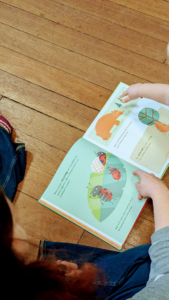
A page showing a dog, a face or a familiar object gives you something easy to talk about.
You can read the printed words or add a short comment: “There’s the dog. He’s got floppy ears.”
For a newborn, that might be plenty. An older baby may reach towards the picture, while a toddler might point, make a sound or supply a word.
The same book can offer different experiences as your child grows.
A book you actually like
Your baby’s bookshelf can include something you enjoy reading aloud.
A favourite poem, a familiar childhood story or a few lines from your own book can all give you words to share. BookTrust’s early reading tips encourage adults to read a wide range of material aloud to babies.
You don’t need to buy something new whenever your baby’s age changes. Enjoying the experience yourself can make it easier to return to.
Here’s a useful distinction: hearing a story and following one are different skills
Adults often judge reading by whether a child understands what happens next.
Babies have earlier things to explore.
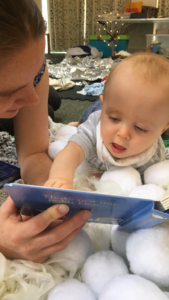
A newborn may listen to your voice. Several months later, your baby might investigate how a page moves or watch your mouth as you make an animal sound.
Towards toddlerhood, they may begin connecting familiar pictures, words and actions.
These experiences overlap, and children don’t follow a tidy reading timetable. You can adjust the book-sharing to the child in front of you.
Our guide to how babies learn explores how attention, movement and relationships work together during everyday discoveries.
You can read one page and stop
Somewhere along the way, many adults absorb an unofficial rule: opening a book means finishing it.
Your baby hasn’t signed up to that arrangement.
Stay on a picture they seem interested in. Repeat a sound they enjoy. Close the book when they need a feed or a break.
BookTrust’s guidance for parents of babies encourages taking time to look at and talk about pictures. Shared reading can support closeness and early communication without becoming a performance.
Finishing three pages peacefully may suit your day beautifully. A longer story might work another time.
Let your face join the story
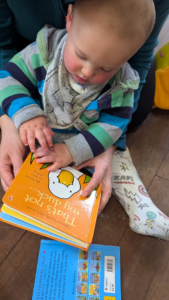
The book gives you pictures, but your baby also has a very interesting person nearby.
Lower it occasionally so they can see your face. Try a gentle “oooh”, a sleepy expression or a soft animal sound.
Pause to notice their response before continuing.
The NHS suggests fabric books, talking and face-to-face interaction during the first six months. These activities offer opportunities to explore sounds, expressions and textures together.
You don’t need a different voice for every character. Your ordinary voice already gives your baby something familiar to listen to.
How reading can change across the first two years
Use these ideas as flexible starting points rather than targets.
In the newborn weeks: keep it comfortable
Choose a settled moment and read a few lines while holding your baby safely or sitting beside them.
A clear picture, a gentle rhyme or a familiar story can all work. Follow their cues and stop when they need something else.
Some days, you’ll manage a small reading moment. Other days, feeding, changing and resting will fill the available space.
As reaching develops: make room for hands
Your baby may become interested in touching, patting and handling books.
Offer sturdy board books or suitable fabric books, checking regularly for damage and loose pieces. Help them explore without expecting careful page-turning.
Read a little, describe what they notice and give them time to investigate.
A baby who grabs the book has found another way to take part.
As your baby becomes more mobile: welcome movement
An older baby may crawl away halfway through a sentence, then return for a favourite picture.
Try a short book, an interesting sound or a page you can enjoy together on the floor. Avoid chasing them with the story or insisting they sit still.
Movement and book-sharing can share the same afternoon.
From around one to two: leave room to join in
Simple repeated phrases, familiar objects and sturdy flaps can offer toddlers something to anticipate or investigate.
Pause before a favourite word. Follow a pointing finger. Add a comment instead of asking questions about every picture.
Your toddler might request the same book repeatedly. Familiarity gives them opportunities to notice more and contribute in new ways.
Why your baby might love the book you find boring
You know exactly what happens on the next page. Your baby is still building that familiarity.
Repeating a book gives them another chance to hear its sounds, explore its pictures and recognise the sequence.
Change one small thing if you fancy it: whisper a familiar line, linger over another picture or let your child choose where to begin.
There’s no need to replace a favourite just because you’ve memorised it. You can also offer another book and see what catches their interest.
A well-loved story can remain useful long after the adult reading it develops strong opinions about the ending.
Bring the story into play
Once you start thinking beyond the printed words, a book can become a small shared adventure.
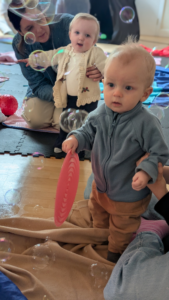
For a story about an owl, add a soft hoot. With an older baby, offer a suitable animal toy to explore alongside the picture.
Keep props simple, age-appropriate and under close supervision. Your newborn can enjoy your voice and expression without holding anything at all.
Our Adventure Babies shop includes original books inspired by the natural world, alongside sensory storytelling resources. We created our books for our ongoing work with the Natural History Museum, and families can enjoy them at home too.
Choose the parts that suit your child today. The rest can grow with them.
Why stories sit at the heart of Adventure Babies
At Adventure Babies classes, we turn brilliant books into experiences babies can explore.
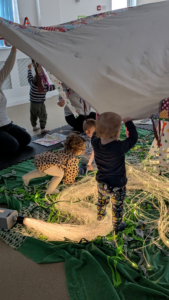
Expressive storytelling, puppets, music, movement and sensory play offer different ways to join in. A young baby might watch a storyteller’s face or listen from your lap. An older baby may reach towards a prop, while a toddler investigates an activity linked to the story.
That flexibility makes our classes special: we create a shared adventure with room for different ages, interests and abilities.
Our trained Adventure Babies leaders bring an understanding of early development to the experience, alongside a warm welcome for families.
You get ideas to take home, enjoyable time with your baby and a community where feeds, wriggles and unexpected naps belong.
What if reading feels awkward?
Talking to a newborn can feel strange at first. Reading aloud may bring back memories of school, complete with the worry that you’re doing it incorrectly.
Start with a picture and one sentence.
You can use the language you feel most comfortable speaking, share a familiar rhyme or describe what you see. A partner, grandparent or another familiar grown-up can enjoy book time too.
There’s space to find your own way.
Your baby doesn’t need polished storytelling. A comfortable moment together offers a much better starting point than worrying about your delivery.
So, which book should you choose tonight?
The best books to read to a newborn are ones you can share comfortably: clear pictures, enjoyable sounds and words that help you begin.
Pick something from the shelf. Read a little. Watch your baby and leave room for their response.
Over the next two years, that quiet listener may become the toddler who brings you a book, climbs onto your lap and firmly rejects every page except one.
If you’d like more inspiration along the way, find your nearest Adventure Babies class or Adventure Babies Book
We’d love to welcome you both into a story.