
Why Your Baby Is Emotionally Obsessed With Ceiling Fans, Fairy Lights and Trees
There’s a particular moment in early motherhood where you realise you have essentially become third wheel in a very serious relationship between your baby and an inanimate object.
Usually a ceiling fan.
Or a lamp.
Or the patch of sunlight on the wall they stare at with the intensity of somebody witnessing the meaning of life itself.
You spend money on sensory toys, beautiful books and developmental activities… and your baby responds by becoming spiritually connected to the kitchen spotlight.
Honestly? Humbling.
we see this all the time in classes. Babies absolutely captivated by bubble lights, shadows, fairy lights, leaves moving outside windows or the glow from sensory equipment. And while it’s hilarious watching a six-month-old react to a lampshade like it’s Beyoncé entering the room, there’s actually something really fascinating happening developmentally too.
Because babies are not “just staring.”
They’re learning.
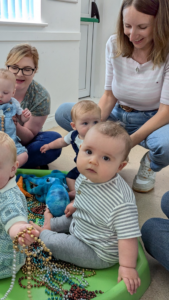
Why Do Babies Stare at Lights So Much?
One of the most common things new parents Google is:
“Why does my baby stare at lights?”
Usually after spending several days being completely ignored in favour of the downstairs dimmer switch.
The answer is actually quite lovely.
Babies are born into a world that is visually overwhelming and brand new. During the first year, their brains are rapidly building connections as they learn how light, contrast, movement, depth and patterns work.
Lights, shadows and moving objects are incredibly stimulating for babies because their visual systems are still developing. Bright contrasts and movement help babies practise:
- visual tracking
- focus
- depth perception
- attention skills
- sensory processing
According to The American Optometric Association
, babies’ visual abilities develop dramatically during the first year, with their brains constantly learning how to interpret the world around them.
Which means your baby staring lovingly at fairy lights for 14 uninterrupted minutes is actually a tiny neuroscience lesson in action.
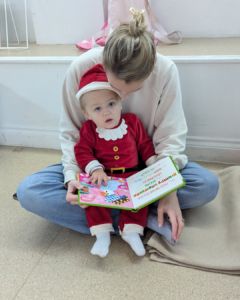
This Is Exactly Why Sensory Experiences Matter for Baby Development
One of the reasons sensory play is so important in the first year is because babies learn through their senses before anything else.
Before they can talk.
Before they can follow instructions.
Before they can properly understand stories.
They are learning through:
- sight
- sound
- touch
- movement
- repetition
- emotional connection
That’s why sensory storytelling classes can be so powerful for babies. At Adventure Babies, our classes are carefully designed to support these early stages of development through immersive sensory experiences linked to books and storytelling.
When babies watch bubbles float through the air, track lights across a room, listen to rhythmic language, reach for textures or stare at moving props during a story, they are building important neural pathways connected to:
- visual development
- sensory integration
- communication
- attention skills
- emotional security
- fine and gross motor development
And honestly? To babies it just feels magical.
That’s the beauty of early learning done properly. Babies learn best when they feel emotionally connected, safe and curious — not pressured.
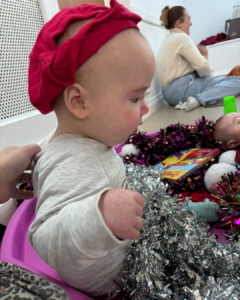
The Reason Babies Love Trees So Much Is Weirdly Emotional
If you’ve ever walked with your baby under trees and watched them absolutely lose their minds with joy, you’ll know exactly what I mean.
The leaves.
The movement.
The changing light.
The patterns shifting in the wind.
Pure baby cinema.
And honestly, sometimes watching them watch the world is enough to make you emotional yourself.
Because imagine seeing sunlight through leaves for the first time ever.
That sense of wonder is something we talk about constantly at Adventure Babies classes. Babies experience ordinary things with complete awe because literally everything is new. A bubble floating across the room. Light dancing on the ceiling. The sound of paper crinkling. It’s all discovery.
Our classes are built around nurturing that natural curiosity instead of overstimulating babies with endless “busy” activities. We use stories, sensory play and immersive environments to help babies explore the world in a way that supports development whilst still feeling calm, connected and joyful for parents too.
Your Baby Does Not Need Constant Entertainment
This is probably one of the biggest reassurances new mums need to hear.
Modern parenting can make it feel like your baby constantly needs enriching activities, developmental toys and carefully curated stimulation.
Meanwhile your baby is fully emotionally invested in watching the washing machine spin.
Babies learn through observation far more than we sometimes realise.
Watching movement, tracking light, noticing facial expressions and studying patterns are all helping build neural pathways and sensory understanding. According to Harvard University’s Center on the Developing Child
, simple responsive interactions and sensory experiences play a huge role in early brain development.
So no, you do not need to entertain your baby every waking second.
Sometimes sitting under a tree together is already enough.
And sometimes coming to a baby class that encourages sensory exploration, shared reading and connection can help parents feel more confident recognising just how much learning is already happening in these tiny everyday moments.
Why Repetition Fascinates Babies So Much
One thing parents quickly discover is that babies are absolutely fine doing the same thing repeatedly forever.
Adults crave novelty.
Babies crave predictability.
That’s why babies can:
- stare at the same light daily
- laugh at the same shadow
- watch the same sensory toy repeatedly
- become deeply attached to one random household object
Repetition helps babies feel safe while strengthening brain connections through familiar experiences.
Which is also why your baby acts like the hallway light turning on is somehow still shocking despite witnessing it approximately 900 times already.
At Adventure Babies, repetition is woven intentionally throughout our classes because repeated songs, stories and sensory moments help babies build familiarity, confidence and emotional security. We often reassure parents that repetition is not boredom. It’s learning.
Even if it drives adults slightly mad sometimes 😅
The Real Magic Is Watching Your Baby Discover the World
Honestly, one of the unexpected joys of having a baby is how much they force you to slow down and notice ordinary things again.
The shape of shadows.
Rain on windows.
Leaves moving.
Bubbles floating.
Light through curtains.
Babies remind adults that the world is actually quite magical when you stop rushing through it.
And that’s a huge part of why sensory storytelling matters so much to us at Adventure Babies Classes
. Our classes are designed to nurture curiosity, sensory exploration and connection through stories, movement, music and immersive play experiences that support early baby development in a way that still feels joyful and emotionally meaningful for parents too.
Because yes, there’s science behind sensory development.
But there’s also something really beautiful about watching your baby look at bubbles like they’ve personally witnessed a miracle.
You’re Probably Doing Better Than You Think
A lot of new mums worry they’re not doing enough.
Enough stimulation.
Enough developmental activities.
Enough educational play.
But your baby does not need perfection.
They need connection.
Safety.
Sensory experiences.
Responsive interaction.
Moments of wonder.
And honestly? Sometimes those moments happen while both of you are staring at fairy lights in exhausted silence at 5pm.
Which, for the record, absolutely counts