Why Your Baby Loves Classes (Even If You’re Not Sure About Them Yet)
I always notice it before the mums do.
A baby arrives at class a little unsure, taking everything in, clinging to mum, watching the room. Then the hello song starts.
And something shifts.
A tiny pause. A smile. A kick of recognition.
It’s small, but it tells you everything about why babies love classes.
Not because they understand “learning” or “activities” or any of the things we think we’re signing up for as adults—but because babies are wired for familiarity, rhythm, repetition, and connection.
And when a class gets that right, babies don’t feel like they’re being taken to an activity.
They just feel like they belong there.
What babies are actually experiencing in class
From the outside, baby classes can look like a mix of singing, sensory play, and stories. But babies aren’t taking it in the way we do.
They’re not thinking about joining in or performing or doing it “right”.
They’re responding moment by moment to what feels safe, familiar, and interesting.
A song they start to recognise week after week suddenly makes them still and listen.
A story they’ve heard before creates anticipation before anything even happens.
A sensory moment invites curiosity because it feels predictable enough to explore.
It’s not random engagement. It’s recognition building on repetition.
And that’s where a lot of the learning sits.
The Harvard Center on the Developing Child explains that repeated, responsive experiences help shape the architecture of a baby’s brain. In simple terms, repetition helps babies feel secure enough to explore and learn.
So what looks like “just a class” is actually babies building memory, confidence, and understanding of the world around them.
Why repetition is what keeps babies engaged
We often assume babies need constant newness to stay interested. New toys. New songs. New stimulation every time.
But babies are the opposite.
They come alive through repetition.
That same hello song each week becomes something they recognise.
That familiar story rhythm helps them anticipate what comes next.
That repeated structure of class gives them something steady in a world that is still very new to them.
And once something is familiar, babies stop observing from the sidelines and start engaging more fully.
That’s when you see the little moments:
a baby who used to sit back suddenly crawling forward,
a glance of recognition before a song even starts,
a tiny smile at something they remember from last week.
It doesn’t happen all at once. It builds slowly through repetition.
At Adventure Babies, this is exactly what classes are built around—repeated songs, familiar story structures, and sensory experiences that babies begin to recognise over time.
Because that recognition is what makes them feel confident enough to join in.
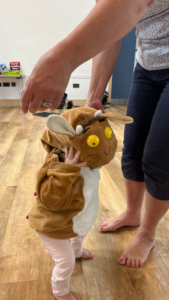
What it feels like for you as a parent
While your baby is experiencing familiarity and connection, your experience can feel very different at the start.
You might walk in wondering if your baby will settle.
You might feel unsure if you’re doing it “right”.
You might compare your baby to others in the room.
That’s completely normal.
But something usually happens quite quickly.
You start to notice that no one’s baby is sitting still the whole time.
You realise other parents are just as unsure as you are.
You start chatting, laughing, relaxing a little.
And the room starts to feel less like a class… and more like a shared experience.
That sense of community often becomes just as valuable as anything your baby is gaining developmentally.
Because you’re not the only one figuring it out.
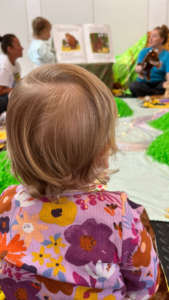
The small signs that it’s working
The changes in babies are rarely dramatic in the moment.
They don’t walk in one week and suddenly transform.
It’s quieter than that.
One week they watch.
The next they notice.
Then they start to anticipate.
A song comes on and they recognise it before it finishes.
A story moment makes them smile before it arrives.
A sensory experience feels familiar enough for them to explore more confidently.
And at some point, you realise they’re not just observing anymore—they’re participating.
Those small shifts are the learning.
Why babies love classes (even if you’re unsure at first)
If you strip everything back, babies love classes because they offer three things they naturally thrive on:
Familiarity.
Repetition.
Connection.
Not overstimulation. Not constant change. Not perfection.
Just experiences that repeat in a way that helps them understand the world and feel safe enough to explore it.
The National Literacy Trust highlights how repeated songs, stories, and shared experiences in early childhood support communication and language development long before speech begins.
So when your baby lights up at a familiar song or story in class, that’s not just enjoyment—it’s learning through recognition.
And your baby already knows more than you think
This is the part most parents don’t expect.
While you might still be wondering if classes are worth it, your baby is already responding to them in a completely different way.
They’re not questioning it.
They’re just:
- recognising patterns,
- building confidence,
- enjoying familiarity,
- and gradually becoming more comfortable in the space.
They already understand something important that we often forget:
It doesn’t need to be new to be meaningful.
Try it for yourself
At Adventure Babies, classes are built around exactly this idea—repetition, storytelling, sensory play, and gentle structure that helps babies feel secure while they learn.
No pressure for babies to perform.
No expectation for parents to get it “right”.
Just a space where learning happens naturally over time.
If you’ve been unsure whether to try a class, you don’t really need to decide in advance.
Your baby will show you.
👉 Find your nearest class here:
And if you know another mum wondering the same thing, send this to her.