
Baby Sleep in the First 6 Months: What’s Normal, What’s Survival, and What Actually Matters
Let’s be honest.
If you have a baby under 9 months, sleep is no longer something you do.
It’s something you negotiate.
You are simultaneously Googling “is this normal?” while reheating coffee for the fourth time and wondering how such a small human can wake so frequently.
First baby? It can feel like everyone else got the handbook except you.
So let’s strip it back. What actually matters in the early months?

Safe Sleep: The Non-Negotiables (Without the Fear Mongering)
Before we talk routines or “sleeping through,” we start with safety.
In the UK, the guidance is clear:
-
Always place baby on their back to sleep
-
Use a firm, flat mattress
-
Keep the sleep space clear (no loose bedding, pillows, toys)
-
Share a room, not a bed, for the first six months
The “back to sleep” recommendation dramatically reduces the risk of SIDS. It’s simple. It works. It’s not about trends — it’s about physiology. Babies sleep more safely on their backs because their airway remains more stable and unobstructed.
That’s your foundation.
Everything else? We can breathe through.

Why Newborn Sleep Feels Wild
Here’s the bit nobody quite explains: newborns don’t have a mature circadian rhythm.
For the first 8–12 weeks, their bodies genuinely don’t know the difference between 2pm and 2am.
They sleep in short cycles (often 40–60 minutes), wake frequently for feeds, and spend more time in lighter sleep. That lighter sleep is protective. It’s biologically designed to reduce risk and ensure regular feeding.
So if your 5-week-old won’t do a 5-hour stretch?
That’s not a failure. That’s development.

The 3–6 Month Shift: When Things Can Change
Around 3–4 months, babies begin producing melatonin more predictably. Their internal clock starts maturing. Sleep cycles lengthen slightly.
This is when you might see:
-
One longer stretch at night
-
Slightly more predictable nap patterns
-
A clearer difference between day and night
Some babies sleep for 5–6 hours.
Some absolutely do not.
Both can be normal.
What’s helpful at this stage isn’t rigid scheduling — it’s gentle signalling:
-
Bright light and interaction in the day
-
Calm, low stimulation at night
-
A simple, repeatable bedtime wind-down
Your baby’s brain is learning patterns. You’re not forcing sleep — you’re guiding biology.

Managing Sleep Deprivation (Because You Matter Too)
This is the part people whisper about.
Broken sleep is hard. It impacts mood, memory, patience, everything.
So instead of pretending you can “hack” it perfectly, think practically:
-
Nap when you genuinely can (even 20 minutes counts)
-
Share night duties if possible
-
Lower the bar on everything non-essential
-
Get outside in daylight — it regulates both of you
Sleep deprivation doesn’t mean you’re doing anything wrong. It means you have a young baby.

What Does “Sleeping Through” Even Mean?
Technically? Around 5–6 hours in one stretch.
It doesn’t mean 7pm–7am.
It doesn’t mean no night feeds.
It doesn’t mean you’ve unlocked a secret parenting level.
It just means their nervous system is maturing.
And development isn’t linear. Growth spurts, teething, learning to roll — all of it can temporarily disrupt sleep. Progress isn’t erased. It’s just adjusting.

Where Development and Rest Connect
Here’s something that often gets missed: sleep isn’t separate from development.
During sleep, babies consolidate memory, process sensory input, and strengthen neural pathways. All that play, movement, music, and storytelling? It’s wired in during rest.
Which is why balanced days matter. Calm connection. Sensory experiences. Movement. Regulation.
When babies feel secure, stimulated (but not overwhelmed), and emotionally safe, sleep often follows more easily.
If You’re In the Thick of It
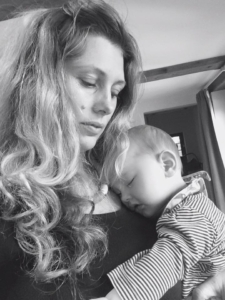
If you’re pacing the room at midnight wondering if you’ve broken your baby…
You haven’t.
If your baby still wakes frequently at 4 months…
That can be normal.
If your friend’s baby sleeps 8 hours and yours doesn’t…
Comparison is a trap.
You are raising a tiny human with an immature nervous system who is learning how to exist outside the womb. That’s not small work.
Sleep in the first 6 months isn’t about perfection. It’s about safety, biology, and survival — with moments of magic in between.
And slowly, quietly, it does get easier.