Early Communication in Babies: Talking Before Words
How babies connect, respond, and communicate from the very start
Long before babies say their first word, they’re already communicating. Not with sentences or labels, but with sounds, expressions, movement, and eye contact.
In these early months, communication isn’t about talking — it’s about connection. Every coo, squeal, and babble is your baby exploring how to interact with the people around them.
And those early interactions matter more than you might realise.
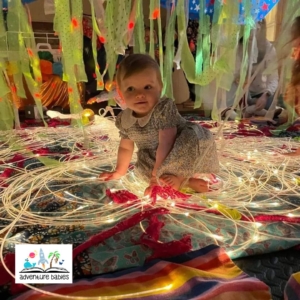
What Early Communication Looks Like in Babies
From birth, babies communicate in subtle but powerful ways. A change in facial expression, a shift in tone, a kick of excitement — these are all part of early communication.
When adults respond — by smiling back, speaking softly, or copying a sound — babies begin to understand something important: communication works both ways.
Over time, babies start to:
-
recognise familiar voices
-
respond differently to tone and rhythm
-
use sounds to gain attention
-
experiment with babbling and vocal play
This back-and-forth interaction forms the foundation for later language and social development.
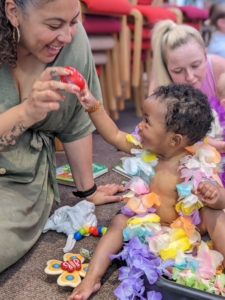
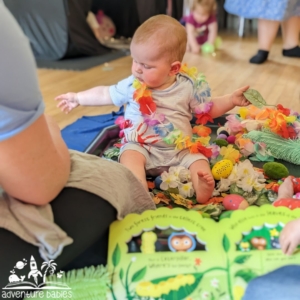
Adventure Babies Sensory storytelling baby toddler classes autumn 2023
Why Sound, Rhythm, and Repetition Matter
Babies don’t learn communication through explanation. Instead, they learn by hearing patterns again and again.
Repeated sounds, familiar phrases, and rhythmic speech help babies:
-
tune into language
-
recognise differences in sound
-
anticipate responses
-
practise turn-taking
That’s why babies are naturally drawn to songs, rhymes, and repeated story phrases. These predictable patterns make communication feel safe and enjoyable.
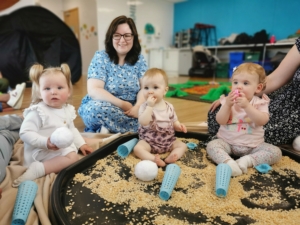
Adventure Babies Sensory Story telling Leeds Autumn 2023
Supporting Early Communication Through Stories and Songs
Stories and songs introduce babies to the music of language — the rise and fall of voices, pauses, emphasis, and emotion.
In Adventure Babies classes, early communication is supported through sensory storytelling that combines:
-
repeated songs and rhymes
-
expressive voices and gestures
-
shared moments of attention
-
familiar story structures
Because babies feel secure in the routine, they can focus on listening, watching, and responding — all key parts of early communication.
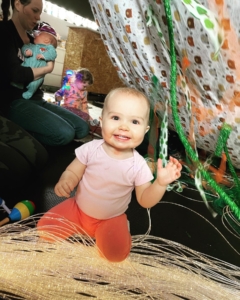
Sensory Storytelling Baby/Toddler Class – bring a brilliant book to life through interactive storytelling, messy play and sensory lighting.
How to Encourage Early Communication at Home
You don’t need specialist tools to support early communication in babies. Everyday moments already provide rich opportunities.
You might:
-
talk through routines, even the repetitive ones
-
pause and wait for your baby to respond with a sound or look
-
repeat and expand on your baby’s babbles
-
use clear, expressive speech during play
When you respond as if your baby is “talking,” they learn that their sounds and expressions have meaning.
For evidence-based guidance, the National Literacy Trust highlights how early communication supports later language and literacy development:
👉 https://literacytrust.org.uk
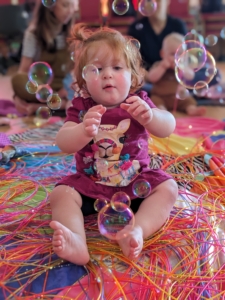
Sensory Storytelling Baby/Toddler Class – bring a brilliant book to life through interactive storytelling, messy play and sensory lighting.
Why Baby Classes Can Build Confidence
Many parents worry they’re not interacting “the right way” with their baby.
Adventure Babies classes offer reassurance by showing how naturally early communication develops through rhythm, repetition, and shared attention. Parents can see their babies respond — and watch others do the same — which builds confidence and removes pressure.
It becomes clear that early communication doesn’t need to be taught.
It grows through connection.
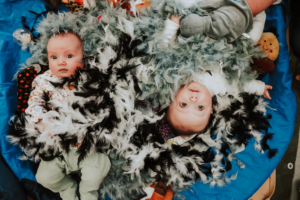
The Bigger Picture
Early communication in babies isn’t about milestones or first words.
It’s about shared looks, exchanged sounds, and moments of understanding — long before speech arrives.
And those early conversations, however quiet, are already shaping how your baby connects with the world.