Crawling, Rolling, Reaching: How Movement Shapes Your Baby’s Brain
As a new parent, you might find yourself Googling questions like:
“Is my baby developing normally?”
“When should my baby start crawling?”
“How can I help my baby’s motor skills?”
These are all part of understanding baby physical development, and it’s completely normal to seek reassurance.
Movement isn’t just about reaching milestones. Crawling, rolling, and reaching are critical for brain development, coordination, and even social and emotional growth.
Why movement matters
Every wiggle, push, or roll helps your baby:
- Strengthen muscles for sitting, crawling, and walking
- Develop coordination between eyes, hands, and body
- Build neural pathways that support problem-solving, spatial awareness, and later fine motor skills
- Learn cause and effect: “If I push, I move!”
In short, babies’ tiny movements are the foundation for everything that comes next — from picking up a toy to reading their first word.
For more on UK-based guidance about physical development in babies, check out The Early Years Foundation Stage resources by the UK government which explain how movement supports overall development.
Repetition = brain fuel
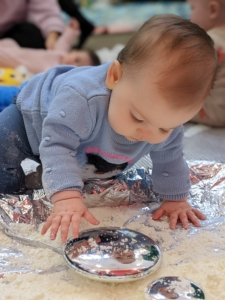
Babies love doing the same movement over and over. Reaching for the same toy, rolling the same way, or crawling to a familiar spot helps them:
- Build muscle memory
- Gain confidence in their bodies
- Learn cause-and-effect patterns
So when your baby insists on crawling across the same rug or rolling toward the same toy repeatedly, they’re not being fussy — they’re learning.
How Adventure Babies supports physical development
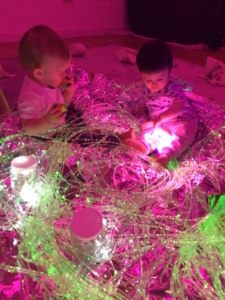
Our sensory storytelling classes are designed to encourage movement naturally:
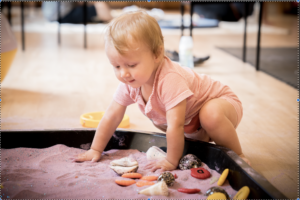
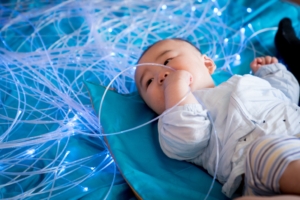
- Tactile and visual props motivate reaching, grasping, and exploring
- Open floor spaces allow crawling, rolling, and tummy time
- Predictable story sequences encourage anticipation and repeated movement
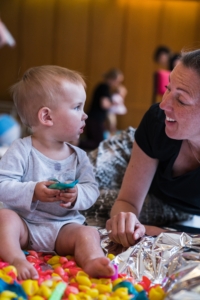
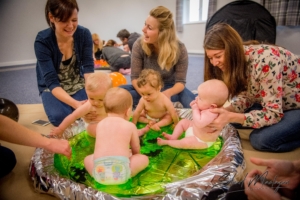
- Interactive parent-baby activities strengthen coordination and emotional connection
Babies can explore at their own pace — no pressure, no comparing — just guided opportunities to move, learn, and grow.
Why it matters for you too
Watching your baby move, reach, and explore isn’t just fascinating — it’s reassuring. You can see their confidence grow with each little skill. And being part of that exploration in a class setting can also give parents:
- Peace of mind that development is on track
- Reassurance that they’re providing the right support
- Connection with other parents noticing the same small but exciting milestones
A gentle next step
Movement is learning in action. Crawling, rolling, reaching — each wiggly step lays the foundation for more complex skills to come.
If you want to see your baby’s physical development in action, and enjoy a supportive, sensory-rich environment, Adventure Babies classes are designed to help both babies and parents explore, move, and grow together.
PAYG Horsforth Sensory Storytelling