
How Do Babies Learn? A Friendly Guide to Cognitive Development
If you’re a new parent, you might wonder: how do babies learn? It can feel like a big, abstract question — but the truth is, it’s happening all the time, every day, often without you even noticing.
Cognitive development is simply how your baby’s brain learns to think, understand and make sense of the world. In the first year, your baby’s brain grows incredibly fast, forming millions of neural connections every second — shaped by play, interaction and everyday experiences.
This guide takes a friendly, first-look approach to cognitive development, what influences it, and how you naturally support it at home.
How do babies learn?
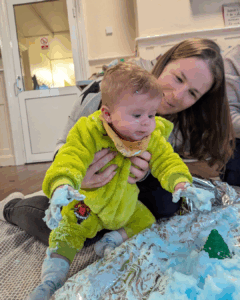
Babies learn through exploration, observation, interaction and repetition. They’re constantly testing, watching, listening, and discovering cause and effect.
Some key ways this shows up in everyday life:
- Paying attention to your face and voice
- Dropping or banging objects to see what happens
- Anticipating familiar songs or games
- Repeating actions that capture their curiosity
These small moments are building the foundations for memory, problem-solving, attention, and early reasoning skills.
What influences how babies learn?
Cognitive development is shaped by many overlapping factors, most of which are part of normal family life.
1. Relationships and responsiveness
Your baby’s brain thrives on warm, responsive interactions. When you respond to gestures, sounds, or looks, your baby learns their actions matter. This back-and-forth interaction, often called serve and return, is crucial for healthy brain development.
2. Language exposure
Hearing words, songs and stories helps babies understand communication, memory, and patterns. Even before speaking, they’re absorbing how language works.
3. Repetition
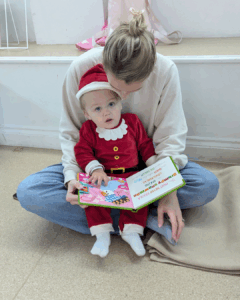
Babies learn by repetition. Hearing the same story, rhyme, or song helps build memory and understanding. Want to read the same book every day? That’s perfect for learning.
4. Sensory experiences
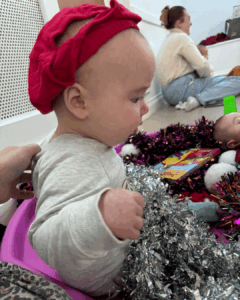
Touch, sight, sound, and movement all help the brain form connections. Age-appropriate, calm sensory experiences encourage curiosity and exploration.
5. Movement and physical play
Cognitive and physical development are closely linked. Crawling, reaching, rolling, and exploring help babies learn about space, cause and effect, and their own abilities.
6. Emotional security
Babies learn best when they feel safe. Consistent routines, familiar faces, and loving care create the confidence to explore and learn. Stress in babies or parents can make learning harder, highlighting the value of supportive communities.
What does learning look like day to day?
Cognitive development doesn’t need lessons or flashcards. It looks like:
- Observing your face closely
- Dropping, picking up, and exploring toys
- Anticipating routines, songs, and games
- Showing curiosity about new sounds or sights
- Repeating actions they enjoyed before
Every small interaction is a learning opportunity.
How can parents support cognitive development?
The most effective support is simple:
- Talk, sing, and read together
- Follow your baby’s interests
- Offer safe opportunities to explore
- Repeat favourite activities without worry
- Spend time in supportive baby communities
Being part of a parent-baby group shows you other babies develop differently — reassuring parents and enriching learning experiences.
Check out our Sensory Storytelling Activities for ways to support learning through play.
When to seek reassurance
If your baby shows very limited interest in interaction, doesn’t respond to sounds or faces, or loses skills they previously had, it’s always okay to check in with your health visitor or GP. For detailed guidance, the NHS overview of child development is an excellent, high-authority resource.
A gentle takeaway for new parents
Babies are constantly learning, and you’re already supporting it every day. Cognitive development grows through connection, play, repetition, and emotional safety.
You don’t need to do more — just enjoy these moments, connect with your baby, and share the journey with a supportive community 💛