What Is the Pincer Grip in Babies? The Tiny Finger Trick That Changes Everything
Somewhere around nine months old, babies develop a brand-new party trick. No, it’s not sleeping through the night (we wish). It’s something much smaller — but just as life-changing: the pincer grip.
What is the pincer grip in babies?
The pincer grip is when your baby starts to pick things up using their thumb and forefinger, like a very serious miniature scientist inspecting a crumb. Before this, they’ve been using their whole hand — a bit like a tiny grabby claw machine — but suddenly, those two fingers learn to work as a team.
And that, my friends, opens up a whole new world of chaos and cuteness.
Why is the pincer grip important?
The pincer grip is a huge step in your baby’s fine motor skill development — the control of small muscles in their hands and fingers. It’s the foundation for so many important future skills, including:
-
Feeding themselves (yes, cheerios everywhere count as progress).
-
Turning pages in books.
-
Picking up crayons and starting to scribble.
-
Eventually… writing, buttoning clothes, and all those big-kid things.
So when your baby proudly waves a soggy bit of banana they just picked up with two fingers — that’s basically the first step toward future independence (and a much messier floor).
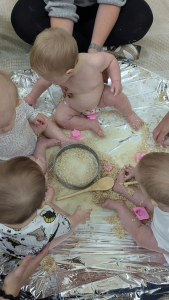
At Adventure Babies, we love watching this milestone emerge in our storytelling and sensory play sessions. Whether it’s turning pages during storytime, exploring textured materials, or grasping a tiny prop during an adventure, you can see those little fingers getting stronger and more coordinated every week.
When do babies develop the pincer grip?
Most babies start developing their pincer grip between 8 and 12 months, with lots of variation. Some figure it out early, others a little later — all totally normal. Like all baby milestones, it’s not a race!
What if my baby can’t do it yet?
First off, don’t panic. Babies are working on dozens of skills at once — rolling, babbling, waving, possibly plotting their escape from naptime — so fine motor development sometimes takes a back seat.
If your baby hasn’t started showing signs by around 12 months, it’s fine to mention it to your health visitor, but it’s rarely a concern on its own.
How to help your baby develop the pincer grip
Good news: supporting this milestone doesn’t require fancy toys or flashcards — just fun, everyday play.
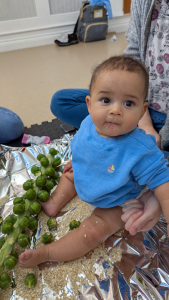
🫐 Offer small, safe snacks — think peas, blueberries, or bits of pasta (supervised, of course).
📚 Turn thick board book pages together — storytime doubles as fine motor practice.
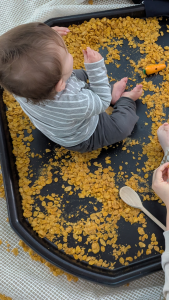
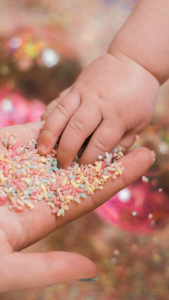
🎨 Try sensory play — at Adventure Babies, we use textures, props, and messy play to encourage grasping and exploring, all disguised as joyful chaos!
🎀 Real-life play — let them peel stickers, pick up socks, or chase bits of tissue paper. Everyday moments build brilliant little hands.
Does the pincer grip really matter?
Yes — but not in a “get the flashcards out” kind of way. The pincer grip matters because it’s part of how babies learn to interact with their world — to explore, feed themselves, and eventually gain independence. But every baby gets there in their own time.
So next time your little one carefully picks up a crumb from the carpet and proudly eats it (you tried, right?), remember: they’re not just being gross — they’re practising fine motor precision.