
How Do Babies Develop Fine Motor Skills?
If you’ve ever watched your baby reach out for a toy, grab a spoon, or poke their tiny fingers into something squishy, you’ve seen fine motor skill development in action. But what are fine motor skills, how do babies develop them, and why are they so important for later milestones like mark making and writing?
At Adventure Babies, we build fine and gross motor skills into every story adventure—through play, discovery, and lots of sensory fun. Here’s how those little movements now turn into big abilities later.
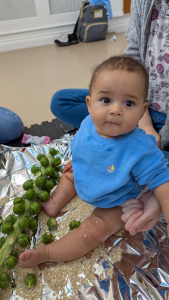
What are fine motor skills?
Fine motor skills are the small but mighty movements that use the tiny muscles in the hands, fingers, and wrists. Babies use these skills to pick up small objects, clap, point, and eventually hold crayons and cutlery.
They might look simple, but these early skills are the foundations for bigger learning steps—like drawing, mark making, and writing at preschool age.
How do babies develop fine motor skills?
Fine motor skills don’t just appear overnight—they develop step by step from birth. Babies strengthen these skills through everyday play, exploration, and interaction.
-
0–6 months: Grasping rattles, holding your finger, and batting at toys helps babies learn to open and close their hands.
-
6–12 months: Picking up food with their fingers, banging toys together, or squishing textures develops coordination.
-
12–24 months: Stacking blocks, turning pages in books, and scribbling with chunky crayons prepare toddlers for mark making and eventually pre-writing skills.
(If you’d like some easy ideas to try at home, explore our mini parachutes for babies —they’re fantastic for encouraging little ones to reach, track movement, and strengthen both fine and gross motor skills.)
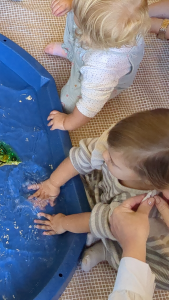
Everyday tasks that support fine motor skills
You don’t need special equipment to help your baby develop fine motor skills—many everyday tasks are already doing the job! Celebrate these wins:
-
Feeding themselves: Picking up finger foods, using spoons, or holding a cup.
-
Dressing and undressing: Pulling socks off, buttoning large buttons, or zipping jackets.
-
Bath time fun: Squeezing sponges, pouring water, and picking up floating toys.
-
Tidying up: Putting toys in boxes, stacking blocks, or rolling balls back and forth.
-
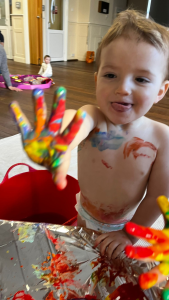
Art and mark making: Scribbling with crayons, finger painting, or tracing in sand.
These simple daily tasks give babies and toddlers countless opportunities to practice grasping, releasing, and coordinating their fingers—building the same foundational skills that make mark making and writing possible later.
The link between motor skills and writing
Before a child can write, they need control over their whole body. That’s why gross motor skills—like crawling through tunnels, reaching for bubbles, or clapping along to songs—matter just as much. Strong shoulders, arms, and core muscles make it possible to sit upright, hold tools steadily, and focus on hand movements.
So when your toddler is tipping rice in messy play or stretching up to catch moving strands of a parachute, they’re not “just playing.” They’re developing the muscle control, coordination, and focus needed for drawing, writing, and so much more.
Supporting fine motor development through play
At Adventure Babies, we sneak skill-building into every story session:
-
Textured sensory trays encourage grasping, pinching, and releasing.
-
Messy play develops finger strength and coordination.
-
Story props invite babies to reach, stretch, and explore with purpose.
-
Action songs encourage clapping, pointing, and copying movements.
These playful activities don’t just keep little ones entertained—they’re powerful building blocks for future learning.
Why fine motor skills matter for the future
Mark making (think scribbling, painting, or drawing lines in the sand) is a natural next step after fine motor exploration. It’s how children experiment with control, direction, and creativity. From those first scribbles come the skills for writing letters, holding pencils correctly, and expressing themselves at school.
So next time you see your baby absorbed in squishing, tapping, or reaching—know this: they’re not only having fun, they’re busy building the tools they’ll use to learn, write, and thrive.
👉 Want to give your little one more opportunities to build their fine motor skills? Find your nearest Adventure Babies class here and join us for story-led play that supports every stage of development.