Seeing the World: Baby Vision Development from Newborn to 9 Months
When you first hold your newborn, one of the first things you probably do is gaze into their tiny eyes and think “Can they actually see me?” Spoiler: yes… sort of! Your baby’s eyesight is one of the most fascinating things to watch unfold in their first year. From blurry blobs to laser-focused toy-grabbing, the journey of baby vision development is full of wow moments you won’t want to miss.
And the best bit? You don’t need a medical degree to spot these milestones—just lots of love, play, and a few simple activities (which we pack into every Adventure Babies class).
Newborn: The Blurry Stage
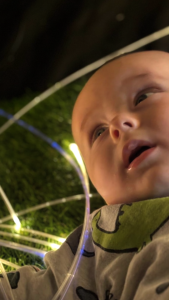
At birth, babies can only see about 20–30cm away—perfect for looking right at your face while feeding or cuddling. Everything else is a blur. That’s why you might feel like your baby is staring right into your soul one minute and then drifting off the next—they’re still working out how to focus.
Wow moment: Parents often tell me that the first time their baby locks eyes with them, it feels like pure magic. It’s usually fleeting at first, but it grows stronger every week.
Try this at home:
-
Hold your face close while feeding or singing.
-
Use bold black-and-white books or cards—contrasting patterns are easiest for newborns to focus on.

2–3 Months: Hello Smiles and Tracking
This is when things start to get exciting! By around 2 months, babies can start following objects with their eyes. Around 3 months, you’ll probably get those first gorgeous smiles when they recognise you—not just a vague shape.
Wow moment: One mum at class told me she burst into tears when her baby followed a scarf I was waving during storytime—it was the first time she realised her little one could really see what was happening.
Try this at home:
-
Slowly move a toy side-to-side in front of baby and watch them track it.
-
Play gentle peekaboo with your face or hands.
4–6 Months: Colour Explosion & Reaching Out
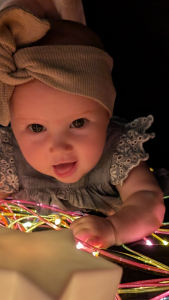
Your baby’s vision is sharpening now, and colours start to pop. Reds, blues, and yellows are especially exciting. This is also when hand-eye coordination kicks in—they spot something interesting and actually reach for it (cue endless toy-grabbing).
Wow moment: Parents at Adventure Babies often gasp when their baby suddenly leans forward to grab a sensory prop—it’s like they’ve unlocked a new superpower!
Try this at home:
-
Offer brightly coloured rattles or scarves.
-
Put toys just out of reach to encourage reaching and rolling.
-
Hold up board books with big, bright pictures—babies love simple faces.
7–9 Months: Depth Perception & Movement Magic
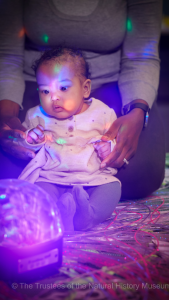
By now, your baby is starting to see the world in 3D. Depth perception means crawling, reaching, and grabbing are way more accurate (and that’s when you realise you suddenly need eyes in the back of your head too).
They’ll also start recognising familiar faces across the room and waving with excitement. Books, toys, and even bubbles become even more fun because they can see them properly.
Wow moment: One dad told me his baby suddenly spotted him from across our story circle and wiggled with joy until he picked her up. Those are the moments that make all the sleepless nights worth it.
Try this at home:
-
Blow bubbles and watch baby track, reach, and try to pop them.
-
Play rolling ball games—great for vision, movement, and giggles.
-
Encourage crawling by putting something fun just out of reach.
How Adventure Babies Helps Vision Bloom
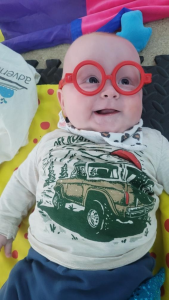
In our classes, every story, sensory tray, and prop is carefully chosen to support milestones like baby vision development. From bold high-contrast books for tiny ones, to colourful lights, scarves, and bubbles for older babies, we create magical experiences that nurture not just eyesight, but the whole world of early learning.
Parents often tell me they love seeing those lightbulb moments during class—the first time their baby tracks a puppet, spots a bubble, or beams at another baby across the room. It’s more than play—it’s a chance to watch your little one’s world come into focus.
👉 Want to dive deeper into milestones? The NHS has a great guide on your baby’s development in the first year