Why Do Babies Stare at Other Babies? What It Really Means for Their Development
One of the funniest things about being on maternity leave is realising your baby has suddenly become obsessed with… another baby.
You’ll be in a baby class, at a coffee shop, or attempting a brave supermarket trip, and there it is—your baby absolutely transfixed. Eyes wide. Full concentration. Completely staring at another tiny human like they’ve just spotted the most interesting person on earth.
And naturally, as mums, our brains go straight to: Why do babies stare at other babies? Is this normal? Are they trying to make friends? Should they be playing together? Is my baby social enough?
If you’ve ever Googled exactly that while bouncing a baby on one hip and reheating your tea for the third time, you’re not alone.
The good news is this: yes, it’s completely normal—and actually a really lovely sign of healthy early social development.
At Adventure Babies classes, we see this every single week. Babies watching each other during sensory play, following another baby crawling across the room, staring while someone else explores the lights, music, textures, or story props. It might look simple, but underneath it, something really important is happening.
Long before babies can properly “play together,” they are already learning from each other.
Why Do Babies Stare at Other Babies?
Babies are naturally drawn to faces from the very beginning. In fact, according to the NHS, newborns are especially interested in faces, eye contact, and expressions because this helps them begin learning communication and connection.
Another baby is basically a fascinating little moving mirror.
They make surprising noises. They wave their arms around dramatically. They pull unexpected facial expressions. They squeal for no obvious reason. Honestly, they’re excellent entertainment.
Your baby is watching because other babies provide huge amounts of social and sensory information. They’re learning about facial expressions, emotions, sounds, reactions, and how people respond to one another.
This is the very beginning of social development.
Not friendship as we think of it—not sharing toys or asking someone to come to their birthday party—but the early building blocks underneath all of that.
The UNICEF explains that responsive interactions and early social experiences help shape brain development, communication, and emotional security from the very start. Even simple observation matters.
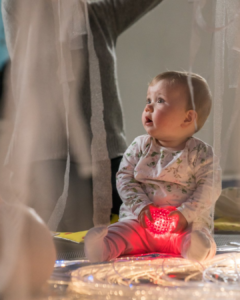
Are Babies Actually Trying to Play?
Usually—not yet.
A six-month-old staring intensely at another baby isn’t planning a playdate. They’re learning through observation.
True interactive play tends to come much later. In the early months, babies are more focused on watching than participating. They learn by observing movement, listening to sounds, noticing emotional responses, and becoming familiar with being around others.
This is why baby classes can sometimes surprise parents.
You arrive expecting your baby to “socialise,” but often what’s really happening is quiet observation. Two babies lying next to each other on a sensory mat might not look like much.
But actually, loads is happening.
They’re watching. Listening. Processing. Learning.
At Adventure Babies, our sensory storytelling classes are designed around exactly this stage of development. Babies don’t need pressure to perform or “join in perfectly.” They need rich experiences—music, books, textures, movement, lights, songs, and other babies nearby to observe and learn from.
Sometimes the magic is in the watching.
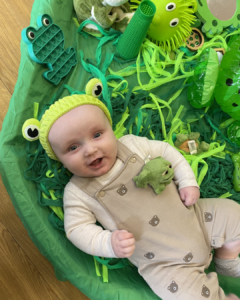
Is My Baby Social Enough?
This is one of the biggest worries for mums on mat leave.
Especially when social media makes it look like everyone else has a baby who is apparently advanced in every possible way.
Some babies smile at everyone in the room. Some stare silently for twenty minutes before deciding if they approve of the situation. Some are happy to be passed around like royalty. Others cling to mum like a tiny emotional support koala.
None of this means your baby is behind.
Temperament matters. Personality matters. Tiredness definitely matters.
A baby who quietly observes is not less social than a baby who squeals at strangers in the café.
Often, they’re simply processing differently.
Social development isn’t measured by how “outgoing” your baby looks. It grows through repeated, safe experiences—hearing familiar voices, seeing other children, learning routines, and understanding that the world feels secure.
This is one of the reasons regular weekly classes can make such a difference.
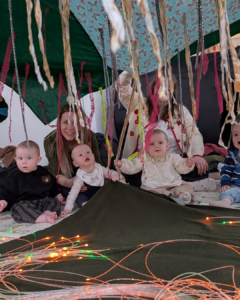
Why Baby Classes Help Social Development
People often think baby classes are just something to fill the long hours of maternity leave.
Something to do between naps and snack runs.
But good baby classes do far more than that.
At Adventure Babies, babies experience repeated positive social interactions in a calm, welcoming environment. They hear different voices, listen to stories, watch other children explore, and begin recognising familiar faces and routines week after week.
That consistency matters.
Sensory storytelling is especially powerful because it combines books, movement, music, textures, and shared experiences. Babies begin associating stories with comfort, excitement, connection, and curiosity—not just sitting still and turning pages.
They also start building confidence around other people and new environments, which supports emotional development long before they can explain how they feel.
Research from the Harvard Center on the Developing Child shows that early experiences and responsive relationships create the foundation for future wellbeing, confidence, and communication.
That’s exactly why we believe books should be felt, explored, and experienced—not just read.
You can find out more about our and how they support your baby’s development from the very beginning.
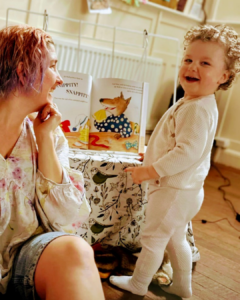
And Honestly—They Help Mums Too
Let’s be honest, this matters just as much.
Because while your baby is staring at another baby like they’ve discovered the meaning of life, you’re having a conversation with another adult, drinking a coffee while it’s still vaguely warm, and remembering that you exist outside of nappies and snack preparation.
That matters.
Mat leave can feel surprisingly lonely, even when you love your baby fiercely. Having a weekly class to anchor your routine gives both of you something valuable—stimulation for them, connection for you.
Sometimes mums come for the baby development and stay for the adult conversation.
We fully support that.
The Bigger Picture
So, why do babies stare at other babies?
Because they’re learning.
They’re studying faces, emotions, sounds, movement, and connection. They’re figuring out how humans work long before they can properly join in.
It isn’t awkward. It isn’t strange. It isn’t a sign you need to organise seventeen baby playdates before Friday.
It’s development doing exactly what it should.
And in places like Adventure Babies, where babies are surrounded by stories, sensory play, music, and other little people to observe, those moments happen beautifully every single week.
So next time your baby is staring across the room at another baby like they’ve just discovered a celebrity—let them.
They might be learning far more than we realise.