
Why Babies Put Everything in Their Mouth: The Hidden Science of Oral Exploration
If you’ve ever spent a day with a baby, you’ll know one thing for certain: everything ends up in their mouth. Toys, books, muslins, their own feet… and occasionally something mysterious they found on the floor before you could stop them.
Many parents worry about this stage.
Is it teething?
Is it safe?
Why do they keep doing it?
Here’s the reassuring truth: putting things in their mouth is one of the most important ways babies learn about the world.
Long before they can speak, walk, or even sit up, babies are busy gathering information through their senses. And the mouth is one of the most powerful learning tools they have.
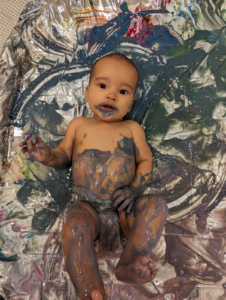
Why Do Babies Put Everything in Their Mouth?
The simple answer is: because their mouth is one of their most sensitive sensory organs.
Babies are born with an incredible number of nerve endings in their lips and tongue. In fact, the mouth is far more sensitive than their hands in the early months of life.
When a baby mouths an object, they’re discovering:
-
Texture – smooth, bumpy, squishy, rough
-
Temperature – warm or cool
-
Shape and size
-
Weight and resistance
It’s not random behaviour. It’s sensory research.
This stage is sometimes called oral exploration, and it’s a completely normal part of baby sensory development. For more on sensory development, the NHS provides practical guidance for parents on supporting babies’ learning through safe play.
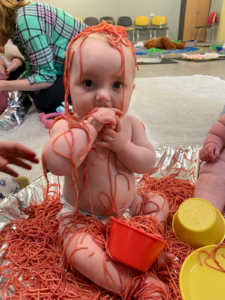
When Do Babies Start Mouthing Objects?
Most babies start putting things in their mouth around 3 to 4 months old.
Before this, they are still developing enough control to grab objects. Once they can reach and grasp, the next step is almost always… straight to the mouth.
Here’s what oral exploration often looks like at different ages:
3–6 months: The discovery phase
Babies begin grabbing toys and bringing them to their mouth. This helps them connect hand movements with sensory feedback.
6–9 months: The investigation phase
Babies actively explore objects by rotating them, chewing them, and switching them between hands and mouth.
9–12 months: The comparison phase
Babies start comparing objects. They might mouth one toy, drop it, then try another. Their brain is beginning to notice differences between textures and shapes.
12+ months: The transition phase
As walking, talking, and hand skills develop, babies gradually rely less on their mouth for exploration.

How Mouthing Helps Brain Development
What looks like simple chewing is actually serious brain work.
Every time a baby explores an object with their mouth, the brain is forming connections between:
-
touch
-
taste
-
movement
-
memory
These repeated experiences strengthen the neural pathways that support:
-
problem solving
-
sensory processing
-
motor development
-
language skills
The brain is essentially building a sensory map of the world. And the more varied those sensory experiences are, the richer that map becomes.
For parents who want to understand how babies’ brains develop through sensory exploration, the Harvard University Center on the Developing Child has an excellent resource on early neural development.
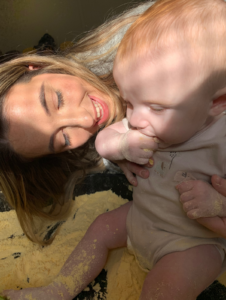
Oral Exploration and Fine Motor Skills
Mouthing objects is closely linked to fine motor development.
To bring an object to their mouth, babies practise:
-
reaching
-
grasping
-
transferring objects between hands
-
coordinating their arms and mouth
These movements lay the groundwork for later skills like:
-
feeding themselves
-
pointing
-
turning pages in books
-
holding crayons
So when babies chew on toys, they’re also developing the hand control needed for future learning.
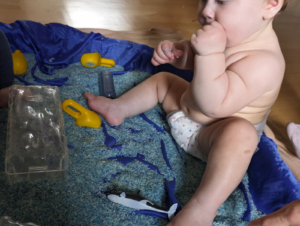
Oral Exploration and Speech Development
Surprisingly, mouthing objects also plays a role in future speech development.
Babies learn to control their lips, tongue, and jaw through these early movements. Those same muscles are later used for:
-
babbling
-
forming sounds
-
shaping words
That’s why you might notice babies exploring objects with their lips and tongue in different ways — they’re experimenting with oral movement and coordination.
Why Safe Sensory Play Is So Important
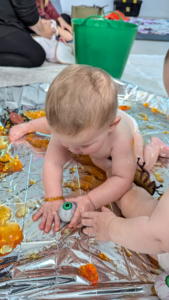
Because babies explore with their mouths, safe sensory materials are essential.
This is why messy play designed for babies often uses taste-safe ingredients. It allows babies to explore freely without parents constantly worrying about what might go in their mouth.
At Adventure Babies classes, sensory activities are carefully chosen so babies can safely investigate with all their senses — including taste when appropriate.
During our immersive storytelling sessions, babies might explore:
-
soft textures
-
gentle sensory materials
-
themed objects linked to a story
-
messy play designed for curious little explorers
And yes — some of it might end up in their mouth.
Parents often tell us they love having a space where babies can explore without constantly hearing “no, don’t put that in your mouth.”
Should Parents Try to Stop Babies Mouthing Things?
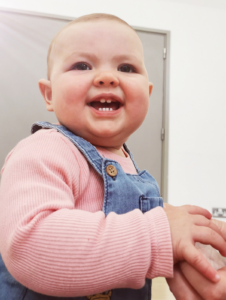
In most cases, no.
Mouthing is a healthy developmental stage. The key is making sure babies have safe things to explore. Helpful tips include:
-
offering a variety of baby-safe textures
-
rotating toys to keep exploration interesting
-
avoiding very small objects that could pose a choking risk
-
supervising sensory play
The NHS also advises parents to keep small objects out of reach and always supervise babies during play as they naturally explore their environment with their mouths.
Instead of stopping mouthing, think of it as guiding exploration safely.
Why Shared Sensory Experiences Matter
Babies learn best when they explore with a trusted adult nearby.
When parents watch, respond, and talk about what babies are experiencing, it strengthens serve-and-return interactions, which are vital for social and language development.
At Adventure Babies, sensory exploration happens within the context of stories, songs, and shared moments between parents and babies. These experiences help babies connect what they feel and explore with language, emotion, and memory.
Frequently Asked Questions
Is it normal for babies to put everything in their mouth?
Yes. Mouthing objects is a completely normal and important part of development, especially between 3 and 12 months.
Is mouthing always related to teething?
Not always. Teething can increase chewing behaviour, but most mouthing happens because babies are exploring textures and learning about the world.
When do babies stop putting everything in their mouth?
Most babies gradually reduce mouthing behaviour between 12 and 18 months as their hand skills and curiosity about movement increase.
Is messy play safe for babies who mouth things?
When designed properly with taste-safe materials, messy play can be a wonderful sensory experience for babies who naturally explore with their mouth.
The Takeaway
Babies don’t put everything in their mouth to worry their parents.
They do it because they’re learning.
Through mouthing, babies gather information about texture, temperature, shape, and movement. These tiny experiments help build the foundations for motor skills, language, and brain development.