
If you’ve ever read the same book six times in a row, sung The Wheels on the Bus until you can’t feel your face, or played the same peekaboo game repeatedly… congratulations.
You’re doing exactly what your baby needs.
While adults crave novelty, babies thrive on repetition. In fact, doing the same activity again and again is one of the most powerful ways babies learn about the world. Those moments when your baby squeals with delight because you repeated something for the tenth time? That’s their brain hard at work.
And the good news? You don’t need complicated toys or fancy activities to support your baby’s development. Often, the simplest repeated experiences are the most powerful.
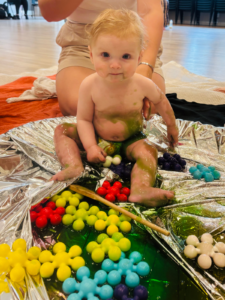
Why Do Babies Love Repetition?
Babies are brand new humans trying to make sense of a huge, busy world. Every sight, sound, texture and movement is a learning opportunity.
When something repeats, it gives their brain a chance to recognise patterns and make predictions.
Think of it like this:
-
First time → What is happening?
-
Second time → I’ve seen this before…
-
Third time → I know what comes next!
That moment when your baby anticipates what’s about to happen and bursts into giggles? That’s their brain making connections.
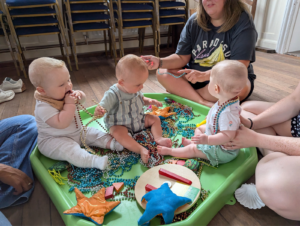
Repetition Builds Strong Baby Brains
Your baby’s brain is growing at an extraordinary rate in the first year of life. Every experience helps create new neural pathways.
Repetition strengthens those pathways.
When babies experience something repeatedly, it helps with:
-
Memory development
-
Language learning
-
Emotional security
-
Motor skills
-
Cause and effect understanding
The more something happens, the easier it becomes for their brain to process.
This is why babies often want the same book, the same game, or the same song again and again.
Repetition Helps Babies Learn Language
Have you ever noticed your baby staring intently at your mouth while you speak?
Babies learn language through hearing the same sounds repeatedly.
Every time you repeat a rhyme, story or song, your baby is:
-
Listening to the rhythm of language
-
Learning new sounds
-
Recognising familiar words
-
Beginning to predict what comes next
That’s why reading the same story repeatedly can be so powerful. Books like Dear Zoo or Brown Bear, Brown Bear, What Do You See? are favourites because their predictable patterns help babies anticipate the next part.
And when babies can predict something, it makes them feel clever and confident.
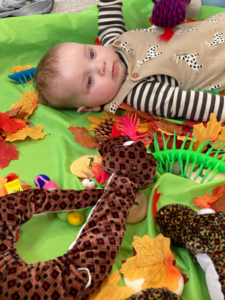
Repetition Builds Emotional Security
The world can feel overwhelming for babies. Everything is new and constantly changing.
Repetition creates comfort and safety.
When babies know what will happen next, it helps them relax and enjoy the experience.
This is one reason routines are so helpful. A repeated bedtime story, a familiar song during nappy changes, or a favourite game before bath time can help babies feel secure.
Repetition Supports Physical Development
Repetition doesn’t just help brains — it helps bodies too.
When babies repeat movements, they’re practising important gross and fine motor skills.
For example:
Reaching for a toy again and again helps develop:
-
Hand-eye coordination
-
Grasping skills
-
Arm strength
Rolling repeatedly helps develop:
-
Core strength
-
Balance
-
Body awareness
Every time your baby repeats a movement, they’re refining their skills and building confidence in their body.
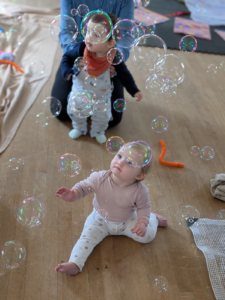
How We Use Repetition in Adventure Babies Classes
If you’ve ever been to an Adventure Babies class, you’ll notice something interesting.
We intentionally repeat songs, story rhythms and sensory moments.
This isn’t by accident.
Repetition allows babies to:
-
recognise familiar story moments
-
anticipate sensory experiences
-
join in with actions
-
build confidence with movement and exploration
The first time a baby experiences a sensory moment they might simply observe. The second time they reach out. By the third or fourth time, they’re fully immersed in the story.
Watching babies realise “I know what’s coming next!” is one of the most magical parts of our classes.
Simple Ways to Use Repetition at Home
You don’t need elaborate activities to support your baby’s development.
Here are a few easy ideas:
1. Re-read favourite books
Even if it’s the tenth time that day. Your baby is learning something new every time.
2. Repeat simple games
Peekaboo, clapping games, or gentle bouncing games are brilliant for development.
3. Sing the same songs regularly
Babies love recognising familiar tunes.
4. Repeat sensory experiences
Let babies explore textures, fabrics, or taste-safe messy play materials again and again.
5. Create simple routines
Repeated daily moments help babies feel calm and secure.
The Magic of “Again!”
When your baby kicks their legs, squeals or looks at you expectantly for something to happen again, they’re not being demanding.
They’re learning.
That little word — again — is one of the most powerful drivers of baby development.
So next time you read that book for the seventh time or sing the same rhyme yet again, remember:
You’re not just entertaining your baby.
You’re building their brain.
FAQs
Why do babies want the same book over and over?
Babies enjoy repetition because it helps them recognise patterns and understand what happens next. Familiar stories help build memory, language skills and confidence.
Is repetition important for baby brain development?
Yes. Repetition strengthens neural pathways in a baby’s brain, helping them develop memory, learning skills and emotional security.
How much repetition do babies need?
There’s no exact number. Babies naturally ask for repetition by showing interest, excitement or anticipation. If they enjoy something, repeating it is beneficial.
Do babies get bored with repetition?
Not usually. While adults crave novelty, babies learn through repeating experiences. What seems repetitive to us is actually exciting and reassuring for them.
What activities should I repeat with my baby?
Simple activities work best, including:
-
Reading books
-
Singing songs
-
Sensory play
-
Peekaboo games
-
Repeating daily routines
All of these help babies develop important skills during their first year.