
Why Babies Love Repetition: Memory and Recognition in Babies
Do babies have memory? Why babies like repetition — and why the same book, song or story on repeat is exactly what your baby needs
If your baby wants the same book. Again. And again. And again.
Or the same song on loop until you’re quietly questioning your life choices.
You’re not doing anything wrong — and neither are they.
In fact, parents often Google “do babies have memory?” or “why do babies like repetition?” at this stage, usually somewhere between the fifth reading and the mild loss of sanity.
Here’s the reassuring answer: babies absolutely do have memory — and repetition is one of the most important ways memory and recognition develop in babies.
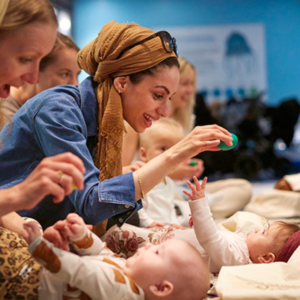
Do babies have memory?
For further reassurance from a trusted UK source, BBC Tiny Happy People explains how babies develop memory, recognition and learning through repeated songs, stories and routines:
👉 https://www.bbc.co.uk/tiny-happy-people/how-babies-learn/zr7k92p
This reflects exactly what many parents notice at home — and what we see week after week in class — familiarity helps babies feel confident enough to engage and learn.
Yes — babies begin developing memory from birth.
In the first two years of life, babies are building two important cognitive skills:
- Recognition (realising something is familiar)
- Memory (remembering what comes next)
These skills don’t develop through novelty alone. They grow through repeated, predictable experiences.
When your baby lights up at a familiar story or anticipates the next action in a song, they’re not being stubborn — they’re practising memory.
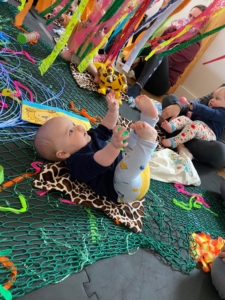
Why babies like repetition (and why it supports memory)
Repetition helps babies make sense of the world.
When something happens again and again, babies begin to learn:
- I recognise this.
- I know what comes next.
- I feel safe here.
That sense of predictability supports both cognitive development and emotional regulation.
It’s why the same book before bed feels calming. Why a familiar song can settle an unsettled baby. And why babies often prefer what they already know.
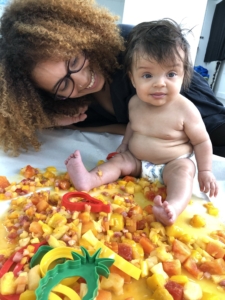
Memory and recognition milestones in babies (0–2 years)
Rather than ticking boxes, memory and recognition develop gradually.
0–6 months: Early recognition
Babies begin to:
- Recognise familiar voices and faces
- Respond to repeated sounds or songs
- Show anticipation during routines
This is the very beginning of memory — recognising that something feels known.
6–12 months: Anticipation
Now babies may:
- React before something happens (a smile before a tickle)
- Show excitement when a favourite song begins
- Notice when something changes
This is memory in action. Babies are beginning to remember sequences.
12–24 months: Participation and recall
Toddlers often:
- Join in with actions or sounds
- Request favourite books repeatedly
- Show frustration if something is skipped
They’re not being demanding — they’re reinforcing what they’ve learned.
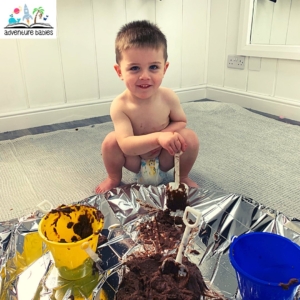
Why repetition supports confidence and emotional development
When babies know what to expect, they feel more confident.
Familiar stories and songs allow babies to:
- Focus without feeling overwhelmed
- Explore details they may have missed before
- Practise anticipation and attention
Repetition doesn’t limit learning. It deepens it.
How Adventure Babies supports memory and recognition in babies
At Adventure Babies, repetition is intentional — and meaningful.
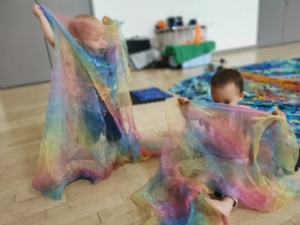
Our sensory storytelling classes use:
- Familiar characters that babies recognise week after week
- Repeated story structures
- Predictable rhythms and songs
This allows babies to move from simply watching… to recognising… to anticipating… and eventually participating.
Babies might:
- Smile as a familiar character appears
- Reach out before a sensory moment
- Settle more quickly as the story unfolds
These are small but powerful signs of memory development.
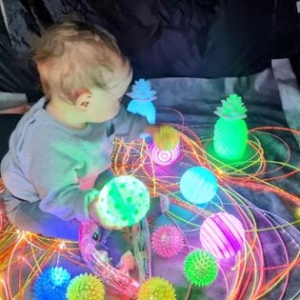
Real life
Parents often tell us:
“They loved it even more the second time.”
“They seemed calmer once they knew what was coming.”
“They recognised the story straight away.”
That’s not coincidence — that’s recognition at work.
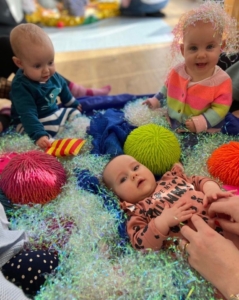
Repetition also supports parents
There’s something reassuring about familiar routines — for adults too.
Knowing what to expect from a class can:
- Reduce anxiety
- Build confidence
- Make outings feel more manageable
Shared, familiar experiences help both babies and parents feel at ease.
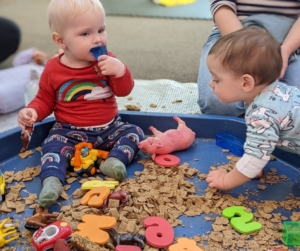
A gentle reminder
If your baby wants the same story on repeat, they’re not stuck.
They’re learning.
Memory and recognition grow through familiarity, connection and time. And those quiet, repetitive moments are laying important foundations for learning, confidence and emotional security.
Curious about how repeated sensory storytelling supports memory, recognition and emotional development? Find your local Adventure Babies class and experience it together.
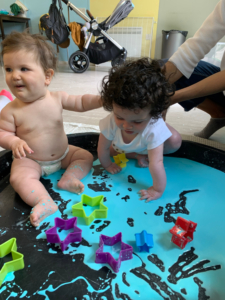
Adventure babies Cookridge Adel Sensory Storytelling