When Will My Baby Crawl?
If you’ve found yourself asking “When will my baby crawl?” you’re definitely not alone. It’s one of the most common questions parents of babies ask, and the truth is—there’s no single answer. Every baby follows their own timetable, but knowing what to expect can help you feel more confident and relaxed about their progress.
When do babies usually crawl?
Most babies begin crawling somewhere between 7–10 months, though some start earlier and others take their time. Some babies even skip crawling altogether and move straight to standing, cruising, or bum shuffling.
👉 The NHS explains that babies develop at different rates and that crawling isn’t a required milestone—what matters is steady progress in strength and movement (NHS: Your baby’s development so instead of focusing on the exact age, look out for the steps that lead to crawling.
The stages before crawling
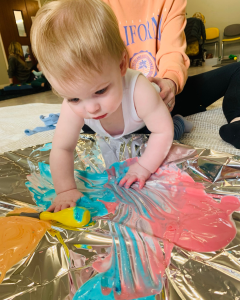
Your baby won’t go from lying still to crawling overnight. They build strength and coordination through smaller milestones like:
-
Tummy time (lifting their head and pushing up with arms).
-
Rolling from back to front and front to back.
-
Sitting without support, which develops balance.
-
Rocking on hands and knees—that adorable “ready, steady… almost go!” position.
These mini-milestones all play an important role in preparing your baby to crawl.
How to support crawling at home (and in class)
The best way to encourage crawling is by giving your baby plenty of opportunities to move and explore. Here are some ideas you can try at home—and that we weave naturally into Adventure Babies classes:
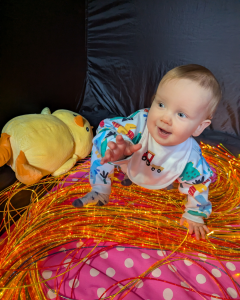
✨ Make tummy time fun – In our classes, babies are introduced to tummy time through colourful props, textures, and story adventures. At home, place a favourite toy just within reach to keep them motivated.
✨ Encourage rolling and reaching – During sensory play, babies naturally twist, turn, and stretch as they explore. Try scattering safe, interesting objects around your baby’s play mat so they’re inspired to reach and roll.
✨ Create crawl-friendly spaces – In class, we set up inviting story worlds that spark curiosity. At home, give your baby a clear space on the floor and place toys or textures just far enough away to encourage movement.
✨ Follow their lead – Every baby in our sessions moves at their own pace, and that’s exactly how it should be. Offer encouragement, but let your baby take the lead on when they’re ready to try something new.
What if my baby isn’t crawling yet?
It’s easy to compare your little one to others, but remember: crawling isn’t a mandatory milestone. If your baby is building strength, rolling, reaching, or showing other signs of progress, they’re doing brilliantly.
If you’re ever worried, chat with your health visitor for reassurance—but try not to stress if your baby isn’t on the exact same timeline as others.
Why classes help
So, when will my baby crawl? The short answer: when they’re ready. But by surrounding them with opportunities to move, explore, and play, you can help them build the confidence and skills they need along the way.
At Adventure Babies classes, every story session is designed to support both brain and body development through sensory storytelling. From tummy time with magical textures to reaching, wriggling, and shuffling towards exciting props, your baby will be working on their physical milestones—without even realising it.