
When Do Babies Learn to Sit Up? (And Why It’s a Total Game Changer for You Too!)
There’s something magical about the moment your baby finally sits up. One day they’re a floppy little bundle who can’t hold their own head, and the next they’re upright, wobbling proudly, looking around like, “Well, this is new!” It’s one of those milestones that feels huge — and it really is. Sitting up marks the start of a whole new world of independence, exploration, and interaction.
🌀 What Comes Before Sitting
Before your baby can sit, they’ve been secretly training for months — a mini fitness bootcamp in disguise.
All that tummy time, head-lifting, and rolling isn’t just adorable; it’s serious work. They’re building strength in their neck, shoulders, back, and core — the powerhouse muscles that make sitting possible.
Every time your baby pushes up on their arms or swivels to grab a toy, they’re improving balance and coordination. It’s like baby Pilates — minus the leggings and overpriced water bottle.
💪 The Muscles Doing the Heavy Lifting
The unsung heroes here are your baby’s trunk and core muscles — the same ones that help them later crawl, stand, and walk. Sitting demands balance, strength, and endurance. It’s not just plonking down and hoping for the best; it’s about finding stability in a constantly moving little body.
(If you’ve ever tried sitting on a gym ball, you’ll know it’s harder than it looks — babies make it look effortless!)
🚀 What Comes After Sitting
Once your baby has nailed sitting, everything changes. Suddenly, their hands are free for serious business: exploring toys, clapping, banging, waving, and grabbing anything that looks remotely chewable.
Sitting is also the launchpad for crawling, pulling up, cruising, and walking. It’s one of those pivotal skills that links early movement with future independence.
🌍 Why Sitting Is So Good for Babies
Sitting literally changes your baby’s view of the world. They can finally look around, engage with you and their surroundings, and join in play in a new, more interactive way.
This new perspective supports visual and cognitive development — they’re taking in more, understanding more, and learning more about how everything connects.
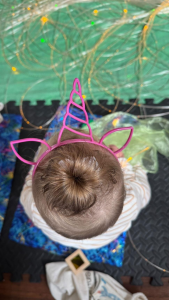
At Adventure Babies, we see this milestone unfold all the time. One week a baby is lying back listening to the story; the next, they’re sitting up, eyes wide, reaching out to touch the sparkly snow or stroke the soft bunny tail in our story baskets. That newfound curiosity is exactly what storytelling and sensory play are designed to nurture.
☕ Why It’s Great News for Parents Too
Let’s not pretend this milestone isn’t a tiny bit life-changing for you as well. When your baby can sit up safely, it opens up a whole new world of possibilities.
You can finally pop them down on the playmat while you drink your coffee while it’s still hot. You can enjoy storytime without needing to hold them upright for 45 minutes. And you can actually see their delighted face as they explore from this exciting new angle.
It’s a win-win milestone — great for their development, and just a little gift for your arms (and sanity).
💫 How to Help Your Baby Learn to Sit
Here are a few simple, expert-approved ways to encourage sitting:
-
Tummy time every day — little and often is perfect.
-
Encourage reaching and rolling by placing toys just out of reach.
-
Support early sitting practice by propping your baby between your legs or with a cushion for short bursts.
-
Interactive play — songs, stories, and sensory play all build strength, balance, and motivation to stay upright.
And remember, babies all hit milestones in their own time. Some will sit confidently by 5 or 6 months, while others prefer to take their time and get there closer to 8 or 9. Both are perfectly normal.
So keep cheering them on, keep playing, and before you know it, you’ll be watching your little one sit tall and proud — ready to take on their next big adventure.
If you’d like to read more about physical development milestones, visit the NHS Start for Life guide to learning to move