
The Pincer Grip: How Babies Learn to Use Their Fingers
If you’ve ever watched your baby carefully pick up a crumb, a bit of fluff, or a piece of food from the floor and thought “oh wow… that looked quite deliberate” — you’ve just spotted the pincer grip in action.
The pincer grip is one of those developmental milestones that often appears quietly, woven into everyday moments of play, feeding, and exploration. Many parents notice it happening long before they know what it’s called. In this guide, we’ll gently explain what the pincer grip is, how babies learn to use their fingers in this way, and why it matters — all without pressure, timelines, or comparison.
You’ll see this skill building naturally through play and sensory experiences, especially those that encourage babies to explore with their hands. If you’re curious about how fine motor skills develop more broadly, you might also enjoy our guide to fine motor development in babies.
What is the pincer grip?
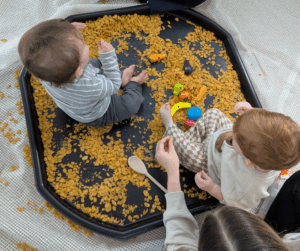
The pincer grip is the ability to hold an object between the thumb and index finger. It usually starts to appear between 8–12 months, though, like all developmental milestones, there’s a wide range of normal.
Before the pincer grip, babies typically use a palmar grasp, scooping objects with their whole hand. Over time, as their hand strength and coordination grow, their fingers start to work more independently. This small but precise movement is a key step in fine motor development.
Why is the pincer grip important?
The pincer grip is more than just cute — it’s foundational for many everyday skills, both now and later:
In babyhood, it supports:
-
Self-feeding (picking up small pieces of food)
-
Exploring toys and books more precisely
-
Hand–eye coordination
-
Concentration and problem-solving
As children grow, strong fine motor skills underpin:
-
Holding crayons and pencils
-
Turning pages
-
Using cutlery
-
Doing up buttons and zips
So yes — that tiny crumb your baby picks up really does matter.
How does the pincer grip develop?
Like most skills, the pincer grip develops through repetition, play, and opportunity. Babies build it by:
-
Reaching for small, safe objects
-
Practising grasping during play
-
Strengthening hand and finger muscles
-
Coordinating what they see with what their hands do
There’s no need to rush it. Development happens best when babies are allowed to explore at their own pace, without pressure.
Simple ways to support the pincer grip
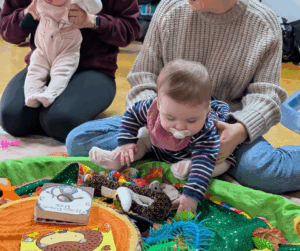
Everyday play is more than enough to encourage fine motor skills. Some gentle ideas:
-
Offer safe finger foods once your baby is ready
-
Let your baby turn pages in board books
-
Play with textured materials they can pinch and explore
-
Give time on the floor to reach, grasp, and investigate
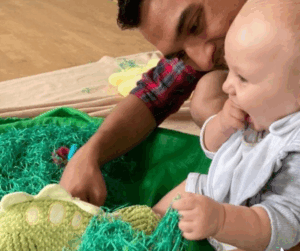
At Adventure Babies, our sensory storytelling activities naturally support these skills — reaching for props, touching textures, and engaging with books all help strengthen tiny hands in meaningful ways.
What if my baby isn’t showing a pincer grip yet?
It’s completely normal for babies to reach this skill at different times. Development isn’t a race, and fine motor skills can take time.
If your baby is generally interested in their surroundings, reaching for objects, and progressing in other areas, there’s usually no cause for concern.
If you ever feel unsure, your health visitor or GP can offer reassurance and guidance.
A gentle reminder for parents
The pincer grip is a brilliant example of how big development comes from small moments.
Every reach, grasp, and explore helps your baby build strength, coordination, and confidence — all through play.
So next time you spot those tiny fingers carefully at work, take a moment to smile. Your baby is learning in the most wonderful way 💛