Raising Kind Humans: How Stories Build Empathy From Babyhood
How To Raise an Empathetic Child
There’s a moment that happens in those early months that’s easy to miss if you’re not looking for it.
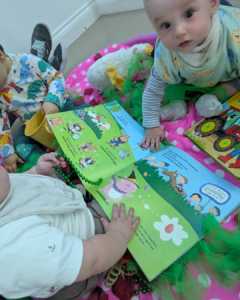
You’re holding your baby, a book open in your lap. You start reading—not because they understand the words, but because it feels like the right thing to do. Your voice softens, lifts, slows. You exaggerate a moment without even thinking about it.
And then you notice them.
Not looking at the book.
Looking at you.
Studying your face like it matters.
Because to them, it does.
Empathy Doesn’t Start With Words
When we think about raising kind children, we often imagine the toddler years and beyond. Teaching them to share. Encouraging them to say sorry. Helping them understand how someone else might feel.
But empathy doesn’t begin there.
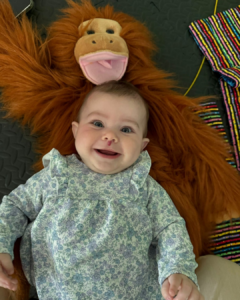
It begins long before language, in the tiny, repeated exchanges your baby has with you. In the way they learn that a raised eyebrow means surprise, that a softened voice means calm, that a smile feels safe.
And one of the richest places this learning happens?
Stories.
Not because of the plot. Not yet. But because of everything else that comes with it.
The Story Is in You
When you read to your baby, the book is almost secondary.
What they are really taking in is you.
The way your voice changes without you noticing.
The pause before something “exciting” happens.
The rhythm you fall into as you turn each page.
They are watching how emotion moves across your face. They are hearing how feeling sounds.
This is how babies begin to map the emotional world.
Not through explanation, but through experience.
Organisations like the National Literacy Trust often talk about the importance of early reading for communication and bonding—but what’s just as powerful is this quieter layer: babies learning what it feels like to be human.
Feeling First, Understanding Later
We sometimes underestimate babies because they can’t tell us what they know.
But spend a moment really watching them during a story and you’ll see it.
The stillness.
The focus.
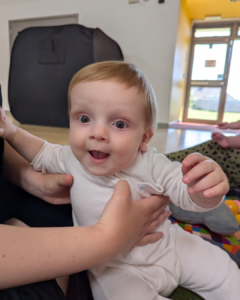
The way their expression shifts in response to yours.
They are beginning to recognise patterns.
That light, playful tone feels different to a hushed, gentle one.
That excitement has an energy to it.
That calm has a softness.
They don’t label these as “happy” or “sad” yet—but they feel the difference.
And that’s where empathy begins.
Because before we can understand someone else’s feelings, we have to experience what feelings are.
Stories as a Safe Place to Experience the World
The world is big when you’re new to it. Bright, noisy, unpredictable.
Stories offer something different. A contained space. A gentle introduction to new sensations, new rhythms, even new emotions—but without overwhelm.
In a story, your baby can experience excitement while being held securely. They can feel calm while listening to your voice. They can sense surprise without fear.
Over time, these repeated emotional experiences build familiarity.
And familiarity builds understanding.
Research from BookTrust highlights how shared reading supports not just language, but a child’s social and emotional development. It’s not just about books—it’s about connection, closeness, and the shared experience of feeling something together.
Why This Matters More Than We Realise
We all want our children to grow into kind people. To notice others. To care.
But kindness isn’t something we can simply instruct.
It grows from a child’s ability to recognise emotion—first in themselves, and then in others.
And that ability is built slowly, quietly, through moments that don’t look like “teaching” at all.
Moments like sitting with a book.
Moments like sharing a story.
Moments like your baby watching your face and beginning to understand that feelings exist—and that they can be shared.
Where Sensory Storytelling Deepens the Experience
This is where something like Adventure Babies becomes more than just a class.
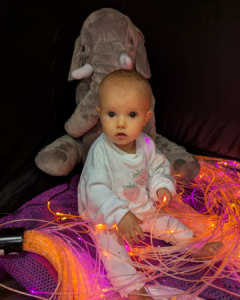
Because when you add sensory elements into storytelling—movement, textures, sounds—you give babies more ways to experience what’s happening.
They’re not just hearing a story.
They’re feeling it.
The shift in atmosphere.
The change in energy.
The emotional tone of a moment, carried through more than just words.
It deepens the connection, not just to the story—but to the feeling behind it.
And that’s what makes those early emotional imprints stronger.
You’re Already Building a Kind Human
It’s easy to feel like raising a kind, empathetic child is a big task. Something that requires constant teaching, constant correction, constant effort.
But so much of it is already happening.
In the way you hold them while you read.
In the way your voice softens without you thinking.
In the way they look at you, completely absorbed.
You are showing them what connection feels like.
You are showing them how emotions move between people.
You are giving them the foundation they will one day use to understand someone else.
And it doesn’t look like a lesson.
It looks like a story.
If You Want More Moments Like This
Or dive deeper into how your baby learns and develops: