
The Wobble Before Sitting: How to Support Your Baby Without Rushing
For three glorious seconds, your baby sits upright.
You hover nearby, barely breathing. Their face suggests they’ve mastered the whole thing. Then they spot something interesting, turn their head and begin a slow sideways descent into your waiting hands.
Welcome to the wobble before sitting.
This stage can bring excitement, uncertainty and an unexpected amount of comparison. Someone else’s baby sits confidently at class, while yours still folds forwards to inspect their own toes.
If you’re wondering how to help a baby learn to sit, start with varied floor play, gentle support and opportunities to move. Understanding what happens beneath those wobbles can make the whole process feel less mysterious.
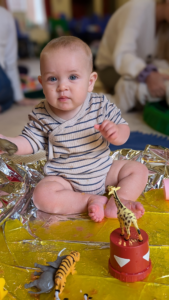
Sitting involves much more than strong tummy muscles
Keeping upright requires your baby to coordinate their head, trunk and pelvis while responding to gravity.
Their eyes provide information about their surroundings. The balance system in their inner ears helps detect movement and head position. Meanwhile, information from muscles and joints helps them sense where their body is.
These systems need to work together as your baby shifts, reaches and turns.
Imagine balancing a tall stack of blocks while someone keeps adding a new distraction. That gives you a flavour of the challenge.
Strength matters, but so do coordination, experience and balance. Holding a baby upright for longer won’t automatically teach all those skills.
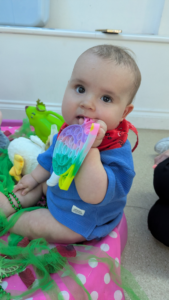
When do babies learn to sit?
Sitting develops gradually, and the word “sitting” can describe several different abilities.
A baby may sit with your hands supporting their body, lean forwards onto their own hands or balance briefly without help. Later, they become more confident reaching and turning while upright.
NHS physiotherapy guidance describes independent sitting as a skill that typically develops around seven to nine months, although babies vary. Read the NHS guidance on early movement development.
Developmental variation still needs sensible checkpoints. If your baby cannot sit unsupported by eight months, speak with your health visitor or GP, using corrected age if they were born prematurely. UK guidance recommends assessment at this point so families can access support when needed.
The hidden difference between sitting and getting into sitting
Here’s something milestone conversations often miss: balancing in sitting and moving into sitting are separate skills.
Your baby might remain upright after you place them on the floor but still need help changing position. Getting from lying to sitting involves additional coordination, including turning and pushing through an arm.
That means a photograph of a sitting baby tells you only part of the story.
Somerset NHS physiotherapy guidance explains how rolling builds muscles that support sitting and moving between positions. It also encourages babies to take an active part in those transitions.
Keep offering space for rolling, reaching and floor exploration as sitting emerges. Your baby benefits from learning how to arrive, balance and eventually move on again.
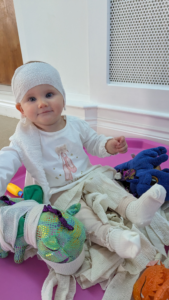
Why reaching can suddenly cause a wobble
A baby who sits happily with empty hands may topple when a favourite toy appears.
Reaching changes the balance problem. Their arm moves away from the floor, their weight shifts and their body needs to adjust.
For an early sitter, lifting one hand can be quite an achievement.
This helps explain why some babies initially lean forwards with their hands on the floor. Those arms provide extra support while they develop control through their body.
Avoid taking both hands away from that support to make them hold a toy. You can offer something interesting to look at while they keep their hands where they need them.
As balance improves, their hands become increasingly available for exploring.
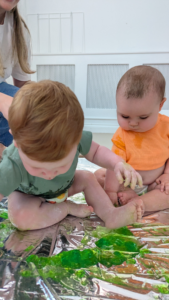
How to help a baby learn to sit through everyday play
The best starting point often happens before your baby looks ready to sit.
Offer supervised play on their back, tummy and side, adjusting the position to suit their comfort and abilities. A clear space on a firm floor mat gives them room to move.
Choose a moment when they seem awake, settled and interested. Hunger or tiredness can make even a familiar activity feel difficult.
Your face, a favourite toy or an open book can provide a reason to look, reach or turn.
There’s no need to create a separate “sitting lesson”. Several enjoyable opportunities throughout the day can fit around the life you already share.
Start with manageable tummy time
Tummy time helps build muscles babies use for sitting and crawling.
For a young baby, this might begin on your chest while you’re fully awake. Later, try short periods on a firm floor mat with your face nearby.
The NHS recommends starting little and often and gradually increasing tummy time. Always supervise, keep your baby awake and alert, and place them on their back for sleep.
If your baby protests, pause and try a shorter attempt another time. Persistent difficulty lifting their head, obvious discomfort or concerns about movement deserve a conversation with your health visitor.
Make room for rolling and side play
Lying on their side can bring your baby’s hands together in front of them, with a toy nearby to investigate. Stay alongside and help them remain comfortable.
During back play, move a favourite toy slowly towards one side and see whether they follow it with their eyes, head or body. Offer opportunities on both sides.
Rolling gives babies experience of shifting weight and turning through their trunk. These movements contribute to the foundations for later position changes.
Our guide to how babies learn explores how movement, attention and curiosity overlap during everyday play.
Offer supported sitting when they can manage it comfortably
Once your baby can hold their head steady, try brief supported sitting on the floor between your legs.
Support their trunk as much as they need, staying close enough to prevent a fall. Their hands can rest forwards on your legs or the floor.
NHS advice on learning to sit suggests this position as a way to explore upright balance. It recommends a firm surface rather than a bed or cushion.
If their head drops, their body repeatedly collapses or they seem uncomfortable, change position. Gradually reduce support as their control improves, without suddenly letting go to test them.
Keep early reaches small
Start with an interesting object directly in front, within easy reach.
As your baby becomes steadier, place it slightly to one side so they can explore a small turn. Keep your hands ready to support their body.
A stable sitter can gradually try a little more reaching. Moving the toy too far away can turn an enjoyable challenge into frustration.
NHS children’s physiotherapy activity guidance includes reaching and looking around as ways to develop sitting balance.
Think “interesting enough to try” rather than “just beyond what they can manage”.
Help them explore movement between positions
Sitting practice can easily become a repeated routine of placing your baby upright and waiting.
Transitions deserve attention too.
Allow time for your baby to turn, roll and push during everyday floor play. Avoid repeatedly pulling them straight up by both hands, which leaves them little opportunity to push through an arm.
If you’re unsure how to help with lying-to-sitting movements, ask your health visitor or a paediatric physiotherapist to demonstrate an approach that suits your baby. Somerset NHS guidance also explains this transition.
Follow any individual advice your baby already receives, especially if they have a medical condition or additional movement needs.
Does a baby seat teach sitting?
A seat can hold a baby upright without giving them the same experience as balancing with responsive support from you.
That distinction matters. Looking upright doesn’t necessarily show how much control a baby can manage independently.
Oxford Health NHS guidance explains that moulded sitting seats don’t provide the same practice for independent sitting or moving into and out of the position.
Keep equipment use brief and leave plenty of time for free movement. Follow the product’s age, size and developmental requirements.
If your baby needs specialist seating, follow their clinical team’s advice. That equipment serves an individual purpose and may help them participate comfortably.
Why sitting changes more than the view
A steadier upright position can open new opportunities for exploring objects and sharing experiences.
With fewer demands on their hands for support, a baby can handle a toy differently. Their view of people and nearby objects also changes.
Researchers study these connections because movement and learning develop together. A new physical skill can alter the experiences available during play.
A 2025 study of 20 babies aged five to seven months examined how sitting support and positioning relate to parent–baby coordinated attention. Its small sample makes broad conclusions difficult, but the research highlights that how babies play with us matters alongside whether they can sit. Explore the research on sitting and shared attention.
Earlier sitting doesn’t automatically mean better learning. Babies can explore, communicate and share your attention in many positions.
Bring the story to your baby’s position
A story doesn’t require a sitting audience.
Lie beside your baby and hold the pictures where they can see them. During supervised tummy time, place an open book in front while you chat about a character.
An older baby may enjoy a story on your lap with appropriate support. Once they sit confidently, offer the book within easy reach and let them investigate.
Our Adventure Babies shop includes our original books, sensory storytelling bags and mini parachutes for continuing shared adventures at home.
Choose props that suit your baby’s age and stage, supervise their use and keep loose fabric clear of their face. You can enjoy a mini parachute together while your baby lies comfortably; sitting can wait until they’re ready.
The story provides something worth noticing. Your baby chooses how to join in.
How Adventure Babies supports these foundations
At Adventure Babies sensory storytelling classes, stories provide opportunities to look, reach, turn and explore.
A puppet can catch a baby’s attention during floor play. Shared sensory activities offer reasons to investigate with their hands. Meanwhile, a familiar grown-up stays close to support their position and respond to their cues.
You can adapt the experience as your baby grows, enjoying activities from lying, your lap or a more independent position.
Classes also give you somewhere to share the less photogenic parts of development: the wobble, the sudden flop and the baby who becomes completely absorbed in their own sock.
Nobody needs a sitting milestone to earn their place in our community.
When should I ask for advice?
Contact your health visitor or GP if your baby cannot sit unsupported by eight months corrected age. NICE guidance recommends referral for assessment at this stage.
For a premature baby, corrected age accounts for how early they arrived. For example, a baby born eight weeks early has a corrected age of roughly six months when they’re eight months old.
Seek advice sooner if you notice persistent one-sided movement, unusual stiffness or floppiness, poor head control or difficulty using an arm or leg. If your baby loses a skill they previously had, contact a health professional promptly.
You don’t need to wait for a milestone deadline when something concerns you. Asking gives you a chance to understand what your baby needs.
The wobble deserves a little credit
It’s understandable to want that first confident sitting moment. Seeing your baby upright can make them look suddenly, startlingly grown-up.
But the lead-up contains plenty worth noticing: a steadier head, a stronger push through the arms, a small turn towards your voice.
When you think about how to help a baby learn to sit, come back to comfortable movement, manageable challenges and time together.
Keep a hand nearby. Leave room for a rest. Let their current abilities guide the next little adventure.
And when they finally sit, pick up a toy and immediately drop it behind themselves, you’ll have a whole new puzzle to enjoy together.