How to Encourage Your Baby to Talk
From babble to first words — and how to turn those into sentences
There are few parenting moments more heart-melting than your baby’s first words. After months of adorable babble, wild pointing, and what sounds suspiciously like dinosaur noises, they finally say something that makes sense. “Mama!” “Dada!” “Dog!” — suddenly, your baby has joined the conversation.
How to Encourage Your Baby to Talk
But what actually leads up to those first words, when do they usually appear, and how can you help your little one find their voice (without turning into a 24/7 children’s TV presenter)? Let’s unpack it — with a sprinkle of humour, and a whole lot of Adventure Babies sensory storytelling magic.
👶 Before words: building the foundations (0–12 months)
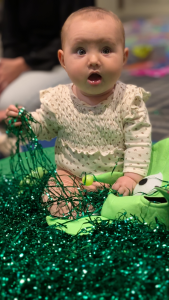
Babies don’t start with words — they start by listening. From birth, they’re soaking up the rhythm and melody of language. When you sing to them, talk to them, or read stories at Adventure Babies, their brain lights up like a tiny fireworks display.
Here’s what’s happening behind the adorable coos and squeaks:
-
0–6 months: Babies experiment with sounds — cooing, gurgling, blowing bubbles. It might sound like nonsense, but this is early voice practice.
-
6–9 months: Babbling begins! “Ba-ba,” “da-da,” “ga-ga.” They’re testing out different sounds, copying your tone, and learning how conversation feels.
-
9–12 months: They start attaching meaning to words — “Dada” might actually mean Dada. (Unless they call everyone Dada, which is also a phase. Sorry, Mum.)
At Adventure Babies, all that sensory storytelling — the songs, textures, sounds, and faces — gives babies endless opportunities to tune in, copy sounds, and connect words with actions. When you read “The Very Hungry Caterpillar” while waving a silky green scarf, your baby’s not just watching a story — they’re living language.
💬 The magic of first words (10–18 months)
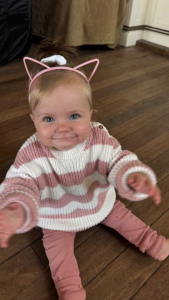
Most babies say their first words between 10 and 14 months, but it’s completely normal to be earlier or later. Some are chatty from the start; others take their time and suddenly burst into full sentences at two.
First words are usually simple, meaningful, and emotional. You’ll often hear:
-
People: Mama, Dada, Nana
-
Objects: Ball, car, teddy
-
Animals: Dog, cat, moo (yes, animal sounds totally count!)
-
Requests: More, up, bye-bye
Your baby’s first words reflect the things they care most about — family, pets, favourite toys, and of course, snacks.
Tip: Repeat their attempts with the correct pronunciation and a smile.
Baby: “Ba!”
You: “Ball! Yes, big red ball!”
This helps them hear the right version without pressure or correction.
🗣️ From first words to first sentences (18–24 months)
Once your baby can say a few words, their brain starts linking them together. You’ll hear two-word phrases like:
-
“More milk!”
-
“Bye Daddy!”
-
“Big car!”
This “two-word stage” often appears around 18–24 months. By age two, many toddlers can string together simple sentences, and by three, you’ll be getting full narratives. (“Mummy fell over. Funny. Daddy laughed.” Thanks, kid.)
Every time you expand what they say, you’re showing them how sentences work:
Baby: “Dog!”
You: “Yes, a big brown dog! The dog is running!”
It’s simple but powerful language modelling.
💡 How to encourage your baby to talk
Here are a few easy (and fun) ways to boost your baby’s speech and language skills every day:
1. Talk, talk, talk
Narrate what you’re doing, what they’re doing, what the cat’s doing. It doesn’t matter if you feel silly — your voice is your baby’s favourite sound.
“Let’s zip up your coat. One arm, two arms! Ready to go!”
2. Sing nursery rhymes
Songs and rhymes teach rhythm, repetition, and memory. The sillier, the better — bonus points for actions and dramatic eye contact. (“The wheels on the bus” performed like West End theatre is highly encouraged.)
3. Read and play
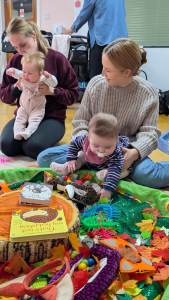
Books are the best tool for early language. At Adventure Babies, we combine stories with sensory play — lights, textures, props, songs — so babies don’t just hear words, they feel and see them. That multi-sensory experience makes words stick and sparks those all-important “aha!” moments.
4. Pause for replies
When you talk or read, leave a little space for your baby to respond. They might coo, point, or babble back — that’s the start of a real conversation.
5. Get down to their level
Face-to-face communication is key. Babies learn a lot from watching your mouth, expressions, and gestures. That’s why our classes are full of songs and interactive moments where babies can see communication in action.
🌈 Why sensory play supports speech development
Speech and language aren’t just about talking — they’re about understanding and connecting. When your baby feels textures, hears different sounds, and explores new sensations, their brain is building the foundations for understanding words.
For example:
-
Feeling something soft while you say “soft bunny” connects the word to a sensation.
-
Watching a bubble pop when you say “pop!” teaches cause and effect.
-
Hearing a rhythm during a rhyme trains their brain to recognise the musicality of language.
That’s why sensory play is such a powerful communication tool — and exactly why we use it at every Adventure Babies class.
❤️ The takeaway
Every baby develops speech at their own pace, but they all need the same ingredients: interaction, play, and love. Talk to your baby, read to them, sing, respond — and enjoy the messy, magical process of learning to communicate.
Because one day soon, you’ll realise your baby isn’t just babbling anymore. They’re chatting, singing, narrating your every move — and you’ll miss the peace and quiet!
(Until then, enjoy every “Mama,” “Dada,” and “moo.” They’re small words, but they mean the world.)