How Do Babies Learn? What Your Baby Is Really Doing When They Seem to Be “Just Playing”
Have you ever watched your baby spend five minutes dropping the same spoon onto the kitchen floor and wondered why they find it so fascinating?
Or perhaps you’ve hidden behind your hands during peekaboo for what feels like the hundredth time, only for your baby to burst into laughter as though it’s the greatest surprise they’ve ever experienced. Maybe you’ve noticed them carefully turning a toy over, studying it from every angle before putting it straight into their mouth.
From an adult’s perspective, these moments can seem repetitive or even a little puzzling. From your baby’s perspective, they’re some of the most important lessons they’ll ever learn.
Parents often ask us, “How do babies learn?” It’s one of our favourite questions because the answer isn’t worksheets, flashcards or educational toys. Babies learn by doing, exploring, repeating and sharing experiences with the people who matter most to them. Every cuddle, every story, every song and every sensory experience helps build the incredible network of connections inside their growing brain.
At Adventure Babies, we see this happen every single week. While parents often notice the obvious milestones, such as rolling, crawling or clapping, we’re also watching something much quieter. We’re watching babies solve problems, make predictions, recognise patterns and discover how the world works. Those early thinking skills are known as cognitive development, but they don’t need complicated activities. They grow through joyful, everyday experiences.
Your Baby Is A Tiny Scientist
One of the loveliest things about babies is their determination to investigate absolutely everything. A feather isn’t just a feather. It’s something to stroke, wave, scrunch and, if you don’t move quickly enough, taste. A wooden spoon isn’t simply a spoon. It’s something to bang, drop, shake and compare with every other object nearby.
Adults often rush to show babies the “right” way to use a toy, but babies usually have a better idea. They’re carrying out their own little experiments.
What happens if I drop this?
Does it always make the same noise?
Will Mum pick it up again?
Can I reach it before she does?
Those repeated experiments help babies build an understanding of cause and effect. Every prediction they make and every outcome they observe strengthens the pathways in their brain. It’s one of the reasons repetition is so valuable during the first year of life. Babies aren’t repeating activities because they’ve run out of ideas. They’re repeating them because their brain is checking that the world behaves in the way they expect.
The NHS Start for Life explains that babies develop through everyday interactions, responsive play and exploration rather than formal teaching. Every conversation, game and shared experience helps build the foundations for future learning.
Why Repetition Is One Of The Best Teachers
If you’ve read The Gruffalo every night for the past three weeks or sung the same nursery rhyme until you can barely hear yourself anymore, there’s good news.
Your baby loves repetition because it helps their brain become more efficient.
The first time your baby hears a story, they’re busy taking everything in. The next time, parts of it begin to feel familiar. Before long, they start recognising voices, anticipating what comes next and remembering favourite moments. Every repeated experience strengthens memory, attention and understanding.
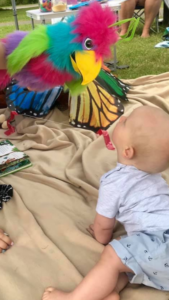
We see this in our classes all the time. During the first week of a new theme, babies often spend most of their time simply looking around. By the following session they’re already recognising familiar songs and sensory resources. A few weeks later they’re reaching excitedly for a favourite puppet before it’s even appeared from the story bag.
Parents sometimes think we should constantly introduce something new to keep babies interested, but their brains often benefit much more from familiar experiences with small new challenges added along the way.
If you’d like to explore this idea further, our blog How Babies Learn Best explains why repetition is one of the most powerful ways to support your baby’s development.
Stories Exercise The Brain In Surprising Ways
People sometimes ask whether babies are really old enough to enjoy books.
The answer is yes, but perhaps not for the reasons you expect.
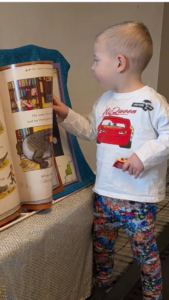
When you read to your baby, you’re not simply introducing words. You’re helping them develop attention, memory, prediction and imagination. As they begin recognising favourite books, they remember familiar characters, anticipate exciting moments and connect words with pictures, voices and emotions.
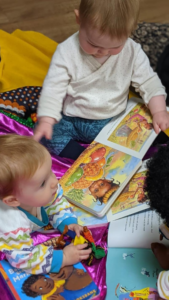
At Adventure Babies, we build our sessions around sensory storytelling because stories naturally bring together so many different areas of development. Babies listen, watch, reach, explore textures, respond to music and share experiences with the people around them. Their brains aren’t separating these experiences into neat categories. They’re building connections between everything they’re seeing, hearing and feeling.
The charity BookTrust highlights that sharing books from birth supports language, communication and early learning while also strengthening the bond between parent and child.
If your baby loves the stories in class, you can continue the adventure at home with our own collection of Adventure Babies books, designed to encourage interaction rather than simply reading from page to page.
Learning Happens In The Little Moments
One of our favourite sights in class isn’t a big milestone at all.
It’s watching a baby pause.
Perhaps another baby has discovered the bubbles. Maybe a puppet has appeared from behind the story sack. Sometimes it’s simply the sound of everyone laughing together.
Your baby stops what they’re were doing, looks carefully, then decides whether to join in.
That tiny pause is packed with learning. Your baby is paying attention, making sense of what they can see and deciding what to do next. These moments might only last a few seconds, but they’re helping build concentration, curiosity and confidence.
Parents often tell us, “I don’t think my baby really did much today.”
We always smile.
Watching is learning.
Thinking is learning.
Listening is learning.
Sometimes the biggest developmental leaps happen so quietly that they’re easy to miss.
How Adventure Babies Supports Cognitive Development
Everything we do at Adventure Babies has a purpose, even if it looks like simple fun.
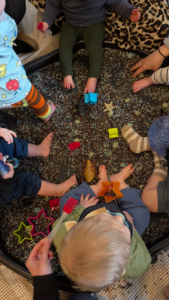
Our sensory storytelling sessions combine books, music, movement, sensory play and imaginative adventures because babies learn best when they engage all of their senses. Every class encourages them to notice patterns, solve tiny problems, remember familiar experiences and explore new ideas in a safe, exciting environment.
Perhaps most importantly, they do all of this with you by their side.
Research consistently shows that babies learn most effectively through warm, responsive relationships. The smiles you share, the conversations you have and the stories you enjoy together all help shape the architecture of your baby’s growing brain.
That’s why our classes have never been about entertaining babies for forty-five minutes. They’re about giving families meaningful experiences that continue long after you leave the room.
If you’re looking for ways to support your baby’s learning while making wonderful memories together, we’d love to welcome you to an Adventure Babies class this autumn.
You can find your nearest class here