
Baby Feeding Milestones: From Milk to Messy Play (And Why It Matters for Development)
If you’ve ever googled “is my baby getting enough milk?” at 2am or panicked during your baby’s first gag at weaning — welcome. You’re in good company.
Understanding baby feeding milestones isn’t just about what goes in your baby’s mouth. It’s about brain development, motor skills, sensory processing and confidence. Feeding is one of the most powerful developmental tools your baby experiences in their first year.
And yes — that’s exactly why at Adventure Babies we embrace taste-safe messy play.
Let’s break it down.
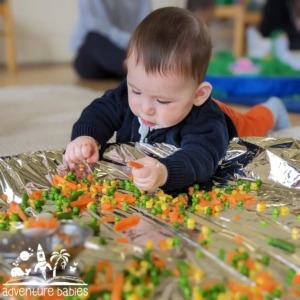
Milk Feeding: The First Stage of Baby Feeding Milestones (0–6 Months)
Whether you’re breastfeeding, formula feeding or combination feeding, the early months are about rhythm, growth and trust.
Common parent worries:
-
Is my milk supply enough?
-
How often should my baby feed?
-
How do I know they’re getting enough?
Signs your baby is feeding well include steady weight gain, wet/dirty nappies and contentment after feeds. If you’re ever unsure, your health visitor or midwife should always be your first port of call.
Development Connection: More Than Just Nutrition
Milk feeding develops:
Oral motor skills
Sucking strengthens jaw muscles, tongue coordination and lip control — all essential foundations for speech later on.
Core strength
Yes, really. Feeding positions (especially breastfeeding) encourage midline positioning and early head control.
Attachment & brain wiring
Responsive feeding builds neural pathways linked to emotional security and regulation.
Feeding isn’t passive. It’s developmental work.
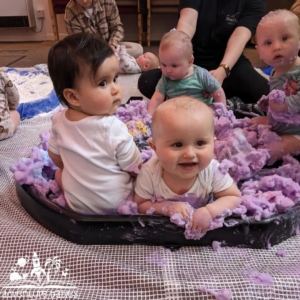
Introducing Solids: A Whole New Motor Skill (Around 6 Months+)
Weaning is one of the biggest baby feeding milestones — and often the messiest.
Around six months, babies typically show signs of readiness:
-
Sitting with minimal support
-
Good head control
-
Interest in food
-
Loss of the tongue-thrust reflex
Whether you choose purées, baby-led weaning or a mix, texture progression is key.
Gagging vs Choking: The Big Fear
Gagging is common and protective. It looks dramatic but is part of learning. Choking is silent and requires intervention.
Understanding the difference can massively reduce anxiety during weaning.

How Feeding Develops Gross and Fine Motor Skills
Here’s where it gets fascinating.
Fine Motor Skills
Picking up finger foods develops:
-
Pincer grip (thumb and forefinger)
-
Hand-eye coordination
-
Bilateral coordination (using both hands together)
-
Wrist rotation
These skills later support writing, dressing and independent play.

Gross Motor Skills
Eating in an upright seated position strengthens:
-
Core muscles
-
Shoulder stability
-
Postural control
-
Midline development
Even reaching for a spoon is full-body work.
Feeding isn’t just about eating. It’s a coordinated neurological workout.
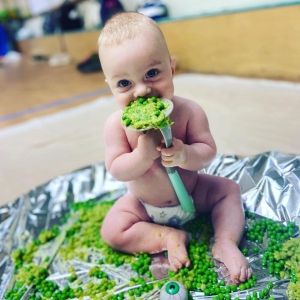
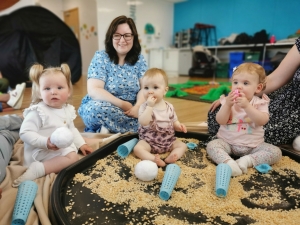
Why We Use Taste-Safe Materials in Adventure Babies Classes
If you’ve been to one of our Adventure Babies sessions, you’ll know — we don’t shy away from the mess.
But it’s intentional.
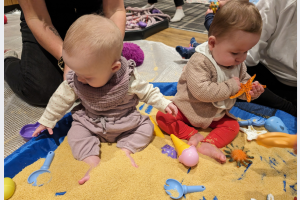
Babies explore the world through their mouths. It’s how their sensory system gathers information. That’s why we use food-based or taste-safe materials in our messy play.
Because when babies:
-
Squish yoghurt between fingers
-
Explore cooked pasta
-
Pat porridge
-
Taste fruit purée
They’re developing:
✔ Sensory processing
✔ Fine motor strength
✔ Confidence with textures
✔ Positive associations with food
✔ Oral exploration skills
For babies in early weaning stages, this exposure can reduce texture sensitivity and support smoother feeding transitions.
And for milk-fed babies not yet on solids? It’s still safe exploration that supports sensory mapping.
Messy play is pre-weaning practice.
Burping, Reflux and Tummy Troubles
Digestive discomfort is another common part of baby feeding milestones.
Parents often ask about:
-
Reflux
-
Wind/gas
-
Colic
-
Frequent hiccups
Burping helps release swallowed air, but some babies simply have immature digestive systems that need time to settle.
Holding babies upright after feeds, responsive pacing and gentle movement can all help.
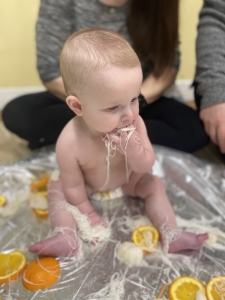
Interestingly, upright seated play (like in our classes) supports digestion and core strength at the same time.
Everything connects.
Why Feeding Confidence Matters
When babies are allowed to:
-
Explore food
-
Get messy
-
Self-feed
-
Experience different textures safely
They build confidence.
And confident babies become curious toddlers.
At Adventure Babies, our sensory storytelling and taste-safe messy play are designed to support these baby feeding milestones in a way that feels joyful — not pressured.
Because development happens best when babies feel safe, connected and free to explore.
FAQ: Baby Feeding Milestones
Fancy joining our online community?
When should I start weaning my baby?
Around 6 months, when your baby shows developmental signs of readiness. Always check with your health professional if unsure.
How do I know if my baby is getting enough milk?
Look for steady weight gain, wet nappies and general contentment. If concerned, speak to your midwife or health visitor.
Is gagging normal when starting solids?
Yes — gagging is common and protective. Choking is silent and requires immediate action. Consider taking a baby first aid course for peace of mind.
Why does messy play help with feeding?
It reduces sensory sensitivity, builds fine motor skills and helps babies feel confident around different textures before and during weaning.
My baby hates tummy time — does that affect feeding?
Tummy time builds the core strength needed for upright sitting, which supports safe feeding. Short, frequent sessions help.
Final Thoughts on Baby Feeding Milestones
Feeding in the first year isn’t just about nutrition charts and schedules.
It’s about:
-
Jaw strength for speech
-
Core stability for sitting
-
Finger strength for writing
-
Sensory mapping for confidence
-
Emotional security through responsive care
Every feed is developmental.
And every splat of yoghurt in our Adventure Babies classes? Completely intentional.
Because messy babies are learning babies.