
Baby Emotional Regulation: Learning Calm in a Big World
How babies learn to manage big feelings — and how parents can help
Parenting a baby can feel like holding a tiny emotional thunderstorm in your arms. One moment they’re calm and curious; the next, they’re crying, arching, squirming, or suddenly overwhelmed. Naturally, many parents wonder, am I doing this right?
However, here’s the reassuring truth: babies aren’t meant to regulate their emotions alone yet. Emotional regulation develops gradually — and it grows through connection, not independence.
Importantly, you are already teaching it every single day.
Why Predictable Routines Help Babies Feel Calm
Because babies rely on external cues to feel safe, predictability plays a vital role. Familiar rhythms help their nervous system relax and signal: “You know what’s coming next.”
For this reason, repeated experiences matter. The same song before sleep, a familiar story pattern, or gentle transitions between activities all reduce emotional overload.
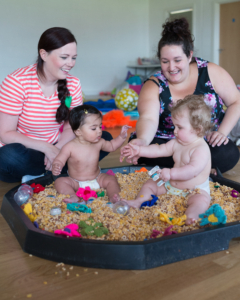
This is also why Adventure Babies classes support emotional regulation so effectively. Each session follows a reassuring structure:
-
familiar songs
-
repeated storytelling rhythms
-
predictable sensory moments
As babies begin to anticipate what happens next, they relax. Consequently, confidence grows. In turn, babies engage with curiosity rather than anxiety.
How Sensory Play Supports Emotional Regulation
Although stimulation often gets a bad reputation, the right kind of sensory input can actually promote calm.
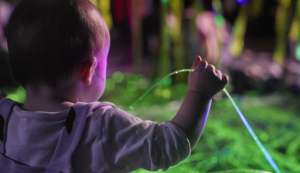
When adults offer sensory play intentionally and gently, it helps regulate a baby’s nervous system instead of overwhelming it.
Calming sensory experiences may include:
-
soft and varied textures
-
rhythmic movement
-
soothing sounds
-
visually engaging but uncluttered environments
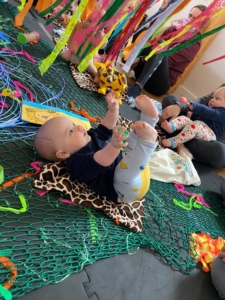
At Adventure Babies, sensory storytelling introduces new experiences within a safe, predictable framework. Because babies feel secure, they can explore without tipping into overload.
As a result, they practise managing stimulation — an essential step in learning how to calm themselves over time.
For evidence-based insight into how early experiences shape emotional regulation and resilience, the Anna Freud Centre provides trusted guidance for parents:
👉 https://www.annafreud.org
How Baby Classes Support Parents Too
Just as importantly, emotional regulation doesn’t stop with babies — it extends to parents.
When parents understand that emotional ups and downs are developmentally normal, they respond with more confidence and calm. Babies sense that immediately.
Parents often leave Adventure Babies classes saying:
“I thought my baby was the only one who got overwhelmed.”
“Seeing other babies do the same thing reassured me.”
“I finally feel confident responding instead of panicking.”
Because classes allow parents to observe, participate, and connect, they leave with practical tools they can use at home. Meanwhile, shared experiences reduce anxiety and isolation.
Simply put: calmer parents support calmer babies.
The Takeaway for Parents
If your baby struggles to settle sometimes, it doesn’t mean you’re doing anything wrong.
Instead, it means your baby is learning — and you are teaching.
Every cuddle, every gentle song, and every moment you respond with warmth builds your baby’s emotional toolkit for life.
Calm isn’t something babies are born with.
Rather, it’s something they learn — with you.