
Baby Attachment and Separation Anxiety: What’s Really Happening in the First Year
At some point in the first year, something shifts.
Your baby who once happily lay on a playmat now cries when you step out of the room.
They cling tighter.
They watch you leave.
If you’re wondering about baby attachment and separation anxiety, this stage can feel emotional — sometimes exhausting — but it is one of the clearest signs your baby is developing exactly as they should.
Let’s explore what’s really happening beneath the tears.

What Is Baby Attachment?
Baby attachment is the deep emotional bond your baby forms with you in their first year of life.
It develops through:
-
Holding and cuddling
-
Skin-to-skin contact
-
Feeding and eye contact
-
Responding consistently to cries
-
Predictable, loving care
Attachment is not about doing everything perfectly. It’s about being responsive enough, often enough.
When babies experience consistent care, they develop secure attachment — the belief that:
-
The world is safe
-
My needs will be met
-
My caregiver comes back
Secure attachment becomes the foundation for emotional resilience, confidence and later relationships.
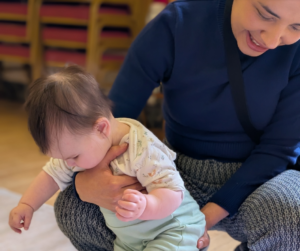
In our Adventure Babies classes, we see this secure base in action every week. Babies explore sensory spaces, lights and textures — but they check back with their grown-up. That “look back” is attachment at work. It’s emotional safety in motion.

When Does Separation Anxiety Start?
Separation anxiety typically begins between 8 and 10 months, though it can start slightly earlier or later.
This is when babies develop object permanence — the understanding that you still exist even when you’re not visible.
Before this stage, if you left the room, you simply disappeared from their awareness.
Now?
They know you’re gone.
And they don’t like it.
Separation anxiety is not clinginess caused by “too much holding.”
It’s a developmental milestone linked to cognitive growth.
Why Baby Attachment and Separation Anxiety Go Hand in Hand
It might seem contradictory — but strong attachment often leads to separation anxiety.
The more securely attached your baby is, the more aware they are of your absence.
Separation anxiety can look like:
-
Crying when you leave the room
-
Distress at nursery drop-off
-
Wanting to be held more frequently
-
Night waking increases
-
Hesitation around unfamiliar people
This stage is temporary. Responding calmly and consistently helps your baby build trust that separations are safe and reunions are reliable.
Gentle group settings, like structured baby classes, can also help babies practise small social experiences while remaining close to their secure base. That balance builds confidence gradually.
Parental Mental Health Matters Too
When we talk about baby attachment and separation anxiety, we also need to talk about you.
The early months are emotionally intense. Hormonal shifts can cause the “baby blues” — tearfulness, overwhelm, mood swings — particularly in the first two weeks.
But if low mood persists, it could be postnatal depression (PND). Signs can include:
-
Ongoing sadness or numbness
-
Anxiety that feels constant
-
Feeling disconnected from your baby
-
Irritability or guilt
-
Loss of enjoyment
Struggling does not damage attachment.
In fact, seeking support strengthens it.
Community plays a powerful role in emotional wellbeing. Being around other parents who understand the clinginess, the night waking, the emotional rollercoaster — it normalises the experience.
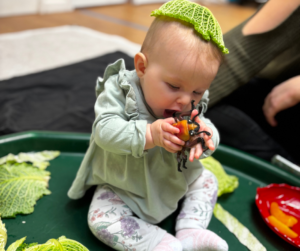
Adventure Babies classes were designed as gentle, supportive spaces. While babies explore story-led sensory play, parents often build something just as important: reassurance.
And reassurance strengthens confidence — which strengthens attachment.

Emotional Development in the First Year: The Bigger Picture
Underneath baby attachment and separation anxiety is something remarkable:
Your baby is forming their first understanding of relationships.
They are learning:
-
People can be trusted
-
Comfort is available
-
I am safe
-
I am loved
And you are learning too.
Learning their cues.
Learning that phases pass.
Learning that closeness now builds independence later.
Attachment is not about dependency forever.
It is the secure base that allows independence to grow.

FAQ: Baby Attachment and Separation Anxiety
Is separation anxiety a sign of strong attachment?
Yes. Separation anxiety often reflects secure attachment. Your baby recognises you as their safe base and prefers your presence.
At what age does separation anxiety peak?
Separation anxiety commonly begins around 8–10 months and may peak between 12–18 months. It varies between babies.
Can you cause separation anxiety by holding your baby too much?
No. Responsive caregiving builds secure attachment. You cannot “spoil” a baby with comfort in the first year.
How can I help my baby with separation anxiety?
-
Practise short separations
-
Use calm, predictable goodbyes
-
Reassure consistently
-
Avoid sneaking away
-
Maintain routines
Over time, trust builds.
Does postnatal depression affect attachment?
Untreated PND can impact bonding, but support and treatment significantly improve outcomes. Attachment is resilient and can strengthen with help.