Are Baby Classes Good for Development—or Just Something to Fill the Week?
Getting out of the house with a baby can feel like an achievement before you’ve reached the front door.
You’ve packed spare clothes, checked the changing bag and timed everything around a nap that may or may not happen.
So it’s reasonable to wonder: are baby classes good for development? Does your baby gain something from the experience, or have you organised your entire morning around watching someone shake a puppet?
The answer depends on what happens in the class—and how well it suits your baby.
A thoughtful session can offer lovely opportunities to explore, move and communicate. The useful part goes beyond the equipment.
How do babies learn during a class?
Imagine a class leader bringing out a puppet.
Your baby watches it move. You notice their interest and say, “Hello, bear!” They wriggle, reach or make a sound. You respond.
That small exchange includes something more valuable than a baby simply looking at an interesting object: you’re sharing the experience.
The puppet gives you something to notice together. Your response makes it personal.
The NHS guidance on playing with babies and toddlers highlights the importance of joining in. It also makes clear that play can involve everyday objects, books and songs.
A well-planned class brings some of those opportunities together and gives you fresh ways to enjoy them.
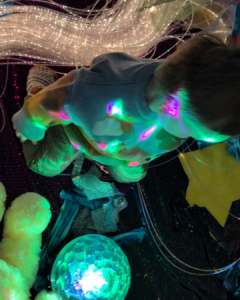
Are baby classes good for development at every age?
A newborn and an eleven-month-old may attend a session and experience it very differently.
For a young baby, hearing your voice, watching a face or following a slowly moving prop may be enough. They don’t need to reach for everything or stay interested throughout.
An older baby might explore a texture, move towards a toy or enjoy repeating an action.
That’s why age-appropriate activities and flexible expectations matter.
A useful class gives babies different ways to join in. It also leaves room for feeding, cuddles and watching from the comfort of your arms.
Participation doesn’t have to look busy to count.
The best activity leaves room for your baby’s response
There’s a difference between presenting lots of things and giving a baby time to explore them.
Picture someone introducing a toy, moving it away and replacing it before your baby has had a chance to respond.
Now imagine a slower version. Your baby looks, reaches and touches. You describe what they notice. The activity follows their interest.
The NHS advice on interacting with your baby encourages adults to pause, watch for a response and follow the baby’s lead.
Look for a class where the leader welcomes those individual rhythms.
Your baby shouldn’t need to keep up with a performance.
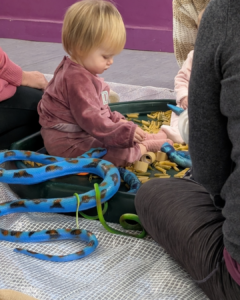
Movement matters, even before crawling
For a baby, movement can begin with turning their head, stretching an arm or shifting their weight.
A suitable class can offer opportunities to practise these movements through floor play and interesting things placed nearby.
Perhaps your baby turns towards a sound. They might reach for a prop or explore a different position with your support.
The NHS guide to keeping babies active recommends opportunities for movement throughout the day. It also advises keeping tummy time supervised and for when babies are awake and alert.
Classes can contribute to those opportunities. Everyday play at home remains important too.
There’s no need to turn either setting into a race towards the next milestone.
Why stories give sensory play something to connect to
A book can bring different parts of a session together.
You hear about an animal, see its picture and watch a matching puppet appear. A familiar sound returns later in the story.
For you, that creates a shared theme to talk about. Your baby can explore the voice, movement or picture that catches their interest.
They don’t need to understand the whole plot to enjoy the experience.
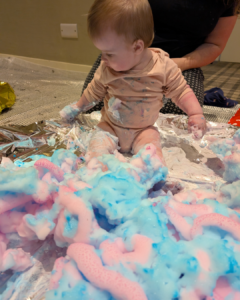
At Adventure Babies, we use sensory storytelling to bring books into play. Props, textures and movement offer different ways to share a story, while your voice and responses keep the experience connected to you.
Our Adventure Babies storybooks can help you continue that shared play at home, without recreating an entire class in your living room.
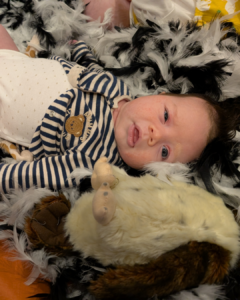
Does your baby need classes to develop well?
No. Babies can enjoy rich, responsive play without attending a paid class.
Talking during a nappy change, sharing a library book and playing on the floor all offer worthwhile experiences.
A class provides a setting, some ideas and someone else to organise the activities. You may find it easier to focus on playing when the washing and other jobs aren’t in view.
That can make it valuable, especially on a week when inspiration feels in short supply.
You’re choosing an experience to enjoy together, rather than buying a developmental advantage.
A class shouldn’t make you feel that your baby will fall behind without it.
What if your baby just watches—or sleeps?
You’ve booked the class. Everyone else seems fascinated. Your baby has fallen asleep before the story begins.
It happens.
There’s no need to wake them so they can get their money’s worth. You can listen, chat and take an idea home for another day.
Equally, a wakeful baby may prefer watching from your lap. You don’t need to move them between activities simply because everything looks inviting.
One quiet session tells you very little about whether your baby will enjoy the next one.
Over time, notice whether the class feels comfortable for both of you. That matters more than collecting a photo of your baby doing every activity.
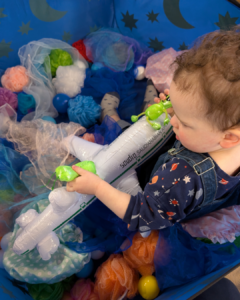
Parents are part of the picture too
Sometimes the most useful part of the morning is seeing a familiar face.
Someone remembers your name. Another parent admits their night was dreadful too. You have a conversation that continues the following week.
Those moments matter in their own right.
A regular class can also give your week a little shape and offer a reason to leave the house when the days feel repetitive.
At Adventure Babies classes, we want parents and carers to feel welcome alongside their babies. Shared stories and sensory play create opportunities to connect with your little one and meet other local families.
You’re allowed to choose a class partly because you enjoy going.
What makes a baby class worth trying?
Look beyond the photographs and ask how the session works.
Does the leader explain activities clearly? Can babies join in at their own pace? Is there space to feed, settle or take a break?
Notice how you feel, too. You should feel comfortable asking a question or adapting an activity for your baby.
A thoughtful leader understands that babies have different interests and different days.
Be cautious about promises to produce earlier milestones or turn ordinary play into a guarantee of future success. A good class can explain what an activity offers without making those claims.
So, are baby classes good for development?
They can offer useful opportunities for movement, exploration and early communication, especially when adults respond to babies and follow their interests.
The quality of the experience matters more than how many activities fill the session.
For some families, a class becomes a favourite part of the week: a place to share a story, try something new and find familiar company.
For others, home play and free local groups suit life better.
If you’d like to explore sensory storytelling together, find your nearest Adventure Babies class. We’ll bring the books, props and ideas. You and your baby can discover what catches your interest.