
Why Your Baby Turns Towards a Rustle Before They Spot the Toy
You’ve chosen a lovely toy. Your baby barely notices it.
Then something rustles beside you, and suddenly they’re interested.
Babies have a wonderful way of making us question our purchases. Yet that small pause, glance or head turn gives you something fascinating to notice: your baby has picked up a sound and may be looking for its source.
Auditory play for babies means exploring sounds together. The name sounds technical, but the play can be beautifully simple.
A gentle rattle. Your familiar voice. A soft “whoosh” as a bird appears in a story.
You don’t need to make more noise. Often, the interesting part happens when you stop.
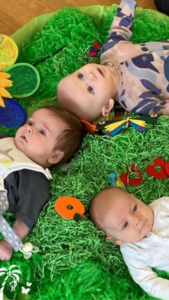
Hearing a sound and finding it are different skills
Imagine hearing your phone ring somewhere in the house.
You recognise the sound, work out its direction and begin searching. Unless it’s underneath the baby, in which case your investigation may take a while.
Your baby is gradually developing their own ability to locate sounds. Hearing something does not mean they can immediately turn towards the right place.
Cambridge University Hospitals’ guidance on early listening skills explains that locating sounds becomes more accurate and consistent during infancy.
A rustle can therefore catch your baby’s attention before they spot the object making it. Their eyes and head may then join the search.
That little turn involves more than simply noticing a noise.
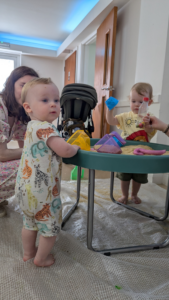
Listening can look surprisingly quiet
We often expect babies to show interest through smiles, kicks and excited squeals.
Sometimes, their response is much smaller.
A young baby might become still, widen their eyes or briefly pause what they were doing. As they grow, looking towards voices and searching for sounds can become easier to notice.
The UK guidance on babies’ responses to sound describes these changing responses and reminds parents that ages offer a guide.
Stillness may be worth noticing alongside the bigger reactions. However, no single response tells you everything about your baby’s hearing.
Play gives you a chance to enjoy their interest, rather than check their performance.

Your voice offers more than sound
Here’s a lovely detail for those long afternoons when your baby wants another cuddle.
When you talk or sing while holding them against your chest, they can feel the vibration of your voice as well as hear it. Face-to-face, they also see your expression and mouth movements.
Those familiar moments bring several experiences together.
Cambridge University Hospitals highlights these everyday opportunities in its listening guidance. There’s no need for an impressive singing voice or a carefully planned repertoire.
Your slightly questionable rendition of the same song still comes with something valuable: you.
Why louder isn’t more interesting
When a baby doesn’t react straight away, it’s tempting to shake the rattle harder.
Try pausing instead.
They may be busy looking at something else, getting tired or simply taking their time. Raising the volume can turn a gentle invitation into an unwelcome surprise.
Sound play works best as something you share. Keep sounds comfortable, hold noisy toys away from ears and stop if your baby seems uncomfortable.
A room full of competing sounds also makes a quiet voice harder to pick out. Turning off the television for a short spell can give your conversation a little more space.
You don’t need a silent house. Just an occasional moment with less going on.
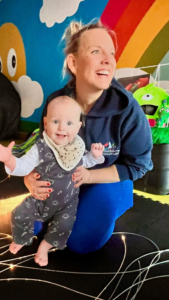
Auditory play for babies: four gentle ideas
1. Make a sound, then show what made it
Choose an age-appropriate rattle or sound toy. Let your baby see it, make one gentle sound and pause.
Notice what happens without demanding a head turn.
Bring the toy into view if they seem interested but cannot find it. You might say, “That’s your rattle!”
Connecting the sound with its source gives you something to explore together. There’s no need to keep hiding it or make the search difficult.
2. Give a picture its own sound
Open a book and follow the picture your baby notices.
Perhaps a dog gets a quiet “woof”, while rain becomes a soft “pitter-patter”. Repeat the sound if they seem interested, then leave a little gap.
Your baby might look at you, move or make a sound of their own. Respond to whatever they offer.
Our Adventure Babies nature-themed books give you plenty of creatures and outdoor scenes to bring to life together.
Finishing the story matters less than enjoying the exchange.
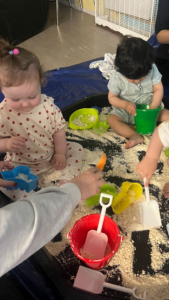
3. Follow one November sound
Rain on the window can provide a surprisingly absorbing moment.
Hold or sit beside your baby, pause together and say, “I can hear the rain.” Later, a bird call or footsteps in the hallway might catch their attention.
You’re helping them connect everyday sounds with the world around them.
There’s no need to narrate the whole day. One shared moment counts, even if the next involves trying to find a clean vest.
4. Leave room for their reply
Make a gentle sound while your baby can see your face. Try a soft “ooo” or copy a little noise they have just made.
Wait.
A reply might arrive as a coo, a smile or another movement. Follow their lead rather than repeating the sound more loudly.
Sometimes, they’ll look away. That’s a useful moment to pause or finish.

The gap is part of the game
Adults can rush to fill silence, especially when we’re trying hard to entertain a baby.
Yet a pause gives you a chance to notice their response. Without it, the next sound may arrive before you’ve seen what they did with the first.
Try thinking of sound play as an exchange rather than a demonstration.
You offer something. Your baby responds in their own way. Together, you decide whether to do it again.
That approach can make play feel less like another task on your maternity leave list.
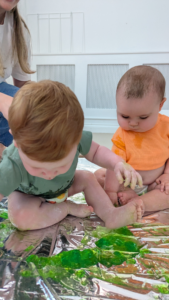
How stories give sounds a purpose at Adventure Babies
A sound becomes part of a shared adventure when it belongs to a character or moment in a book.
A puppet might arrive with a familiar noise. Your class leader could stretch a word, soften their voice or pause before the next part of the story.
At Adventure Babies sensory storytelling classes, books, voices and sensory props offer things for you and your baby to notice together.
You can watch their expression, respond to their interest and enjoy discovering what catches their attention.
Some sessions bring excited squeals. Other mornings, your baby may prefer to listen from your arms.
Both leave room for connection—and for you to spend time with parents who understand that babies rarely follow the plan.
Discover more about our approach to baby sensory storytelling.
What if my baby doesn’t turn towards sounds?
A single distracted moment cannot tell you whether your baby has a hearing difficulty.
Equally, you don’t need to dismiss a concern because they sometimes respond, or because they passed their newborn hearing screen.
Speak to your health visitor or GP if you’re worried about their hearing, notice a change in their responses or feel they aren’t reacting to sounds as expected.
Avoid making sudden loud noises to test them at home. A hearing professional can assess what’s happening and offer appropriate support.
For babies with an identified hearing difference, your audiology team can help you adapt play and communication to suit them.
One small sound, one shared discovery
The next time your baby pauses at a rustle, you might notice the moment a little differently.
Something caught their attention. Now you can explore it together.
Keep the sound gentle, give them time and follow their interest. Your baby doesn’t need a soundtrack running all day to enjoy listening with you.
Fancy sharing more little discoveries? Find your nearest Adventure Babies class for stories, sensory play and a welcoming morning for you both.
SEO title: Auditory Play for Babies: Gentle Sound Games | Adventure Babies
Meta description: Explore auditory play for babies with gentle sound games, fascinating listening facts and simple ways to share stories, voices and everyday discoveries.
URL slug: auditory-play-for-babies