
The Toy Just Out of Reach: Helping Your Baby Stretch, Turn and Explore
Your baby spots something interesting. Their eyes widen, an arm starts waving, and every part of their body seems to join the effort.
The hand misses. A foot kicks. Somehow, the toy ends up beside their ear.
Watching those early attempts can make you want to pop the toy straight into their palm. Sometimes, that’s exactly the help they need. At other moments, a little pause gives them room to try.
Reaching activities for babies offer a lovely way to explore movement together. You don’t need an elaborate play station or a baby who hits every milestone early. A comfortable space, one suitable toy and your attention make a good start.
That little reach involves much more than an arm
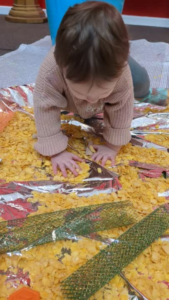
Picking up your phone feels effortless. For your baby, reaching towards a toy involves several skills coming together.
First, they need to notice it. Then comes the challenge of moving their hand towards the right place, opening their fingers and keeping their body steady enough to make contact.
Gripping something you place in their palm differs from reaching out to collect it themselves. A baby might manage one before the other.
The American Academy of Pediatrics describes early movements such as swinging at toys and holding an object placed in the hand. These small steps help explain why early play can look wonderfully messy.
That enthusiastic swipe has a lot going on behind it.

Why babies sometimes watch their own hands
Perhaps you’ve caught your baby staring at their fingers with the concentration you normally reserve for a difficult parking space.
During the early months, babies become more interested in their hands and how they move. Looking, waving and bringing hands towards the mouth all form part of that exploration.
Their hands gradually become tools they can use to investigate other things.
Before the neat grab comes a period of working out what these fascinating little objects can do. Give them time to look and move without always adding another toy.
Reaching activities for babies: start closer than you think
The phrase “just out of reach” can sound like an instruction to make things difficult.
Instead, begin with an easy opportunity.
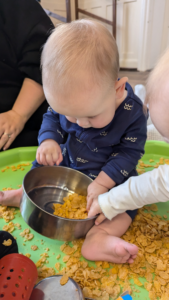
Guidance hosted by the Royal United Hospitals Bath NHS Foundation Trust suggests offering easy-to-hold toys close to your baby’s hands. Once they manage objects nearby, you can gradually offer them a little further away.
Think “I could get that”, rather than “Why does that thing keep escaping?”
Offer one toy and pause
Lay your awake baby on their back on a firm, comfortable floor mat. Hold a lightweight, age-appropriate toy above their chest, close enough for them to approach it.
Wait for their response.
A small arm movement might be the beginning of an attempt. Keep the toy fairly still so they have a chance to find it.
Constantly waving it around creates a moving target. Your baby already has plenty to organise.
Let a touch count
Success doesn’t have to mean a firm grip.
Brushing the toy with a finger or knocking it with a hand gives your baby a chance to explore what happens when they make contact.
Try a simple comment: “You touched it!”
There’s no need to turn every attempt into a coaching session. A smile and a pause leave space for another go.
Bring the toy closer when they need help
If your baby keeps trying without getting near, shorten the distance. Offer the toy in a position they can manage, or let them hold it with your help.
Avoid moving it away each time their hand approaches.
The aim is enjoyable exploration. Frustration doesn’t prove that learning is happening.
Reaching is a whole-body activity
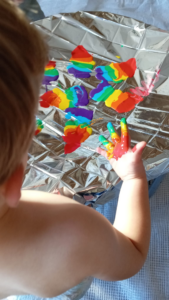
Watch closely during a reach and you may notice a shoulder lift, a head turn or a small shift through the body.
Different positions bring different challenges. Reaching while lying on the back feels quite different from reaching during tummy time.
The NHS recommends short, supervised tummy-time sessions while your baby is awake. Nearby toys can give them something interesting to look towards and, as their skills grow, reach for.
Choose moments when your baby seems comfortable and alert. Stop for a cuddle or change position when they have had enough.
You don’t need to turn the floor mat into a training circuit.
The pause can be the hardest part for parents
There’s something almost irresistible about helping a tiny hand finish the job.
You can see the toy. Their fingers are so close. Surely a small nudge would sort everything out?
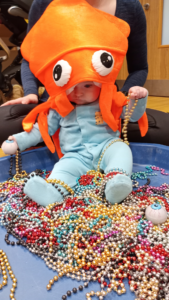
Try waiting a moment before stepping in. That gives you a chance to see what your baby actually wants to do.
Perhaps they’ll try again. Alternatively, they might look away because the curtain has become far more interesting.
Following their attention keeps play a conversation. Your baby gets a say in what happens next.
What makes a good reaching toy?
Start with something lightweight, easy to hold and suitable for your baby’s age. An easy-grip rattle or soft baby toy may work well.
Check for loose parts, damage, long cords and anything that could pose a choking risk. Stay close throughout play, especially as objects often travel straight towards the mouth.
Familiar toys deserve another turn, too. You don’t need a new purchase whenever your baby develops a new skill.
Changing the position of a favourite object can offer a fresh experience.
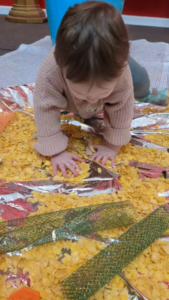
How reaching fits into an Adventure Babies class
A story gives your baby a reason to become curious.
Perhaps a puppet appears beside you, or a sensory prop catches their attention. Watching can lead to an arm movement, a touch or a determined attempt to hold it.
At Adventure Babies sensory storytelling classes, shared stories and sensory experiences create opportunities to explore together.
Your baby can join in from a comfortable position with your support. There’s no prize for grabbing first, and watching from your arms counts too.
Meanwhile, you get to notice the little changes that can disappear into a busy week.
Last time, they watched. Today, a hand moved towards the puppet.
That’s a moment worth sharing.
What if my baby doesn’t seem interested in reaching?
Choose another time before assuming they dislike the activity. Hunger, tiredness or simply wanting a cuddle can change how play goes.
Some babies also need an easier position or a toy closer to their hand.
If your baby isn’t reaching towards toys by around six months, speak to your health visitor. Ask for advice sooner if they consistently use one hand much more than the other, seem unusually stiff or floppy, or lose a skill they previously had.
For babies born early, your healthcare team can explain how corrected age relates to development.
Getting advice gives you support tailored to your baby. More practice is not always the answer.
Make room for the small attempts
A reach can look like a wobble, a swipe or a hand that stops halfway.
Give your baby something interesting, keep it achievable and see what they choose to do. Their pleasure in touching the toy matters more than how tidy the movement looks.
Want to enjoy more little discoveries together? Find your nearest Adventure Babies class for stories, sensory play and a welcoming place to explore.