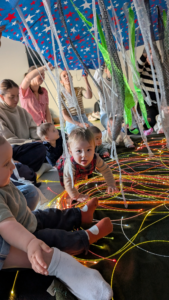
Ready, Steady, Crawl: Encouraging Movement Without Creating Pressure
There comes a point when “Are they crawling yet?” starts appearing in almost every conversation about your baby. Usually, someone asks just as another baby powers across the room while yours lies contentedly examining a label.
Even when you know development isn’t a race, comparison can sneak in. If you’re wondering how to encourage crawling safely, the most helpful starting point is giving your baby opportunities to explore, without making every moment on the floor a test.
At Adventure Babies, we make room for the reaching, wriggling and watching that happen before anyone gets anywhere. Those quieter moments deserve attention too.
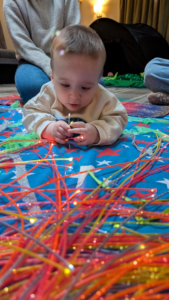
What happens before the first crawl?
Crawling involves more than strong arms and an enthusiastic destination. Your baby needs to coordinate movements, shift their weight and balance while a hand or knee moves.
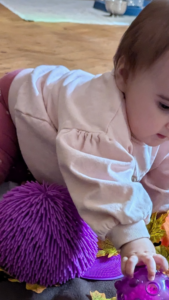
Watch closely and you might notice the smaller experiments: reaching sideways, turning on their tummy or rocking on hands and knees. A baby can work hard without travelling very far.
Paediatric physiotherapists explain that weight shifting, pivoting and balance all help prepare babies for crawling. That makes floor play worthwhile long before the first journey across the rug.
Try noticing what your baby explores today rather than how much distance they cover. “You reached for it!” leaves much more room for enjoyment than waiting for a particular milestone.
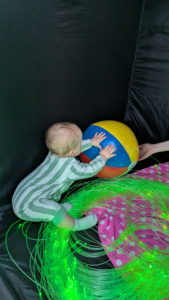
Do all babies crawl on hands and knees?
No, and this is where the tidy pictures in milestone guides can mislead us. Babies may belly crawl, bottom shuffle or use another way to get around. Some move on to walking without a classic hands-and-knees crawl.
NHS guidance on learning to crawl describes several different movement patterns. Your baby hasn’t read the guide and may have their own transport arrangements.
The important thing is noticing their overall progress and raising concerns when something doesn’t seem right. A different route doesn’t automatically signal a problem, but reassurance should never mean ignoring your instincts.
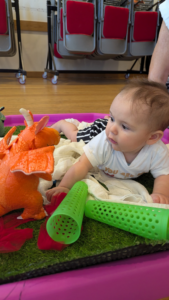
How to encourage crawling safely: start with space
Choose a clear patch of floor with a firm, comfortable surface where your baby can move freely. Stay nearby and offer floor play when they seem alert and content.
Place an age-appropriate toy within easy reach, then try a position slightly to one side or a little further away as their confidence grows. Give them time to respond, and bring it closer if they become frustrated. Continually retreating with the prize turns a lovely invitation into a very annoying game.
Your face can be just as interesting as a toy. Get down at their level, talk to them and see whether they look, reach or turn towards you.
NHS activity guidance includes reaching, grasping, pushing and pulling as ways to keep babies active before they crawl. You don’t need a special crawling gadget to make movement possible.
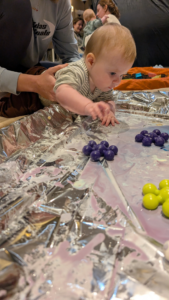
Tummy time without the endurance contest
Some babies enjoy tummy time. Others react as though you’ve suggested they complete their tax return.
Start with brief, supervised opportunities while your baby is awake. For a younger baby, lying on your chest while you stay fully awake can offer a gentler introduction. Build up gradually, following their comfort and interest.
The NHS recommends little and often when introducing tummy time. Talking, singing and placing a toy nearby can make it more inviting.
Once your baby tires or becomes upset, change position and try again later. Keeping them distressed on their tummy doesn’t make you a more committed parent.
Always place your baby on their back for sleep. Tummy time belongs to awake, supervised play.
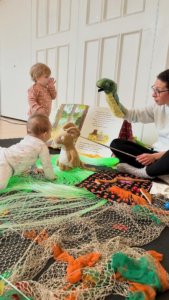
Let curiosity do some of the work
A movement opportunity doesn’t have to look like an exercise. Sometimes a baby reaches because something interesting happens nearby.
An open picture book can give you something to look at together during floor play. Put it where your baby can comfortably see it, point to an animal and add a sound. Our nature-inspired Adventure Babies books offer little adventures you can explore at your baby’s pace.
In class, we bring that same idea into sensory storytelling. A puppet, texture or familiar voice can offer a reason to look, turn or reach, depending on what a baby is ready to try.
We plan opportunities for exploration rather than expecting every baby to respond in the same way. Watching from the safety of your lap counts as joining in too.
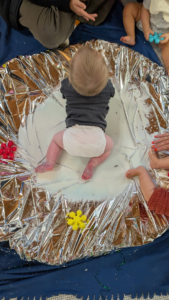
Make the room ready before your baby is
Check the floor from your baby’s level before movement takes you by surprise. Small objects, dropped food and an older sibling’s tiny toy pieces can suddenly become accessible.
Keep button batteries, magnets, medicines and cleaning products securely out of reach. Secure blind cords and unstable furniture, and fit suitable stair gates before your baby can reach the stairs.
The NHS baby and toddler safety guide can help you check your home. Supervision still matters, even after you’ve made changes.
Skip seated baby walkers as a way to teach movement. NHS physiotherapists advise against them because they bring injury risks and don’t teach babies to walk.
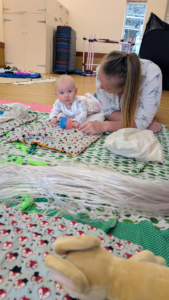
A room where nobody needs to keep up
Knowing you shouldn’t compare babies doesn’t always stop you doing it. Sometimes what helps most is spending time somewhere you and your baby can feel comfortable as you are.
Our Adventure Babies classes bring families together through stories, sensory exploration and shared play. You can enjoy your baby’s discoveries alongside parents who understand why one small reach can feel like the biggest news of the week.
There’s something lovely about returning to a familiar group and noticing the changes together. Last week, a baby watched a puppet. This week, they reach for it. Another finds the confidence to explore a little further from their parent.
Those are the moments we make space for. Nobody needs to arrive with a new skill to show off.
When to ask for advice
You don’t need to wait for a particular age if you feel concerned. Speak to your health visitor or GP if your baby loses a skill, consistently moves one side differently or seems unusually stiff or floppy. NHS-backed movement guidance explains signs worth checking.
The NHS also advises asking your health visitor if your baby shows no signs of moving by 12 months.
Getting advice and avoiding pressure go together. You can support your baby’s needs without turning their development into a daily assessment.
For now, offer a safe space, something interesting and your company. When you’d like a few more people to share those little discoveries with, find your nearest Adventure Babies class.
We’ll bring the stories. Your baby can bring themselves, exactly as they are.