Tiny Fingers, Big Job: Learning to Turn the Pages of a Book
If you’re wondering how to teach a baby to turn book pages, you may already share your home with a very impatient editor. You’re halfway through a lovely sentence when a small hand removes three pages, skips the main character’s entire emotional journey and closes the book. Apparently, we’re finished.
From an adult’s point of view, that looks like interrupted reading. For your baby, it can be the most interesting part: working out how to make a book do something.
Behind that slightly sticky page turn sits a surprising amount of learning. Better still, you can help without turning storytime into another thing you’re supposed to get right.
There’s more to it than a good grip
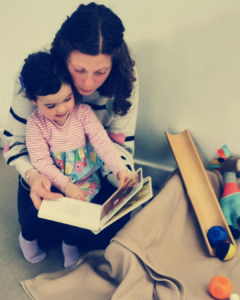
Think about what your hands do when you turn a page. One steadies the book while the other finds an edge, separates it, lifts it and moves it across. Finally, your fingers release it.
That last part deserves more credit. Holding on gets most of the attention in baby development, but letting go at the right moment matters too. A baby who grabs a page and keeps pulling may still be working out how to finish the movement.
As their skills develop, their hands can take on different jobs: one holds while the other moves. Therapists call this bilateral coordination. Alder Hey’s guide to fine motor skills describes the “helping hand” that steadies a book while the other turns its pages.
In other words, your baby is gradually learning to run a two-person department with one brain.
Why three pages at once still counts
Separating one thin sheet from another is surprisingly fiddly. Even adults resort to the slightly embarrassing finger-lick when paperwork refuses to cooperate.
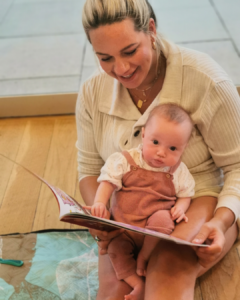
For a baby, sweeping several pages over together offers a much easier starting point. Early attempts might involve patting, pushing or hooking a whole hand around the edge, long before a neat finger-and-thumb movement appears.
NHS children’s therapists explain that hand skills develop through play, with reaching and grasping preceding more complex toddler activities such as turning book pages. Helping with a page and managing one independently are different achievements.
There’s no need to make single-page turning a first-birthday deadline. If you have concerns about your baby’s hand skills, your health visitor can help.
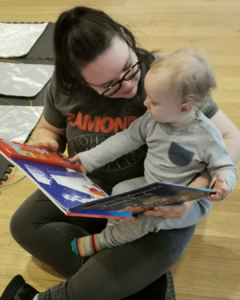
How to teach a baby to turn book pages
Start with a sturdy board book or soft cloth book for hands-on practice. Thicker pages give fingers something easier to find and move; a picture book with paper pages can remain a lovely shared read while you handle the delicate bits.
Settle your baby comfortably against you, with the book within easy reach. Supporting their body and steadying the book leaves them less to juggle.
Next, lift a page slightly so its edge stands away from the page underneath. Offer that little gap rather than expecting tiny fingers to prise apart two flat surfaces. Say, “Your turn,” then pause.
A proper pause can feel ridiculously long when you already know what happens next. Resist jumping in after half a second; your baby may still be organising the reach.
When they move the page, respond warmly: “You turned it! There’s the bear.” If they lose interest, carry on reading or stop. Nobody needs homework from the bear.
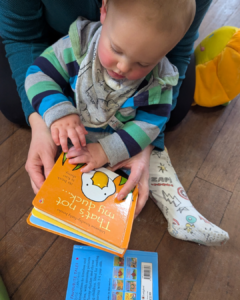
The picture changes because of them
A page turn offers a satisfying little discovery: I did something, and something changed.
BookTrust highlights the connection between page turning, hand-eye coordination and the pleasure of making things happen. A book can give your baby an immediate, visible response to their movement.
Try noticing what happens after the turn. Perhaps your baby studies the new picture, looks up at you or immediately reaches to do it again. Name whatever catches their attention rather than rushing back to the sentence you hoped to finish.
Going backwards is fine too. NHS advice on sharing books encourages parents to follow their baby’s interest without worrying about finishing the story or reading in order.
The plot can survive a detour. Your baby has questions about that duck.
What does a parachute have to do with a book?
More than you might expect. Reaching towards a page and reaching for an inviting fabric tassel both involve looking, directing an arm and opening a hand to make contact.
Our Adventure Babies personal parachute offers a playful way to explore those overlapping skills. Its dangling fabrics invite babies to watch and reach, while shared play gives you plenty to smile and talk about.
During awake, closely supervised play, hold it securely and move it gently. Pause with the fabric within comfortable reach so your baby has a chance to explore. Keep it clear of their face and neck, and put it away after play.
Catching a tassel won’t automatically teach page turning; moving fabric and a book page present different challenges. Both, though, offer enjoyable reasons to practise reaching and grasping. Your baby sees something interesting and decides to have a go.
Stories worth getting your hands on
Our original Adventure Babies books bring the natural world into shared storytime. We created the range for our ongoing work with London’s Natural History Museum, with animal adventures and environmental themes to explore together.
You might follow a penguin in The Night Time Rainbow, then bring movement into the story with your parachute. Let your baby look, pat and point while you support the book and help with its pages.
For families who enjoy bringing a story off the page, The Curious Chimpanzee book and mini parachute bundle puts both parts of the adventure together.
What parents notice
Parents’ class reviews capture why we pair stories with sensory play. On our testimonials page, Kate describes an experience that “Generates a real love of books and sensory play.”
Meanwhile, parent reviewer Anna reported that parachute games and bubbles were her nine-week-old daughter Elodie’s favourite part of their session. Her Harrogate Mumbler review followed a gifted class.
These reviews describe class experiences, rather than purchases of our books or personal parachutes. They capture the shared enjoyment we want families to take home.
A little present with plenty of future adventures
If someone has started asking what your baby would like for Christmas, a story and a parachute make a lovely suggestion. There’s something appealing about a present you can enjoy together straight away, then revisit as little hands become more adventurous.
For now, that might mean watching fabric move while you read aloud. Later, your baby might reach for a tassel, point to a character or proudly turn a page before you’re remotely ready.
You can find your nearest Adventure Babies class for more ways to bring stories to life, or choose a little adventure to unwrap at home.
And when your baby skips six pages and shuts the book? Thank your editor. They’ve had a busy morning.