
The Days Are Getting Shorter: Helping Babies Adjust to Darker Evenings
There’s a point every November when you look out of the window at half past four and wonder how on earth it’s already dark.
You’ve barely finished lunch, the washing is still sitting in the machine, and suddenly it feels like bedtime should be approaching.
Except your baby hasn’t received the memo.
They’re wide awake, enthusiastically pulling your hair, and apparently planning to stay that way for the foreseeable future.
If you’ve been wondering how to help a baby cope with darker evenings, there’s something interesting worth understanding. Babies don’t experience changes in daylight in quite the same way adults do, and the effect on their sleep depends partly on their age.
The good news is that you don’t need to completely overhaul your routine just because the clocks have changed. A few small adjustments can help, and some of the science behind them is genuinely fascinating.

Does my baby actually notice that it’s getting dark earlier?
Yes, although probably not in the way you imagine.
Your baby isn’t looking out of the window at 4.30pm and thinking, “Well, that’s autumn ruined.”
However, light plays an important role in how our bodies organise sleep and wakefulness.
We all have an internal timing system, known as our circadian rhythm. It helps coordinate when we feel sleepy, alert and ready for activity.
Light provides one of the strongest signals to this system.
When daylight reaches our eyes, it helps our brain recognise that it’s daytime. As evening approaches and light levels fall, our bodies begin preparing for sleep.
Babies gradually develop this system during their first months, which explains why newborn sleep can seem completely disconnected from whether it’s day or night.
And why you can spend an entire afternoon trying to keep a newborn awake, only for them to become incredibly sociable at 2am.
Your newborn doesn’t arrive with a working body clock
Here’s something many parents don’t realise.
Before birth, babies receive timing signals from their mother’s body. After birth, they gradually begin establishing their own day-and-night rhythm.
This doesn’t happen immediately.
During the early weeks, newborns need frequent sleep and feeds throughout the day and night. Their sleep patterns are driven by several factors, including hunger and their developing nervous system.
Circadian rhythms become more organised over the first few months, although there’s considerable variation between babies.
Melatonin, a hormone involved in signalling biological night, also develops its own daily rhythm during infancy.
So if your six-week-old seems completely uninterested in the difference between midday and midnight, they’re not doing anything wrong.
Their body is still learning.
The NHS guidance on helping your baby sleep recommends keeping daytime bright and active while making night-time quieter and less stimulating.
It’s simple advice, but there’s some interesting biology behind it.

Why morning daylight might matter more than an early bedtime
When parents notice their baby becoming unsettled during darker evenings, the instinct is often to concentrate on bedtime.
Should we start the bath earlier? Close the curtains sooner? Move the final feed?
But one of the most useful things you can do happens much earlier in the day.
Give your baby opportunities to experience natural daylight in the morning.
Daylight helps provide a timing signal to the developing circadian system.
For older babies whose day-and-night patterns are becoming established, regular exposure to morning light may help reinforce the difference between daytime and night-time.
You don’t need an elaborate outdoor activity.
Open the curtains when you get up. Enjoy breakfast near a window or head outside for a short walk when the weather allows.
Even a trip to the shops can provide a change of scene and some daylight.
There’s no need to wake a sleeping newborn just to achieve a particular amount of morning light. Nor should you put a baby in direct sunlight to improve their sleep.
The evidence for exact daylight routines in infants is limited, but supporting a clear day-and-night pattern is a sensible approach.
And frankly, getting outside can be just as beneficial for the parent who’s been indoors since breakfast.

Why your baby’s sleep might change when the clocks go back
The autumn clock change creates an interesting problem.
Your clock says 6am, but your baby’s body may still be operating on the previous schedule.
So when they wake at what feels like a ridiculously early hour, they may simply be following the timing they’ve become used to.
This is particularly noticeable in babies who have developed relatively predictable sleep and feeding patterns.
Younger babies with less established routines might barely notice the change.
If your baby does struggle, you can gradually adjust their schedule by around 10–15 minutes over several days.
For example, shifting naps, feeds and bedtime slightly later can help if you’re preparing for the clocks to go back.
However, if the change has already happened, there’s no need to start moving everything backwards and forwards in a panic.
Consistent morning routines, regular daylight and a little patience will often help things settle.
And if your baby is waking early because they’re hungry, uncomfortable or going through another developmental change, adjusting the clock won’t necessarily solve it.
Babies rarely make things quite that straightforward.

Does a darker evening mean my baby should go to bed earlier?
Not necessarily.
This is one of the biggest misunderstandings about autumn sleep.
Although light influences circadian rhythms, darkness alone doesn’t determine when a baby is ready for bed.
Sleep pressure also matters. This is the biological need for sleep that builds while we’re awake.
A baby who has recently enjoyed a long nap may not be ready for another sleep simply because the sun has disappeared.
Equally, an overtired baby might struggle to settle despite a perfectly dark bedroom.
Your baby’s age, feeding needs, naps and individual sleep patterns all contribute.
Rather than changing bedtime because it’s dark outside, look at how your baby behaves.
Are they becoming less interested in play? Rubbing their eyes? Looking away from stimulation or becoming unusually unsettled?
These can be useful clues, although no single sign tells the whole story.
Try to respond to your baby’s needs rather than forcing their sleep into a schedule that looks tidy on paper.

The surprising connection between light and your baby’s developing brain
Light doesn’t just help us see what’s happening around us.
Specialised cells in the retina send information about environmental light to the brain’s central circadian clock.
This system helps coordinate biological rhythms across the body.
What’s particularly interesting is that these light-sensitive cells are involved in non-visual responses to light. In other words, light can influence our internal timing system as well as our ability to see.
Babies’ visual and circadian systems continue developing after birth.
As they mature, predictable patterns of light, activity and rest can provide useful environmental cues.
However, we shouldn’t overstate what this means.
There’s no good reason to believe that one gloomy November afternoon will disrupt your baby’s brain development.
And parents don’t need to spend their evenings worrying about whether every lamp is giving off the correct amount of light.
The overall pattern matters far more than achieving perfect conditions.

Should I keep the lights low during darker evenings?
A gentle change in lighting can help distinguish evening from daytime, especially for older babies.
During the day, enjoy ordinary household light and activity.
As bedtime approaches, you might dim bright overhead lights and choose softer lighting for feeding, changing and quiet play.
This can become part of a familiar sequence that tells your baby what usually happens next.
It’s also worth thinking about screens.
Research in adults and older children shows that bright light in the evening can influence circadian timing, although the evidence about specific effects in young babies is much more limited.
For babies, the more immediate concern is often that screens can compete with face-to-face interaction and create unnecessary stimulation.
You don’t need to sit in darkness from 5pm.
Just aim for a calmer environment as bedtime approaches.
And if you need to change a nappy at 3am, use enough light to do it safely. Nobody wins a prize for attempting that particular job in complete darkness.
Your baby doesn’t need a perfect bedtime routine
There’s an enormous amount of pressure on parents to establish the perfect evening routine.
Apparently, if you get the bath, book, feed and bedtime sequence exactly right, your baby will drift peacefully to sleep every night.
If only.
Predictable routines can be helpful because babies gradually learn to recognise familiar patterns.
But the routine itself doesn’t need to be complicated.
For some families, a quiet feed and cuddle work well. Others enjoy a short book, a familiar song or a little time together before bed.
The important thing is that the experience feels manageable and appropriate for your baby’s age.
At Adventure Babies, we talk a lot about repetition because babies learn through familiar experiences.
Hearing the same words, recognising a favourite book or anticipating what happens next can all become meaningful parts of everyday family life.
And no, you don’t have to read the same book in exactly the same voice every evening.
Although if your baby has a favourite, there’s a good chance you’ll know every word of it by Christmas.
Why reading together can be lovely on dark evenings
One thing I genuinely love about this time of year is how naturally it lends itself to sharing books.
When it’s pouring with rain outside and nobody particularly wants to go anywhere, sitting together with a story can feel like a welcome change of pace.
For babies, the benefits go beyond the words on the page.
They can listen to the rhythm of your voice, watch your facial expressions and begin noticing the patterns of familiar language.
As they grow, they may reach for pictures, explore the pages or make sounds in response to your voice.
You don’t need to finish the story.
In fact, your baby might be far more interested in looking at one picture for five minutes than finding out what happens at the end.
That’s absolutely fine.
The BookTrust offers useful ideas for sharing books with babies and young children, including ways to make reading enjoyable from the earliest months.
A story can be part of a bedtime routine, but it doesn’t have to be reserved for bedtime.
Babies can enjoy books at any time of day, including those long November afternoons when you’ve run out of ideas.
What about babies who become unsettled in the late afternoon?
If your baby becomes particularly fussy as evening approaches, it’s tempting to blame the darkness.
But there may be several things happening.
Young babies often experience periods of increased crying or unsettled behaviour in the late afternoon and evening.
This can happen even during the summer, when it’s still light outside.
Hunger, tiredness, feeding patterns and the normal development of crying behaviour may all contribute.
Some babies also find busy environments tiring, although we should be careful about assuming that every unsettled baby is overstimulated.
The NHS has helpful advice about soothing a crying baby.
If your baby is otherwise well, you might find that a change of position, a cuddle, gentle movement or a quieter space helps.
However, persistent or unusual crying, feeding difficulties or signs of illness deserve medical advice.
And if you’ve had a long day with an unsettled baby, please don’t feel that you’re somehow failing because your evening doesn’t resemble the peaceful bedtime routines you see online.
Some evenings are simply hard work.
Why a baby class can be particularly lovely during autumn
One of the things I remember about having young children is how much shorter the days can feel when you’re spending a lot of time at home.
By late afternoon, you’ve already played with the same toys, changed approximately a million nappies and started wondering whether it’s too early to put your pyjamas on.
Having something enjoyable planned during the day can make a real difference.
At Adventure Babies, our classes offer a chance to get out, meet other parents and enjoy a shared experience with your baby.
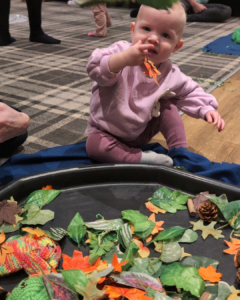
We bring stories to life through sensory play, puppets, movement, sounds and textures, giving babies opportunities to explore in ways that suit their stage of development.
For younger babies, that might involve watching a puppet, listening to a story or enjoying time close to their parent.
Older babies may be busy reaching, rolling, crawling or investigating the resources around them.
There’s no expectation that babies should sit still or perform particular skills.
And for parents, there’s something lovely about spending time with people who understand exactly what life with a baby is like.
Our Adventure Babies classes run across the UK, with sessions designed for different ages and stages.
It’s a lovely way to brighten up the darker months, even when the weather outside is doing its absolute worst.
Five small changes that can make darker evenings easier
You don’t need a completely new routine for autumn. A few practical adjustments may help.
Make the most of morning daylight. Open the curtains and enjoy time outside when possible, without disrupting your baby’s essential sleep.
Keep daytime and night-time different. Ordinary activity and natural light during the day, followed by a calmer environment at night, provide useful cues.
Avoid changing bedtime just because it’s dark. Follow your baby’s age, sleep needs and individual patterns.
Use familiar activities to signal bedtime. A feed, cuddle, story or quiet song can become part of a predictable routine.
Remember that unsettled evenings aren’t always about daylight. Hunger, tiredness and normal developmental changes can all affect behaviour.
For sleep, continue following the Lullaby Trust’s safer sleep guidance, including placing babies on their backs in a clear, flat sleep space.
A dark room doesn’t make unsafe bedding or sleep arrangements any safer.
The darker evenings won’t last forever
There’s something slightly ridiculous about how quickly autumn seems to change our days.
One week you’re enjoying a walk after tea. The next you’re closing the curtains before you’ve even started cooking.
And when you’re caring for a baby, those longer evenings can sometimes feel very long indeed.
But your baby doesn’t need you to create the perfect autumn routine.
They need opportunities to experience the difference between day and night, familiar interactions and support that responds to their individual needs.
Some babies will barely notice the seasonal change. Others may take a little time to settle into a new pattern, particularly after the clocks change.
Neither response means you’re doing anything wrong.
So if you’re wondering how to help a baby cope with darker evenings, start with the simple things. Enjoy daylight when you can, keep evenings reasonably calm and make space for the little routines that work for your family.
And if those routines occasionally involve reading the same book three times while your baby tries to eat the corner?
Well, that’s a fairly normal evening with a baby.
Looking for something lovely to do together as the days get shorter?
At Adventure Babies, we combine storytelling, sensory exploration and opportunities for parent-child interaction in a welcoming environment.
Find your nearest Adventure Babies class and come and join our community this autumn. 💛