Can Babies Learn From Listening to Stories Before They Understand the Words?
Imagine reading a story to your six-month-old. You’ve barely reached the second page when they’re staring at the ceiling, grabbing your sleeve or attempting to launch themselves backwards off your lap.
You’re doing your best character voices, but your audience appears more interested in your necklace.
It’s enough to make you wonder whether any of those words are actually going in.
The fascinating thing is that your baby doesn’t need to understand the story to get something from listening to it. Long before they can follow a plot or recognise a character, their brain is becoming familiar with the sounds, patterns and rhythms of language.
And some fascinating new UK research has given us another reason to look at how families enjoy stories together.
At Adventure Babies, keeping up with the latest research into infant development is an important part of what we do. We want parents to understand not just what their babies are doing, but why those everyday experiences can be so valuable.
So, what does the latest research tell us about the benefits of listening to stories for babies?
New research reveals how families are enjoying stories in 2026
In October 2026, the National Literacy Trust published new research into audio stories in the early years.
The researchers surveyed 3,194 UK parents and carers with children aged from birth to five.
Their findings revealed something interesting about how storytelling fits into modern family life.
Six in ten parents said their young child listened to audio stories at home. Even among families with children aged 0–2, the figure was 54.4%.
For many families, stories weren’t reserved for bedtime. They were part of playtime, car journeys, quiet moments and everyday routines.
Parents also described listening together as an opportunity to enjoy stories, spend time together and support their children’s communication.
It’s important to understand what this research does and doesn’t tell us.
The study explored family habits and parents’ experiences. It didn’t directly measure whether listening to audio stories improved babies’ language development.
However, it raises an interesting question. If stories are becoming part of so many different family routines, what are babies actually learning from hearing them?
To answer that, we need to look at what happens during the earliest stages of language development.
Your baby starts learning about language before they can understand it
Think about how strange language must sound to a newborn.
Adults produce an almost continuous stream of sounds. Somehow, babies gradually begin to recognise patterns within that stream.
They start becoming familiar with the rhythm of the languages they hear, noticing differences between sounds and recognising voices that are important to them.
This process begins remarkably early.
Research has shown that newborn babies can recognise aspects of their mother’s voice from experiences before birth. Babies also begin developing sensitivity to the speech patterns of their home language during their first year.
That means your baby is already learning about language long before their first word.
When you read a story, you’re introducing them to another rich source of spoken language.
The words might be unfamiliar, but the changing sounds, pauses and expressions give your baby plenty to listen to.
A story about a dragon doesn’t need to make sense to a four-month-old for them to enjoy hearing your voice change as the dragon arrives.
And that brings us to something particularly interesting.
Why your storytelling voice is different from your everyday voice
Have you noticed how differently you speak when reading a children’s book?
You might slow down, exaggerate certain sounds or give characters completely ridiculous voices.
Suddenly, you’re performing an entire cast of woodland animals while your baby looks mildly concerned about your wellbeing.
But those changes in your voice have a purpose.
Adults naturally adjust their speech when talking to babies. Researchers call this infant-directed speech.
It often includes a more varied pitch, clearer rhythm and greater emphasis on certain sounds.
These features can help attract babies’ attention and make aspects of speech easier to notice.
Stories offer plenty of opportunities to use this expressive style naturally.
You might whisper when a character is hiding, pause before a surprise or make your voice deeper when a bear appears.
Your baby may not understand why the bear is grumpy, but they can hear that something has changed.
Over time, experiences with spoken language help babies build the foundations they need for understanding and eventually producing words.
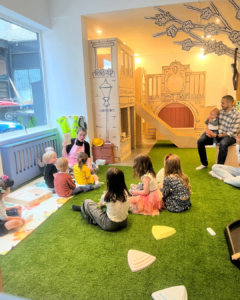
The surprising benefits of listening to stories for babies
One of the most interesting things about early development is how closely different skills are connected.
Listening to a story isn’t only about learning words.
Your baby is also experiencing attention, social interaction, emotional connection and, depending on their age, opportunities to explore and respond.
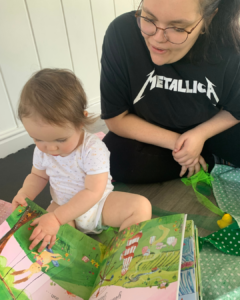
Consider what happens when you open a book together.
Your baby hears your voice and may turn towards you. Perhaps they look at the picture you’re pointing to or smile when you make a familiar sound.
You notice their reaction and respond.
Suddenly, you’re doing much more than reading.
You’re sharing an experience.
These little exchanges are important because babies learn about communication through interactions with other people.
They gradually discover that their sounds, movements and expressions can influence what happens next.
The National Literacy Trust’s early-years resources offer further ideas for supporting communication through everyday activities.
For parents, the encouraging message is that you don’t need to turn storytime into a lesson.
The interaction is part of the experience.
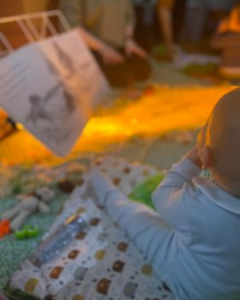
Is listening to an audio story as good as reading a book together?
This is where the new research becomes particularly interesting.
With more families using audio stories, it’s reasonable to wonder whether pressing play offers the same experience as opening a book.
The answer is that they can offer different opportunities, and we don’t yet have enough evidence to say that they’re interchangeable for babies.
An audio story introduces children to spoken language, voices and narrative sounds.
A physical book also provides pictures, opportunities to point, shared visual attention and the experience of handling pages.
When an adult reads aloud, they can adapt the experience to their baby.
If the baby becomes fascinated by a particular picture, the adult can stop and talk about it. When the baby makes a sound, they can respond.
A recording can’t notice those individual reactions.
However, that doesn’t mean audio stories have no place in family life.
They can provide another enjoyable way to experience storytelling, particularly when a parent or carer listens alongside their child.
The important thing is not to treat audio as a replacement for every other form of interaction.
As BookTrust’s research into family reading highlights, sharing books remains an important part of early childhood.
For babies, a mixture of stories, songs, conversation and shared reading offers a wonderfully varied introduction to language.
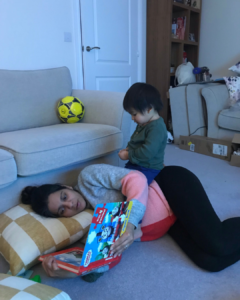
Your baby doesn’t need to sit still to enjoy a story
Here’s something we see regularly in Adventure Babies classes.
A parent arrives with a baby who has recently discovered crawling. Within seconds, that baby is off exploring, apparently determined to investigate every corner of the room.
The parent sometimes worries that their baby isn’t listening.
But listening doesn’t always look like sitting quietly.
An older baby might crawl towards a puppet, turn when they hear an exciting sound or briefly stop exploring when a familiar phrase appears in the story.
A younger baby may simply watch the adult’s face.
These responses are all different, and none provides a complete measure of what the baby is learning.
Of course, babies also become tired, distracted or overwhelmed. Sometimes they’re simply more interested in something else.
That’s perfectly normal.
At Adventure Babies, we don’t expect babies to sit still and listen to an entire story.
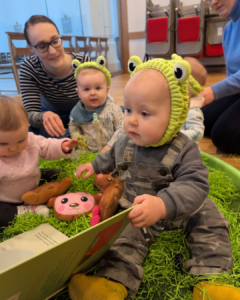
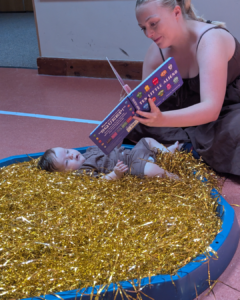
Our sensory storytelling sessions allow them to experience stories through movement, exploration, sounds, textures and interaction.
The story provides a shared starting point, while babies can participate in ways that suit their stage of development.
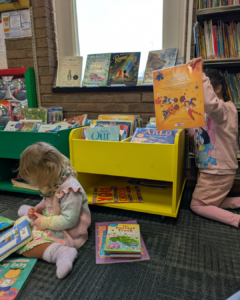
Why we bring stories to life at Adventure Babies
When I created Adventure Babies, I wanted to take the experience of sharing a story and make it something babies could explore.
A book is already a wonderful starting point for language and connection.
But what happens when a baby can also experience some of the sounds, movements and textures connected to the story?
Imagine a woodland adventure.
As the story unfolds, a baby might hear rustling leaves, watch a puppet appear or reach towards a soft sensory resource.
Their parent can describe what they’re exploring, respond to their excitement or simply enjoy watching their reaction.
For a younger baby, the experience might involve watching a moving object while listening to a familiar voice.
An older toddler might begin anticipating what happens next or attempt to copy an action.
The story connects these experiences, giving adults natural opportunities to introduce language.
We shouldn’t claim that adding sensory resources automatically improves language development. Research hasn’t established that.
What we can say is that sensory storytelling creates varied opportunities for babies and adults to explore, communicate and enjoy books together.
That’s the thinking behind our Adventure Babies sensory storytelling classes.
And there’s another important part of the experience that parents sometimes overlook.
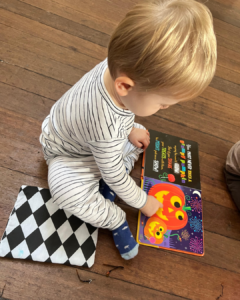
Sometimes the most important part of a story is the pause
Picture yourself reading to your baby.
You reach a particularly exciting moment, make an enormous roaring noise and wait.
Your baby looks surprised.
Then they make a little sound.
What happens next?
You could continue reading, but you might also copy their sound, smile or say something in response.
That tiny exchange is the beginning of a conversation.
Long before babies can use words, they start learning about the back-and-forth nature of communication.
They make sounds, watch how adults respond and gradually become more active participants.
Stories provide a lovely opportunity for this because they’re full of moments that invite a reaction.
A familiar character appears. A sound repeats. Something unexpected happens.
Rather than rushing through the pages, try allowing a little space for your baby to respond.
You might be surprised by how much they have to say.
Even if their contribution sounds suspiciously like a raspberry.
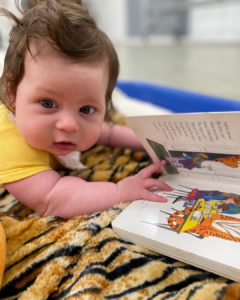
Why hearing the same story again can be valuable
If you’ve reached the stage where your toddler requests the same book every evening, you’ll know that variety isn’t always their priority.
You might be desperate for a new storyline, but they’re delighted to hear exactly the same words again.
Repetition is an important part of early learning.
Repeated experiences give babies opportunities to become familiar with sounds, patterns and routines.
As they grow, they may begin recognising particular phrases or anticipating familiar moments.
A toddler might start making an animal noise before you reach the relevant page.
A younger baby may become excited when they hear a sound they recognise.
Of course, we can’t assume that every smile or movement means a baby remembers a particular part of a story.
But familiarity can make shared experiences enjoyable and encourage participation.
There’s no need to introduce a completely new book every day.
If your baby has a favourite, enjoy it.
Even if you’re now capable of reciting the entire thing in your sleep.
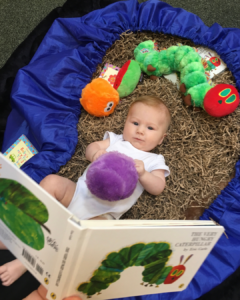
How to make listening to stories more interesting for your baby
You don’t need an elaborate sensory setup to make storytime engaging.
In fact, some of the most enjoyable experiences happen during ordinary moments at home.
For a newborn, simply hearing your voice while you share a short book can be a lovely experience.
As your baby becomes more alert, try sitting where they can see your face. Let them watch your expressions as you speak.
Once they’re interested in reaching and exploring, you can introduce a soft object that connects to the story.
Perhaps a woodland book includes a bird. You could make a gentle bird sound and move a soft toy slowly within your baby’s view.
For an older baby, try pausing before a familiar sound or encouraging them to copy a simple action.
Toddlers may enjoy finding a character in the pictures or joining in with repeated phrases.
You don’t need to finish the book.
If your baby becomes interested in one particular page, spend time there.
The NHS Best Start in Life guidance also explores how conversation, actions and shared storytelling can support children’s developing language as they grow.
Most importantly, follow your baby’s interest rather than worrying about getting through every page.
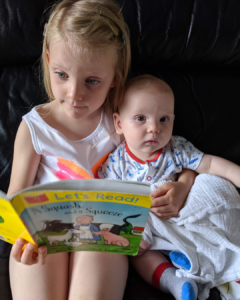
Bringing Adventure Babies stories home
One of the reasons we’ve developed our own Adventure Babies books is that we want families to continue enjoying stories beyond their weekly classes.
Our original stories explore the natural world, introducing children to characters, animals and environments that offer plenty of opportunities for conversation and imaginative play.
They’re the same stories we’ve brought to life through our sensory storytelling work at London’s Natural History Museum.
Books such as Pixie Power, Betsy Bee and Rockpool School give families a starting point for exploring stories together at home.
You can read them traditionally, add a few character voices or introduce a simple sensory experience inspired by the pictures.
Our Adventure Babies books and sensory storytelling resources are designed to help families enjoy those experiences together.
But you certainly don’t need to buy anything new to benefit from storytelling.
A familiar book from the library, your baby’s favourite picture book or even a story you’ve made up yourself can provide wonderful opportunities for interaction.
The most valuable ingredient is often the person sharing it.
Why keeping up with baby development research matters to us
At Adventure Babies, we’re passionate about understanding how babies learn.
That means keeping up with new research into early language, sensory development, movement, attention and the relationships that shape babies’ experiences.
It also means being careful about what the evidence actually tells us.
The latest National Literacy Trust report shows that audio storytelling is becoming a familiar part of life for many UK families.
It doesn’t prove that listening to recorded stories improves babies’ language development.
However, alongside the wider evidence about early communication and shared reading, it gives us another reason to explore how stories fit into babies’ lives.
As research develops, we use it to reflect on our classes, improve our understanding and share useful information with families.
We want parents to leave Adventure Babies having enjoyed themselves, met other families and discovered something interesting about their baby’s development.
Not because they need another thing to worry about, but because understanding how babies learn can make those everyday moments even more enjoyable.
So, can babies really learn from listening to stories?
Absolutely. Babies begin learning about the sounds and patterns of language long before they understand the meaning of a story.
Listening to spoken language is one part of that process, while shared reading offers additional opportunities for interaction, attention and connection.
The benefits of listening to stories for babies aren’t measured by how many books you finish or whether your baby sits quietly throughout.
They’re found in the opportunities stories create.
The familiar sound of your voice, the expression on your face, the excitement of recognising something and the little exchanges that happen along the way.
So, the next time your baby appears to be ignoring your beautifully performed story, don’t assume the experience is wasted.
They might be listening to your voice, noticing a sound or simply enjoying being close to you.
And if they decide halfway through that they’d rather crawl away and investigate the curtains?
There’s always tomorrow.
Come and experience a story together.
At Adventure Babies, we bring books to life through sensory storytelling, movement, play and plenty of opportunities for babies and grown-ups to interact.
Our classes welcome babies and toddlers at different developmental stages, so there’s no expectation to sit still, follow every word or participate in exactly the same way.
It’s a chance to enjoy your baby’s development, discover new experiences and meet other families along the way.
Find your nearest Adventure Babies class and join us for a sensory storytelling adventure.