How to Bond With Your Baby: Why That Overwhelming Love Is Helping Their Brain Grow
There are moments in parenthood that are impossible to explain until you’ve lived them.
You find yourself staring at your sleeping baby for no reason at all. You show friends another photo even though they look almost identical to the last one. Your baby smiles, and your whole day changes in an instant.
Then there are the harder moments. You’re exhausted, you’ve been awake since 3am and you haven’t had a hot cup of tea all day. Somehow, one little cuddle still makes everything feel manageable.
It can feel overwhelming.
It can feel irrational.
It can even feel a little unbelievable.
The wonderful thing is that your body has been preparing for this from the moment your baby arrived.
Your Brain Changes When You Become a Parent
People often talk about how babies grow and change, but parents change too.
Scientists now know that becoming a parent reshapes parts of the brain linked to empathy, emotional connection and recognising your baby’s cues. At the same time, hormones work quietly behind the scenes to help you build a strong relationship with your little one.
Oxytocin often receives the most attention, and for good reason. Sometimes people call it the “love hormone”, but it does far more than create warm feelings. It helps you recognise your baby’s needs, encourages eye contact, strengthens trust and makes those everyday moments together feel rewarding.
That’s why something as simple as holding your baby close, stroking their hair or watching them smile can leave you feeling emotional. Your brain is reinforcing the bond between you because, from the very beginning, that relationship helps your baby thrive.
The NHS Start for Life explains that everyday interactions such as cuddling, talking, singing and responding to your baby’s cues all help build healthy brain development and secure attachment. Their guide to building your baby’s early development is well worth a read for any new parent.
Love Is Building Your Baby’s Brain
It’s easy to think cuddles are simply comforting.
They’re doing much more than that.
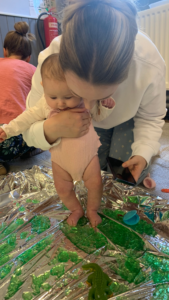
Every smile you return, every conversation you have and every time you respond to your baby’s cries strengthens connections inside their developing brain. Your baby learns that someone understands them, someone responds and someone makes them feel safe.
Psychologists describe this as secure attachment, but most parents simply experience it as love.
That secure relationship becomes the foundation for confidence, communication, emotional regulation and learning. Babies who feel safe are more willing to explore, play, solve problems and interact with the world around them because they know they can always come back to you.
The NSPCC’s advice on bonding and attachment explains that responsive parenting during the first years has lasting benefits for children’s emotional wellbeing and relationships throughout childhood.
It’s reassuring to remember that bonding isn’t about being perfect.
It’s about being present.
The Little Things Really Are the Big Things
When new parents ask us how to bond with their baby, they’re often expecting complicated ideas.
The answer is surprisingly ordinary.
Reading the same story every night.
Smiling back when your baby smiles.
Singing songs during a nappy change.
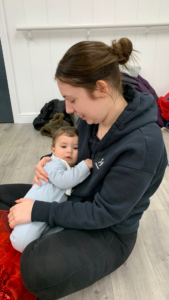
Holding them close while you watch the rain together.
Stopping to notice the pigeon that’s landed outside the window because your baby can’t take their eyes off it.
Those moments don’t usually make social media.
They rarely appear in baby milestone books either.
Yet they’re exactly the experiences your baby’s brain is built to learn from.
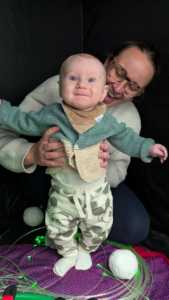
At Adventure Babies, we see this every week. A baby catches sight of a puppet and immediately looks back at Mum to share the excitement. Another laughs when bubbles appear, then checks Dad is laughing too. These tiny exchanges last only seconds, but they’re helping babies understand relationships, communication and trust.
The charity BookTrust’s guide to reading with babies explains that sharing books from birth supports language, attention and emotional connection because stories create opportunities to interact, respond and enjoy experiences together.
Why Parents Need Their Village Too
As powerful as the bond with your baby can be, those first months sometimes feel lonely.
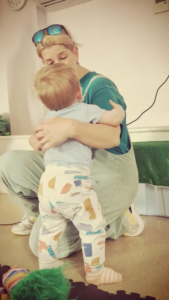
Many parents spend hours talking to someone who can’t answer back. Days blur together, routines disappear and confidence can wobble. Even parents who feel deeply connected to their baby often say they miss chatting to other adults who understand exactly what this stage of life feels like.
There’s science behind that too.
Oxytocin doesn’t only strengthen the relationship between you and your baby. It also encourages social connection with other people. Human beings have always raised children together, and most of us feel happier when we have support around us.
That’s one reason baby classes matter.
Not because babies need a packed diary.
Because parents need somewhere to belong.
Why Adventure Babies Supports Both of You
People often assume our classes are designed purely for babies.
Of course, babies love the sensory play, stories, music and exploring alongside other little ones. Every session encourages communication, attention, memory, movement and curiosity through experiences that feel like joyful play rather than lessons.
Something equally important happens for parents.
Conversations begin while babies explore the sensory trays.
Friendships grow over coffee after class.
Someone admits they’ve had a difficult week, and another parent smiles because they’ve been there too.
Those moments are just as valuable as the developmental activities happening on the play mat.
We often hear parents say, “This is the highlight of our week.”
We never take that for granted.
You could read a story at home, and we genuinely hope you do. Reading together every day is one of the greatest gifts you can give your child. If you’re looking for inspiration, our collection of Adventure Babies books helps families continue the magic of sensory storytelling at home.
Coming to class adds something different.
Your baby watches other babies.
You meet other parents.
Everyone laughs together when the puppet appears or the bubbles begin to float.
Those shared experiences create a sense of community that’s difficult to recreate on your own.
That’s one reason so many families come back term after term. They arrive because they want to support their baby’s development. They stay because they find friendships, confidence and a place where nobody worries if a feed interrupts the story or a nappy needs changing halfway through class.

The Best Thing You Can Give Your Baby
Parents often ask what toy they should buy next.
They wonder whether they’re doing enough.
They worry they’re missing something important.
The truth is wonderfully reassuring.
Your baby doesn’t need a perfect parent.
They need you.
Your voice.
Your smile.
Your cuddles.
Your stories.
Your attention.
Those ordinary moments release hormones, strengthen your relationship and shape your baby’s growing brain in ways that no expensive gadget ever could.
If you’re wondering how to bond with your baby, start there.
Read together.
Laugh together.
Explore together.
Slow down enough to notice the tiny moments that disappear far too quickly.
At Adventure Babies, that’s what we’ve always believed childhood should be about. Every story, every sensory activity and every shared smile is designed to help your baby learn while giving you precious time to connect with each other and with other parents walking the same path.
If you’d love more moments like these, we’d be delighted to welcome you to an Adventure Babies class. You can find your nearest Adventure Babies class, explore our Adventure Babies books, or discover more about how babies learn and how babies learn to communicate on our blog.
Because the greatest gift you give your baby isn’t found in a toy shop.
It’s found in the relationship you build together.