How to Build Baby Confidence: From Watching to Doing Through Group Play
“My Baby Just Watches…”
I hear this all the time in class, usually said a little quietly, almost like a confession.
A mum will lean over and say, “She never really joins in… she just watches.”
And I always smile, because I know exactly what she means. I also know that what she’s describing isn’t a problem at all.
Watching is joining in.
It just doesn’t always look the way we expect it to.
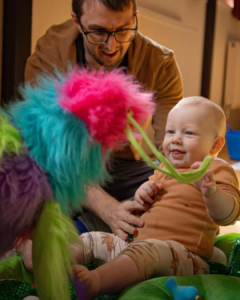
Some babies arrive at class like tiny social butterflies. Before their grown-up has even sat down, they’re reaching for the sensory trays, grabbing scarves, splashing in the foam, and happily investigating whatever is happening nearby. They seem to throw themselves into every activity without a second thought.
And then there are the watcher babies.
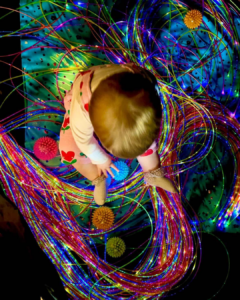
The ones who stay tucked close to mum for a while. The babies who sit quietly on a lap, wide-eyed, taking everything in. They notice everything. The songs, the lights, the other babies, the new textures, the strange noises. They aren’t doing less—they’re just processing first.
Honestly, I often think these babies are the deepest thinkers in the room.
Confidence Rarely Arrives With a Big Announcement
As parents, it’s so easy to worry when your baby seems hesitant.
Especially when you’re sitting next to another baby who is confidently chewing a puppet, climbing into the tuff tray, and generally behaving like they own the place.
You start wondering if your baby is shy. If they’re behind. If you should be encouraging them more, or exposing them to more, or somehow doing motherhood better.
But confidence in babies doesn’t usually arrive in one big, obvious moment.
It grows slowly, and often so quietly that you almost miss it.
It starts with familiarity.
It’s hearing the same welcome song each week. Seeing the same faces. Recognising the room. Knowing that this strange place with the lights and music and sensory trays is actually safe.
That feeling of safety is where confidence begins.
Not from being pushed into joining in, but from having enough trust in the environment to decide to explore when they’re ready.
That’s such an important difference.
Because confidence can’t really be taught like colours or counting. It has to be felt.
Why Repetition Builds Brave Little Humans
At Adventure Babies, I see this happen all the time.
The first class can be a lot. New room, new people, new smells, new sounds. For some babies, especially younger ones or naturally cautious little souls, that can feel huge.
So they watch.
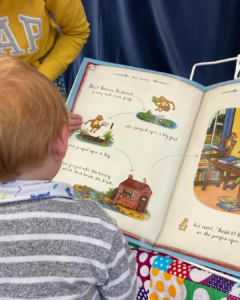
Then they come back the next week, and something has shifted. They still stay close, but maybe they lean forward a little more during story time. Maybe they smile when the parachute comes out because they remember it from last time.
The week after that, they might stretch one hand toward the sensory tray.
Not diving in. Just testing.
And then one day, usually when nobody is expecting it, they’re fully committed—crawling straight in, covered in oats or foam or shredded paper, looking absolutely delighted with themselves.
That’s why repetition matters so much.
As adults, we often think confidence comes from trying something new. For babies, confidence often comes from knowing what to expect.
The familiar creates the bravery.
That’s one of the reasons regular baby classes work so beautifully. It isn’t about entertaining them with something different every week. It’s about creating a rhythm they trust.
Messy Play Looks Simple… But It Can Feel Huge
I think sometimes adults underestimate how intense sensory play can be for babies.
To us, it’s just coloured rice or jelly or a tray full of water beads.
To them, it’s a completely new experience.
It feels different. It smells different. It moves strangely. Sometimes it’s cold, sticky, squishy, or unpredictable. That can be exciting—but it can also feel overwhelming.
If you’ve ever lovingly presented your baby with a beautiful sensory activity only for them to stare at you like you’ve deeply offended them, you are in excellent company.
This is incredibly normal.
Babies often need time before they touch something unfamiliar. They want to understand it first.
And interestingly, they often do that by watching other babies.
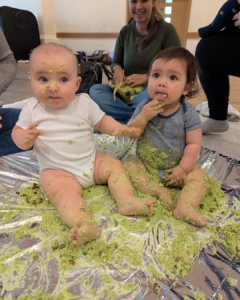
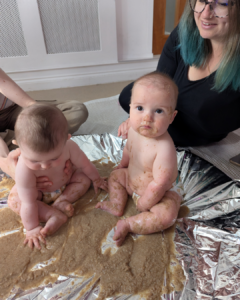
There’s something powerful about group play because babies take social cues from each other. When they see another little one happily splashing, squishing, and exploring, it changes the feeling of the experience.
It becomes less unknown.
It starts to feel safer.
That little glance sideways at another baby in the tray? That matters more than we realise.
They’re checking. Learning. Deciding.
And often, that’s the moment curiosity wins.
The First Reach Is Never a Small Thing
There’s a moment in class that I love more than almost anything else, and it’s so small most people would miss it.
It’s when the watcher baby reaches out for the first time.
Maybe it’s just the tips of their fingers touching the oats.
Maybe it’s picking up one prop during story time.
Maybe it’s crawling across to sit near another baby instead of staying safely pressed against mum.
To anyone else, it looks tiny.
But to me—and usually to their parent—it feels enormous.
Because that moment is confidence happening right in front of you.
Not because someone told them to do it. Not because they were persuaded or pushed.
Because they felt ready.
That’s real confidence.
And once that first step happens, the next one tends to come more easily. You can almost see it. The little shift from uncertainty to curiosity.
It’s one of the loveliest things to watch.
You’re Not Trying to “Fix” a Quiet Baby
I think this is really important to say.
The goal of baby classes isn’t to make your baby louder, bolder, or more performative.
It’s not about getting the perfect photo of them covered in paint or proving they’re the most sociable child in the room.
It’s about creating the right conditions.
A warm environment. Familiar faces. No pressure. Gentle encouragement. Space to observe first and participate later.
Some babies need that slower start.
Actually, many of them do.
And there is something really beautiful about respecting that, rather than rushing it.
The babies who take their time often show us the most about how confidence actually works—not as something dramatic, but as something built quietly, safely, and in their own time.
Sometimes Mums Need the Same Thing
Honestly, I think mums often need exactly what their babies need.
A familiar place. Friendly faces. Reassurance that they’re okay.
I’ve seen so many mums arrive worried that their baby is too clingy, too quiet, too cautious, too something.
And then, a few weeks later, I watch that same baby crawl confidently into class like they own the building.
Reaching for props. Joining in with songs. Laughing at bubbles.
And mum is sitting there with that look on her face—that mixture of pride, relief, and maybe a tiny bit of emotion—because she can see it too.
Not just development.
Confidence.
That quiet unfolding of trust and independence.
And often, while baby is building confidence, mum is too.
She’s chatting to other parents. Realising her baby is normal. Hearing someone say, “Mine did that too.”
That matters more than people realise.
If you’ve been wondering how to build baby confidence, sometimes the answer isn’t doing more.
Sometimes it’s simply finding the right environment.
You can find your nearest Adventure Babies class here:
Because sometimes the bravest thing a baby does is simply watch first.
And sometimes, that’s exactly where confidence begins.